

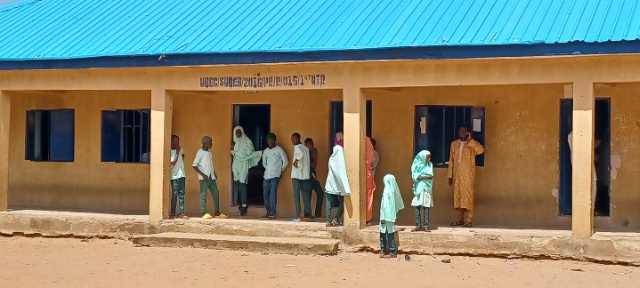
* Bauchi State enrolled over 1.2 million children into formal schools.
* The 2025/2026 enrollment drive surpassed targets by enrolling 284,000 learners against 220,000 planned.
* Key drivers include traditional leaders' involvement, girls' education programs with cash transfers, infrastructure upgrades, and integration of Tsangaya/Qur’anic schools into the formal system.
Adamu Mohammed, Chairman of the Bauchi State Universal Basic Education Board (SUBEB), announced at a Monday news conference in Bauchi that aggressive reforms have slashed the out-of-school figure from 1.7 million to just 216,000 — an over 85 percent drop as of December 18, 2025.
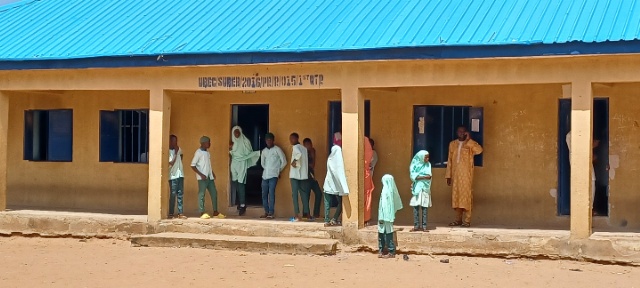
The breakthrough stems from data-driven campaigns, community mobilization, and targeted interventions that prioritize every child's right to learn, transforming despair into measurable progress for vulnerable families.
Key drivers include traditional leaders' involvement, girls' education programs with cash transfers, infrastructure upgrades, and integration of Tsangaya/Qur’anic schools into the formal system.
Mohammed, represented by Permanent Secretary Abdulhamid Jubril, detailed the journey, “However, as of Dec. 18, 2025, the number dropped sharply to 216,000 representing an over 85 per cent reduction and restoring access to education for more than 1.2 million children.”
He added, "The 2025/2026 statewide enrolment drive exceeded expectations, enrolling 284,000 learners against an initial target of 220,000, translating to a 129 per cent performance rate.
"The success was driven by data-based planning, attendance monitoring, early warning systems, and coordinated stakeholder engagement."
Toro Local Government Area emerged as a standout, integrating over 35,000 pupils from an estimated 50,000 out-of-school children.
Mohammed credited traditional and community leaders as a “key pillar” in enforcing enrollment and monitoring attendance.
Girls' retention surged through conditional cash transfers and adolescent empowerment initiatives, narrowing gender gaps and boosting transitions to higher levels.
Infrastructure gains — new mega, model, and smart schools, rehabilitated facilities, and Tsangaya integration — supported the influx, though Mohammed acknowledged strains on classrooms, teachers, and resources.
The state eyes sustainability through institutionalizing traditional leaders' accountability roles, accelerating ICT reforms, and creating a Special Teacher Corps for remote areas.
Mohammed concluded, “Bauchi is now firmly on the path toward inclusive, sustainable educational transformation and human capital development.”


Comments (0)
Please sign in to join the conversation.
Loading comments...