

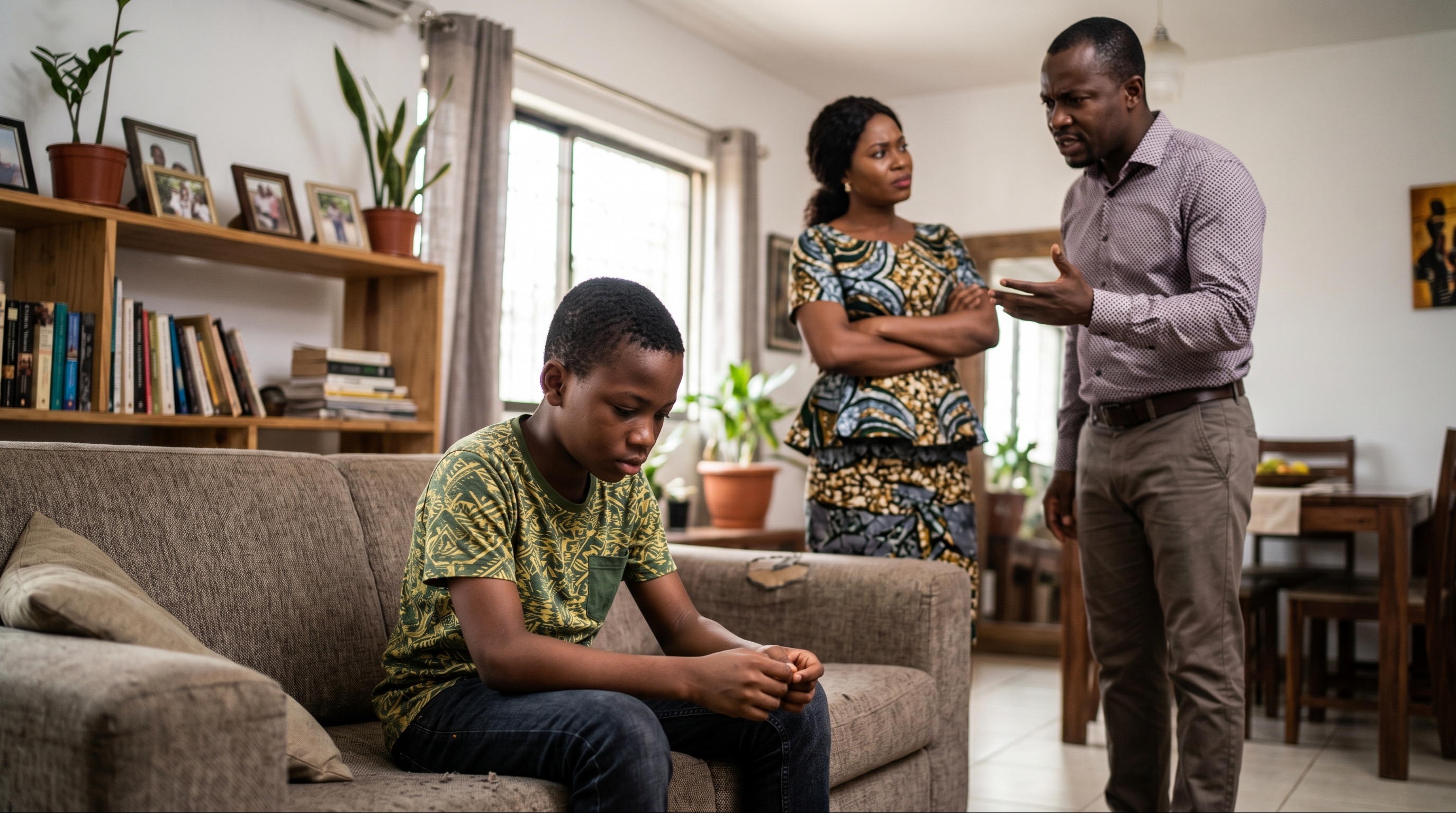
Ade sat beside his wife Ngozi, they had built a stable life through Ade’s growing small-scale import business, yet as they watched their young children grow, memories surfaced from their own upbringing and early parenting days in Enugu. Ade recalled moments of frustration during tight financial periods, when business delays left them stretched, and words slipped out heavier than meant, casting unintended shadows on their children’s spirits. But through reflection and quiet growth, they chose a different path, one rooted in understanding that gentle guidance protected their little ones from becoming easy targets or hardened by life’s pressures.

Ade and Ngozi talked about how their initial strict tones, born from their own parents’ survival-focused discipline amid economic hardships, had risked pushing their son toward withdrawal. In the living room with its simple patterned curtains and the soft hum of the ceiling fan, they had once corrected mistakes with cutting phrases that aimed to toughen but instead created invisible cracks in confidence. Their daughter’s eyes would sometimes dim during those times, the weight of expectations feeling like heavy harmattan air that made breathing harder for young hearts.
Recognizing this during one reflective evening on the veranda as crickets began their chorus and neighbors’ laughter carried faintly over the walls, they committed to change, replacing sharpness with patient explanations tied to real-life lessons about resilience and choices. This shift happened gradually through their late twenties into thirties, mixing past regrets with present joys as they watched their children bloom under kinder words that encouraged rather than diminished.
Today, Ade and Ngozi see a future where their family stands strong, with their business thriving enough to support education dreams and their home filled with open conversations that build rather than break. Their adjustment closes with a warm sense of purpose as they tuck the children in at night, the moonlight filtering through the windows onto peaceful faces, knowing their deliberate choice has steered the little ones away from becoming societal scapegoats or carrying hardened edges into adulthood.
Harsh words from parents, even when delivered with love and a desire to prevent mistakes, often plant seeds that make children vulnerable to becoming scapegoats in school, workplaces, or communities later in life. For young men especially, understanding this helps you partner with your wife to create a home where discipline strengthens rather than scars, protecting your shared financial and emotional investments in your family’s future. It is not about being soft but about being wise, recognizing that words shape how kids navigate a world already full of pressures like job scarcity and social judgments.
The reasons harsh words backfire so deeply lie in how they affect a child’s developing sense of self in practical, everyday ways that ripple into adulthood. In many homes, parents draw from their own experiences of scarcity, using strong language to instill toughness against failures in business or studies, yet this can leave kids internalizing shame that makes them targets for bullies or quick to withdraw from opportunities.
Ade and Ngozi noticed how their earlier tones made their son hesitate in group play, a pattern they gently corrected by focusing on effort and learning instead. As young couples, reflect on your own words during stressful financial moments, like when bills pile up or business ideas face delays, and choose phrases that guide without breaking spirit, preserving the relational trust that supports long-term family stability.
Financially, protecting children from harsh verbal patterns contributes to healthier mindsets that foster better money habits later. Kids who grow up feeling valued rather than diminished are more likely to take calculated risks in entrepreneurship or careers, avoiding the cycle of becoming societal burdens or easy scapegoats when economic winds shift.
Young men, your supportive presence matters here by modeling calm responses when finances tighten, perhaps discussing family budgets openly in the living room over meals so children learn resilience through example instead of fear. This approach turns potential family stress into teachable moments that equip everyone for real-world challenges like market fluctuations or unexpected expenses.
Emotionally, the impact of sharp words builds layers of defensiveness that can harden young hearts into societal menaces or leave them open as perpetual scapegoats in relationships and groups. Couples benefit when they share these emotional loads together, talking through tough days without blame and focusing on the long view where kind guidance yields adults who contribute positively.
In perspective families, harsh words often stem from caring deeply but overlook how they erode the inner security kids need to stand firm against external pressures. Practical insight for young men includes stepping in with steady encouragement during your wife’s challenging parenting days, creating teamwork that models healthy communication and safeguards your financial future by raising capable, non-troubled adults.
The social impact stretches wide because children shaped by balanced words become community assets rather than problems, breaking cycles that burden society with unresolved pain from generational discipline styles. Young couples can draw on this by investing time in shared family routines that blend cultural respect with modern awareness, ensuring finances support education and experiences that build character without harshness.
Mixing timelines reveals how past patterns, when thoughtfully adjusted in the present, secure brighter futures free from scapegoat roles. This progression encourages you to examine your dialogues honestly, choosing upliftment that aligns with values of communal strength while adapting to today’s realities.
Relationships flourish under this understanding because partners who align on gentle parenting create deeper unity, reducing tensions that financial pressures might otherwise amplify. A young man walking this path with his wife might share quiet reflections after the children sleep, discussing how today’s words shape tomorrow’s adults capable of building stable homes themselves.
For young couples, choosing words with care safeguards not just individual futures but the collective strength of families and communities. It allows finances to focus on growth rather than repairing emotional fallout, relationships to deepen through shared wisdom, and parenting to feel like the rewarding journey it can be.
Your children deserve guidance that empowers them to thrive, proving that thoughtful parenting honors both heritage and the hope for a better tomorrow where no one bears unnecessary burdens from yesterday’s echoes.



Comments (0)
Please sign in to join the conversation.
Loading comments...