

Salma was slicing cucumbers and tomatoes into a wide ceramic bowl while her husband Karim laced up his trainers by the front door. Their son Ziad shuffled out of his room in a sleepy fog, drawn by the smell of mint tea steeping on the stove, and their daughter Rania was already at the table with her colouring book, humming something under her breath.
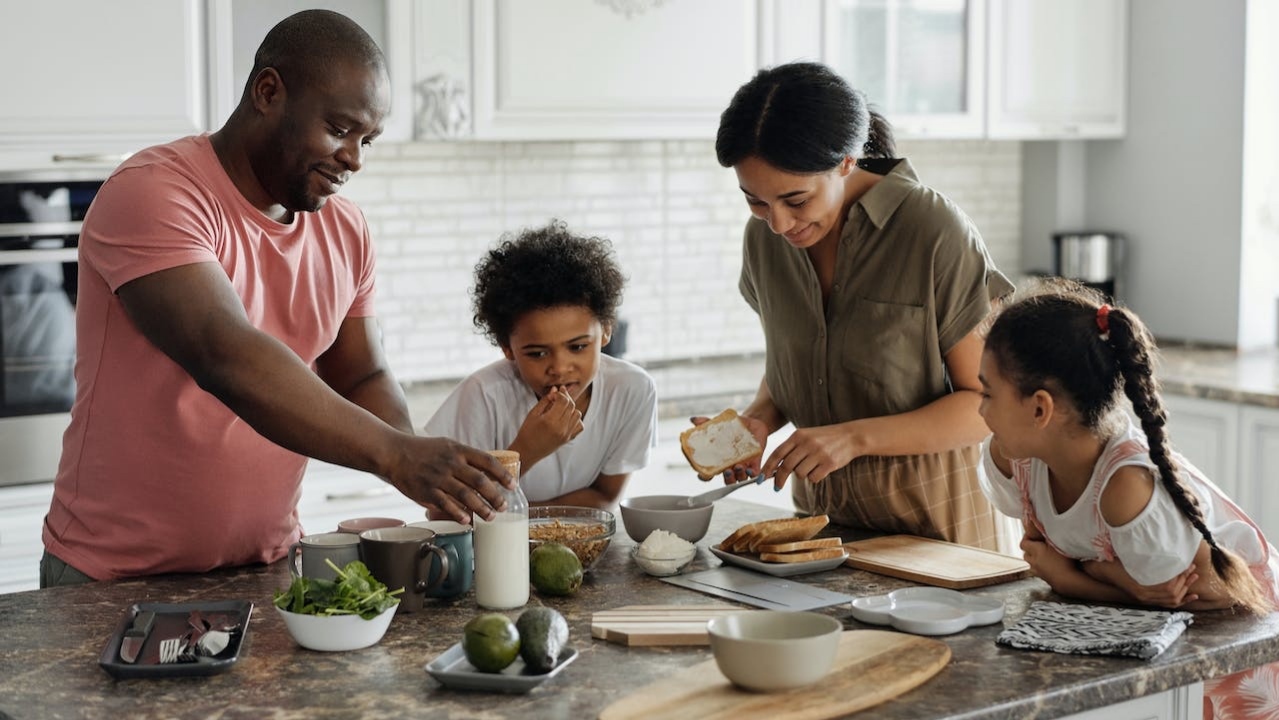
On the surface, it looked like just another Saturday. But look a little closer, and you'd see something quietly powerful happening that had taken Salma and Karim nearly four years to build, one small habit at a time.
The morning had a rhythm to it, and that rhythm was not an accident. It was a culture. A family culture, to be precise: the invisible architecture of shared habits, values, and small repeated choices that shape how a family lives without anyone feeling lectured, pressured, or policed.
We want to talk about something far more sustainable and far more human: how to build an environment inside your home where healthy choices don't feel like punishment. Where movement feels joyful. Where real food feels normal. Where talking about how you feel doesn't feel strange. Where your children grow up with instincts you gave them because you made the right things feel like just the way we do things around here.
That, right there, is culture. And every family can build it. Including yours. Starting now.
1. Culture Is Built in the Ordinary, Not the Extraordinary
Here's the first thing to understand clearly: family culture is not built during the big moments — the holidays, the milestone birthdays, the special outings. It is built in the Tuesday mornings, the rushed school-run breakfasts, the evenings when everyone is tired, and nobody feels like cooking. Salma didn't start a "health programme" for her family. She started by simply replacing the white bread they kept on the counter with wholegrain bread, and saying nothing dramatic about it. That quiet substitution, repeated week after week, became normal. The ordinary is where your culture lives, which means the ordinary is where you have the most power to shape it.
2. Stop Announcing, Start Doing
One of the most common mistakes parents make when they want to shift their family's habits is announcing the change like a government policy. "Starting Monday, we're eating healthier and cutting out soft drinks." The family groans. Nobody buys in. By Wednesday, the old patterns are back. Karim made this exact mistake the first time. He sat the family down and explained that they were going to be more active as a household. Ziad rolled his eyes. Rania asked if she could still have her weekend juice. The whole thing collapsed inside two weeks. What worked, eventually, was doing instead of declaring. He started going for a 20-minute walk after dinner without making it A Family Event. Slowly, Rania started asking to come. Then Salma joined some evenings. Eventually, Ziad started putting on his shoes without being asked. The change happened when it stopped being a lecture and became simply what the family did.
3. Make Movement a Natural Part of the Day, Not a Chore
The word "exercise" carries weight that the word "movement" doesn't. When you tell a child they need to exercise, it sounds like medicine — something you take when something is wrong. But when movement is just woven into the texture of daily life, it becomes invisible in the best way. Salma kept a football in the hallway. There was a skipping rope on the balcony. She and Rania sometimes danced for ten minutes while waiting for food to cook, just because a good song came on. Ziad and Karim had a standing Saturday habit of walking to the market instead of driving. Nobody called it exercise. Nobody tracked it on an app. It was just life in the Oussama household, and both children grew up with bodies that understood movement as something natural, even pleasurable, rather than something imposed.
4. Let Food Be a Story, Not a Sermon
Food is one of the most loaded topics in family life, and it becomes dangerous the moment it becomes moral when certain foods are "bad," and others are "good," when eating becomes linked to guilt or reward. Salma was deliberate about this. She never used food as punishment or prize. She never said, "you can't have dessert if you don't finish your vegetables." What she did instead was make food interesting. She told Ziad where certain ingredients came from, involved Rania in washing vegetables and tearing herbs, and brought the children to the market often enough that they started to feel curious about ingredients rather than suspicious of them. When food has a story and a relationship attached to it, children approach it differently. They eat with more awareness. They develop preferences. They ask questions. That curiosity, cultivated early, becomes a healthy relationship with food that lasts into adulthood.
5. Build Rituals That Reinforce What You Value
Every family has rituals, only that they're not always conscious about them. The family that eats together every evening, even for 30 minutes, is building a ritual of togetherness. The family that reads before bed is building a ritual of quiet and reflection. The Oussama family had a Sunday ritual where they made harira from scratch together, and nobody was excused from the kitchen. It wasn't about the soup. It was about the fact that for one hour every Sunday, the four of them stood in the same room, did something with their hands, and talked about nothing and everything. Rituals don't have to be elaborate. They have to be consistent. Consistency is what transforms an action into a value.
6. Protect Your Children's Relationship With Rest
We live in an era that treats busyness as a virtue and rest as laziness, and children absorb this message earlier than we think. Ziad had started wearing tiredness like a badge by the time he was 12, proudly telling people how little he slept. Karim caught this early and made a quiet but firm decision: in their house, sleep was respected. Devices charged outside of bedrooms. The household wound down after nine. Weekends had unscheduled hours. Children who learn to rest learn to recover. Children who recover show up better at school, in relationships, in their own emotional lives. Protecting rest is not indulgence. It is one of the most health-forward things a parent can do.
7. Talk About Feelings As You Talk About the Weather
Emotional health is part of the health conversation that most families completely skip. Not out of indifference, but because it feels too abstract, or too uncomfortable, or simply because nobody modelled it for us when we were young. In the Oussama home, Salma made feelings conversational by making them casual. She would say things at dinner like, "I felt really frustrated today when the delivery was late… took me a while to shake it off." She wasn't performing vulnerability. She was normalising it. And over time, Rania started narrating her own feelings at the table,"I felt embarrassed today at school," with the same ease that she reported what she had for lunch. When children hear adults name their emotions without shame, they learn that feelings are information, not weakness. That is a life skill no classroom can reliably teach.
8. Let Your Children See You Making Healthy Choices for Yourself
Children are watching everything, and the most powerful health education they receive is watching their parents live. When Karim chose water over a cold drink at a restaurant, he didn't explain why. When Salma stepped away from her phone after dinner to sit quietly for ten minutes, she didn't frame it as "self-care." When Karim admitted he was feeling stressed and needed an early night, he said it plainly, without drama. These moments, accumulated over years, build a picture in a child's mind of what a healthy adult looks like. You are not just raising children. You are showing them, every day, what it looks like to take care of yourself. Make sure what they're seeing is something you'd want them to repeat.
9. Make the Home Environment Do the Work for You
Behavioural science has a principle that is genuinely useful for parents: we make the choices that are easiest to make. Which means if the fruit bowl is on the counter and the biscuits are in a high cupboard, the fruit gets eaten more often. Salma designed her kitchen around this principle without ever reading a book about it. She kept cut vegetables in a visible container in the fridge. She kept a water jug on the dining table instead of a bottle of juice. She placed a small mat and resistance band in the corner of the living room where the family watched television. None of these things forced anyone to do anything. They just made certain choices more convenient, and over time, convenience became habit, and habit became culture.
10. Involve the Whole Family in Decisions, Not Just Execution
One thing that quietly undermines family culture is when parents design a healthy lifestyle and then ask the family to simply comply with it. Compliance is management. Culture requires buy-in, and buy-in requires participation. Salma started asking Ziad and Rania to each pick one meal per week that the family would try together, and some of the choices were chaotic. But he also became invested in the dinner in a way he never was before, and he ate everything on his plate without complaint because he had chosen it. When people, including children, feel they have a voice in how things are done, they take ownership. Ownership creates commitment. Commitment creates culture.
11. Celebrate Progress Without Creating Pressure
There is a very fine line between encouraging a healthy habit and making a child feel surveilled or graded. When Rania started drinking more water on her own initiative, Salma noticed and simply said, "Hey — you've been doing that a lot lately. I love it." Not a chart. Not a reward. Just acknowledgement. When Ziad walked to the market with Karim without being asked for the third week in a row, Karim said nothing directly about it, but mentioned it to Salma in front of Ziad: "Your son walked with me again today. The boy is good company." Ziad pretended not to hear, but he was smiling when he walked to his room. Acknowledgement without performance pressure is one of the gentlest and most effective tools a parent has. Use it generously and quietly.
Because one day, you'll be standing in your kitchen, you'll look around at your family, and you'll realise that you did it. You built something.
:max_bytes(150000):strip_icc()/Parents-HowToApologize-eee179a2361f4796a34eb8543fb8f619.jpg)

Comments (0)
Please sign in to join the conversation.
Loading comments...