

Bahati still remembers the exact afternoon she knew something had shifted in her son. Ndayishimiye was seven, sprawled on the living room floor, tablet propped against a cushion, thumb swiping through videos so fast the colours blurred into a single restless streak.

She called his name twice. Nothing. She called it a third time, louder, and he blinked up at her like someone surfacing from deep water, disoriented, slightly annoyed, already itching to sink back under.
That was the moment Bahati stopped assuming her bright, chatty boy was simply “being a kid” and started asking a harder question: what is actually happening inside his mind when he spends six hours a day being fed content instead of building thought?
A child’s brain, particularly between the ages of three and twelve, is undergoing rapid architectural work, laying down neural pathways that will either strengthen through repeated use or weaken through neglect.
Cognitive fitness is not a fixed inheritance handed down at birth. It behaves more like a muscle, responsive to how often it is stretched, challenged, rested, and fed. And just like physical fitness, it can quietly waste away when the daily inputs shift from effortful engagement to passive consumption.
So let’s talk plainly about what actually builds a sharp, resilient young mind, because vague advice like “limit screen time” or “read more” rarely tells parents what to do on a Tuesday afternoon when dinner needs cooking, and the house needs quiet.
1. Unstructured play still does more than any app.
Ndayishimiye’s grandmother, Nzeyimana, used to say that a child inventing his own game was doing more thinking than a child following someone else’s rules. She was right, in ways modern research keeps confirming.
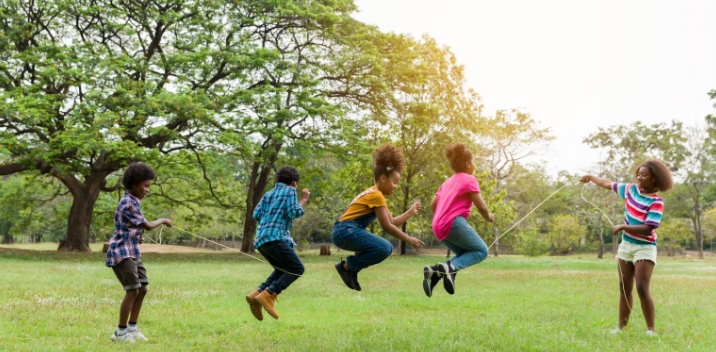
When children build forts from cushions, negotiate the plot of an imaginary battle, or argue over whose turn it is to be the lion, they are exercising executive function, the mental skill set responsible for planning, flexible thinking, and self-control.
2. Real conversation beats passive listening.
There is a difference between a child hearing words and a child being pulled into dialogue.
When Bahati began asking Ndayishimiye open-ended questions over dinner, things like “what was the trickiest part of your day?” she noticed him reaching for vocabulary he rarely used before, pausing to organise his thoughts before speaking.
This back-and-forth exchange, linguists call it serve and return, builds the same neural circuitry used later for reading comprehension and problem solving. It costs nothing except attention.
3. Physical movement is cognitive fuel, not a break from learning.
Ndayishimiye’s father, Ndikumana, works long hours managing a small transport business, but he made one nonnegotiable change: a 20-minute walk with his son before homework, rain or shine.
Movement increases blood flow to the brain and has been shown to improve memory retention and focus immediately afterwards. Parents chasing the idea that stillness equals studiousness often get this backward.
A restless child sitting at a desk for three hours absorbing nothing is not more disciplined than a child who ran, then sat down ready to think.
4. Sleep is where the brain actually files what it learned.
Ndayishimiye used to fall asleep past ten most nights, tablet still glowing beside his pillow. Bahati eventually understood that sleep is not downtime for the brain; it is when short-term memories are consolidated into long-term ones.
A child running on insufficient sleep might appear present during the day while their brain quietly fails to store anything meaningful from it.
Moving his bedtime earlier by ninety minutes changed his recall and his mood within two weeks.
5. Music, rhythm, and pattern-based play sharpen mathematical reasoning.
Nzeyimana taught Ndayishimiye traditional drumming patterns passed down through the family, not as a formal lesson but as something fun to do on Sunday afternoons.
Rhythm work strengthens pattern recognition, the same cognitive skill underlying mathematics and logical reasoning. Parents don’t need instruments or lessons for this. Clapping games, call-and-response songs, and even rhythmic chores like sorting objects by pattern all activate the same mental pathways.
6. Real-world responsibility builds problem-solving faster than worksheets.
When Ndayishimiye was given the task of helping plan the family’s small weekend market shopping list, counting out coins, comparing prices, deciding what could wait until next week, he was doing applied mathematics and decision-making far more complex than most workbook exercises.
Children given genuine responsibilities, age-appropriate but real, develop reasoning skills through consequence and context rather than abstraction.
7. Curiosity needs to be met, not managed.
There was a stretch where Ndayishimiye asked Bahati why the sky changed colour at sunset nearly every single evening for two weeks straight. She admits she nearly brushed him off more than once.
But children asking repeated questions are not being difficult; they are testing whether their environment rewards curiosity or shuts it down.
Answering honestly, or even better, exploring the answer together, teaches a child that questions are worth asking, which keeps inquiry alive rather than dulled by disinterest.
Cognitive fitness is cumulative, built in small, repeatable moments rather than dramatic interventions.
If your child has spent a season drifting into passive habits, it is simply information, a signal to gently shift the daily inputs before the drift becomes a pattern too comfortable to leave.



Comments (0)
Please sign in to join the conversation.
Loading comments...