

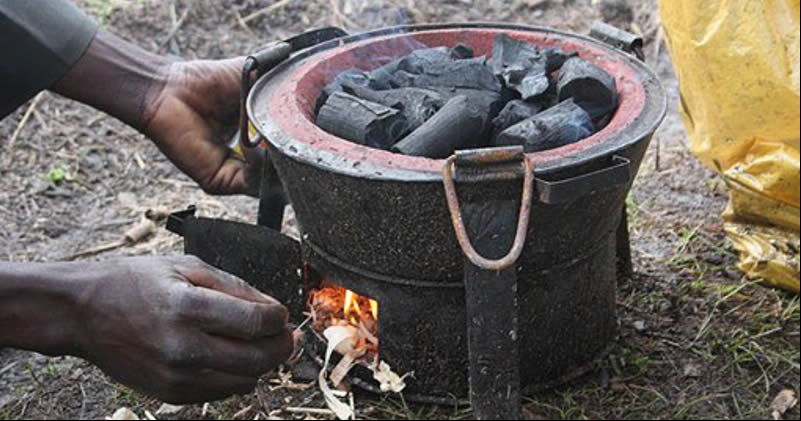
Many Nigerian families are being forced to abandon cooking gas and return to charcoal and firewood as the continuous increase in the price of Liquefied Petroleum Gas (LPG) places additional pressure on already strained household budgets.
Across many communities, the price of cooking gas now ranges between ₦2,000 and ₦2,400 per kilogram, making it increasingly difficult for many households to afford regular refills. In some areas, residents also report a scarcity of cooking gas, further worsening the situation for consumers.
For years, the Federal Government and health experts encouraged Nigerians to embrace clean cooking fuels such as LPG to reduce indoor air pollution, protect the environment, and improve public health. However, the recent surge in cooking gas prices has made it increasingly difficult for many low- and middle-income households to refill their cylinders.
Across several communities, families say they now rely on charcoal and firewood because they are more affordable, despite the health risks associated with smoke from traditional cooking methods.
For many parents, the decision is not about preference but survival. With food prices, transportation costs, school fees, electricity bills, and rent all on the rise, cooking gas has become a luxury that many households can no longer afford.
Some families revealed that what used to last them several weeks now costs almost twice as much to refill, forcing them to seek cheaper alternatives. Others said they only use cooking gas for quick meals while reserving charcoal or firewood for meals that require longer cooking times.
Health experts have repeatedly warned that prolonged exposure to smoke from firewood and charcoal increases the risk of respiratory illnesses, eye irritation, asthma, and other health complications, particularly among women and children who spend more time around cooking areas.
Environmental advocates also note that increased dependence on firewood contributes to deforestation and environmental degradation, reversing years of progress made in promoting cleaner energy sources.
Consumer groups have expressed concern that unless cooking gas becomes more affordable, the country's clean energy transition could suffer a major setback as more households revert to traditional fuels.
Many Nigerians are calling on the government to introduce measures that will stabilize LPG prices, improve local production and distribution, and make clean cooking fuel more accessible to ordinary families.
For millions of households, the issue goes beyond cooking. It reflects the difficult choices families must make every day between protecting their health and stretching limited incomes to meet basic needs.



Comments (0)
Please sign in to join the conversation.
Loading comments...