

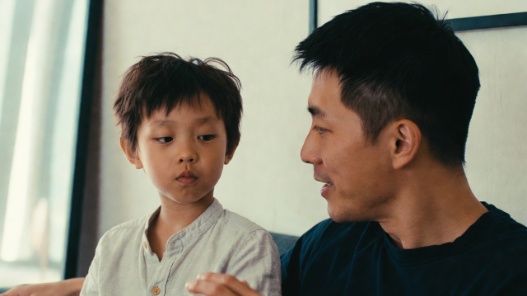
There’s a moment most of us remember, even if we can’t quite name it. You’re small, maybe eight or twelve, and suddenly Mum is crying in the kitchen. She looks at you, not as her child, but as someone who might understand. “Your dad and I… we’re not doing well,” she says, voice low. “I don’t know how much longer I can do this.”

We call it oversharing. It feels like closeness at the time. It is anything but.
When a Child Becomes the Parent
This is parentification in its quietest, most heartbreaking form. One minute you’re a child who needs comforting after a bad day at school; the next you’re the one stroking your mother’s hair, telling her “Dad didn’t mean it.” You learn, far too early, that your job is to keep the grown-ups okay. Playtime, tantrums, and even your own sadness become secondary.
Children in this role usually grow up feeling strangely responsible for everyone else’s happiness. They become the friend who always has tissues, the partner who can’t bear conflict, the adult who apologises for things that aren’t their fault.
“Don’t Tell Your Brother, But…”
Confiding in children about marital problems is one of the most common forms of oversharing. “Your father and I might not make it.” “He’s been distant for months and I don’t know if I still love him.” The words land like stones in a small pond.
The child doesn’t just hear the information. They feel the terror of the family breaking. They start monitoring their parents’ moods, walking on eggshells, secretly hoping they can somehow fix it. Many carry that secret for years, long after the marriage has either survived or ended.
What It Does to Them, Years Later
The impact is rarely dramatic. It’s slow, insidious, and often invisible until adulthood. Many become adults who:
Struggle to know where they end and other people begin
Feel anxious when someone they love is upset (because they were trained to “fix” it)
Attract partners who need constant emotional care
Find it almost impossible to say “I’m not okay right now” without immediately apologising
They have learned that love means carrying someone else’s pain. A lesson which is hard to unlearn.
Healthy Vulnerability Vs. Emotional Dumping
There is a world of difference between the two. Healthy vulnerability sounds like this: “I’ve had a really tough day at work, love. I’m feeling a bit low, but I’m okay. Shall we have a cuddle on the sofa?”
Emotional dumping sounds like: “I can’t believe your father said that to me. I think he might be having an affair. What do you think I should do?”
The difference? One shares a feeling and still holds the adult role. The other hands the child the steering wheel of the family car.
So, How Do You Stop?
The kindest thing you can do for your children is to protect their childhood by protecting your own emotional needs. Find other places to put the heavy stuff, like a friend, a therapist, a partner, a journal, or a long walk with the dog.
When you do need to share with your child, keep it age-appropriate, brief, and solution-focused. Let them see that grown-ups have feelings, but never let them feel responsible for managing those feelings.
The most beautiful gift you can give your child is the freedom to be small when they still are small. To run, to play, to worry about lost football boots instead of lost marriages.
Simply put, you were never meant to be their therapist and they were never meant to be yours.


Comments (0)
Please sign in to join the conversation.
Loading comments...