


The soft hum of the standing fan mixed with the distant evening calls to prayer and the aroma of simmering efo riro drifting from the kitchen as Akin and Funke sat together in their modestly furnished Lagos sitting room one Tuesday evening, surrounded by school notebooks, fee receipts, and their nine-year-old son Demilade’s colourful drawings pinned on the wall. Their voices rose with concern rather than anger while they reviewed his latest report card, Akin gesturing thoughtfully with a pen as he expressed doubts about the rote memorisation dominating, and Funke nodding while sharing observations from parent-teacher meetings, both fully united in their desire to secure the very best for their son in an economy that rewards creativity and adaptability more than ever before.
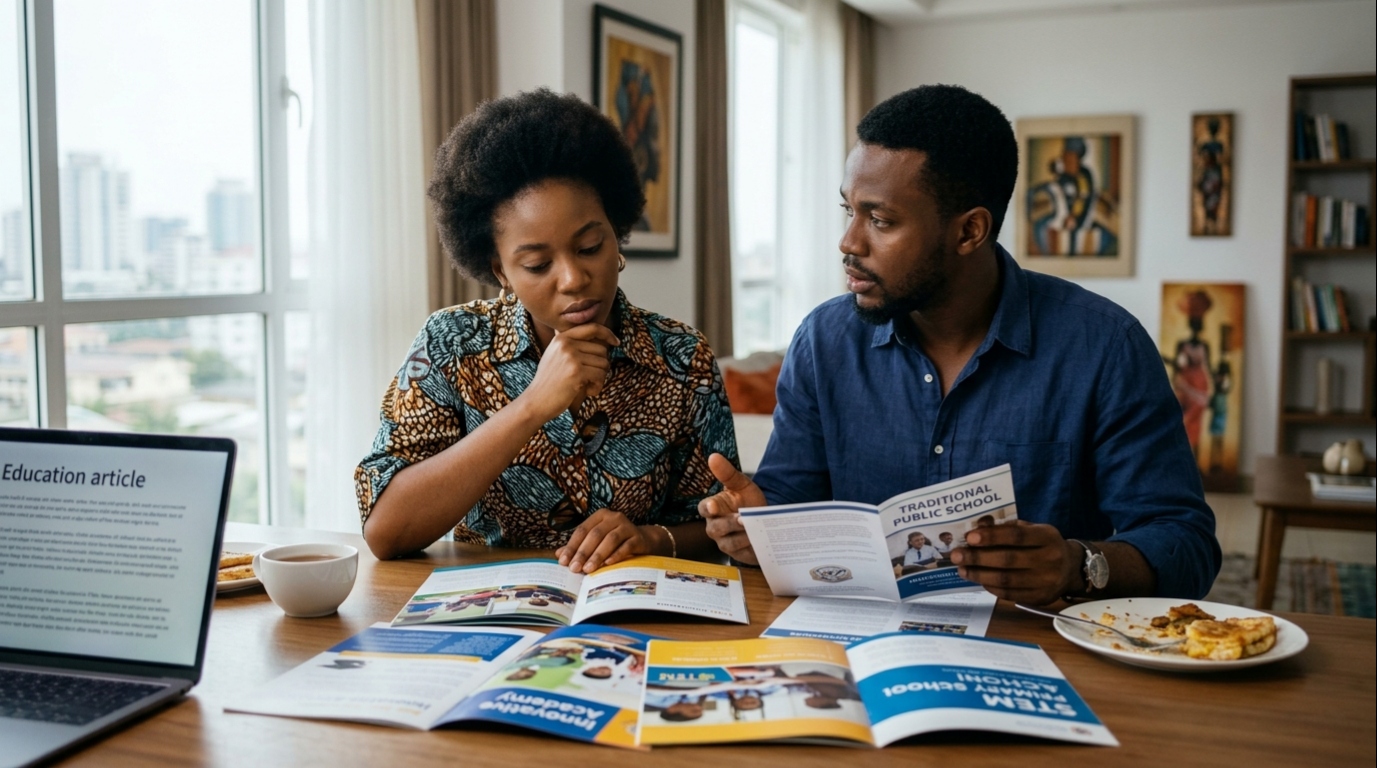
In that honest living-room conversation, it became evident how deeply today’s education system leaves many parents uneasy, yet Akin and Funke’s intentional journey reveals compelling reasons to embrace innovative schools that nurture curious, capable young minds without discarding our cultural strengths.
They built their marriage on shared dreams of stability and raising children who would thrive amid unique opportunities and challenges, yet as Demilade progressed through primary school, they noticed gaps that traditional methods struggled to fill, prompting deeper reflection. Those early days felt full of promise, but by primary three, they began observing how heavy reliance on memorisation and high-stakes exams left little room for practical skills, creative thinking, or emotional growth, especially when coupled with frequent strikes, large class sizes, and limited resources in many standard schools.
Their growing concern led them to explore options that aligned better with preparing their son for a future where adaptability, financial sense, and innovation matter greatly.
That pivotal Tuesday evening conversation marked a turning point as they reviewed everything they had learned.
With Demilade peacefully asleep in the next room, Akin and Funke listed out clear reasons why innovative schools offered a stronger path, drawing directly from their observations, school visits, and Demilade’s own responses to different learning environments. These insights emerged naturally through their caring dialogue and shaped the thoughtful decisions they made for their family.
1. Innovative schools emphasise practical life skills alongside academics.
Demilade began showing more confidence when he joined a school that incorporated basic financial literacy and simple projects, helping him understand money management in ways traditional chalk-and-talk methods rarely addressed, preparing him better for real-world responsibilities young adults face today.
2. They nurture creativity and problem-solving abilities.
Instead of constant copying of notes, Demilade’s new environment encouraged him to build models and explore ideas, sparking a visible spark in his eyes when he came home describing inventions he imagined, skills essential in Nigeria’s evolving job market.
3. Smaller, interactive classes improve attention and participation.
Funke noticed how her son engaged more actively in discussions rather than sitting passively, reducing the boredom that often leads to disinterest in larger, lecture-heavy traditional setups common in many public and older private schools.
4. Innovative approaches integrate technology meaningfully.
Demilade learned to use educational tools for research and presentations, building digital confidence early while still grounded in face-to-face interactions that respect our communal African learning heritage.
5. They focus on emotional intelligence and character development.
Regular activities teaching empathy, teamwork, and resilience helped Demilade handle disappointments better, complementing the moral values Akin and Funke taught at home through stories and proverbs.
6. Project-based learning makes education more relevant and memorable.
Their son retained information longer when connecting lessons to everyday Nigerian realities like agriculture, local businesses, or community challenges, unlike isolated facts that faded after exams.
7. Innovative schools often maintain better teacher-to-student ratios.
This allowed more personalised attention, helping Demilade strengthen areas like mathematics through hands-on methods rather than repeated drills that previously frustrated him.
8. They encourage entrepreneurship and initiative from a young age.
Simple school enterprises and idea-sharing sessions excited Demilade about creating value, aligning with the self-reliance that many Nigerian families value amid economic pressures.
9. Flexible curricula adapt to individual learning paces.
Demilade, who sometimes needed more time on certain topics, thrived without the rigid one-size-fits-all pressure that can discourage bright children in strictly exam-focused systems.
10. Strong emphasis on collaboration mirrors real family and community life.
Group projects taught him to work with others respectfully, reinforcing the cooperative spirit central to our culture while building networks that could support future opportunities.
11. Innovative schools integrate local culture with global awareness.
Demilade proudly learned Yoruba history and values alongside practical modern skills, avoiding the cultural disconnection some parents fear in overly foreign-oriented approaches.
12. They prepare children for diverse career paths beyond white-collar jobs.
Exposure to design, basic coding, environmental projects, and communication helped broaden Demilade’s dreams in a country where innovation drives new industries and opportunities.
13. Regular feedback and holistic assessments reduce exam anxiety.
Funke and Akin appreciated seeing their son’s growth tracked through portfolios and observations rather than single high-pressure tests that often define traditional schooling outcomes.
14. These schools foster parental involvement in meaningful ways.
Joint workshops and open communication channels allowed Akin and Funke to partner actively with teachers, creating consistency between home values and school learning.
15. They build financial awareness and resourcefulness early.
Lessons on budgeting, simple investments, and value creation equipped Demilade with tools to navigate the same economic realities his parents managed, promoting long-term family stability.
16. Innovative environments promote physical and mental well-being.
Balanced schedules with play, arts, and movement supported Demilade’s overall health, helping him stay curious and energetic rather than drained by endless sitting and cramming.
17. They cultivate adaptability for an uncertain future.
By embracing change through varied activities, Demilade developed resilience that will serve him well amid Nigeria’s dynamic economy and global shifts.
18. Stronger critical thinking replaces rote learning.
Their son started asking thoughtful questions and analysing situations, skills Akin and Funke believe will help him make wiser life and financial decisions as he matures.



Comments (0)
Please sign in to join the conversation.
Loading comments...