

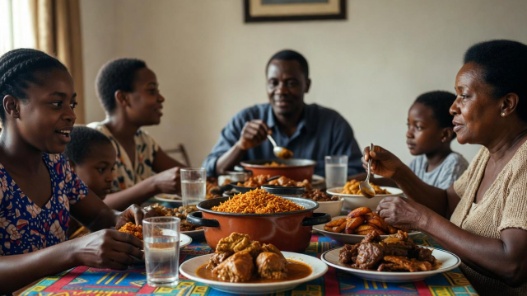
Remember those evenings at the family table? The aroma of steaming jollof rice, egusi soup thick with Ugwu, or pounded yam waiting to be moulded. Your plate is loaded. Mum, Grandma, or Aunty has dished generously because "food is a blessing" but the order that follows brings the reality to a haunting stand-still - "Finish your food!!!"
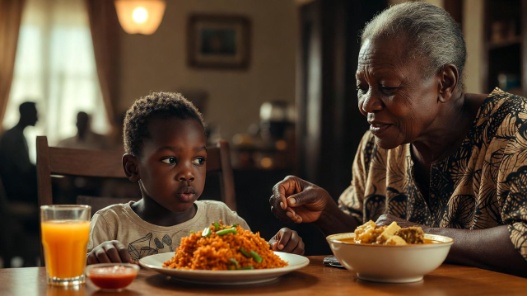
Then comes the familiar line. "Finish everything on your plate o! Children are hungry out there." Or the classic, "Don't waste food because people are suffering."
You sit there, belly already full, but you push on because refusing feels like ingratitude. Maybe even a light tap on the head if you grumbled. It was said with love, discipline, and a deep sense of appreciation for every grain.
But years later, as an adult juggling work, traffic, and life in Lagos, do you still find yourself scraping the last bit of rice even when you're stuffed? Or feel that small pang of guilt when you leave a few pieces of plantain behind?
Those childhood words weren't just instructions. They were lessons carved deep into how we relate to food.
Keep scrolling to find out how those words from years ago might still be whispering at mealtimes today.
The “No Waste” Rule That Follows You Everywhere
In many Nigerian homes, wasting food is almost a sin. Parents grew up in times when meals weren't guaranteed, or they heard stories of hardship. So "finish your food" became a mantra. It taught gratitude, respect for the farmer's sweat, and the reality that not everyone has a full plate.
As grown-ups, this shows up in funny and sometimes tricky ways. At parties or owambe, you load your take-away plate high because "you can't come and go empty." At home, you might overeat to avoid leftovers going bad, even if it means feeling heavy afterwards. That inner voice whispers, "Don't waste it," and suddenly you're full but still chewing.
It's tied to our culture of abundance when food flows but also the memory of scarcity. The result? Many of us struggle to stop when satisfied. We eat with our eyes or out of habit, not just hunger.
Ever caught yourself saying to your own kids, "Finish it o!" and then wondering why you can't leave half a plate at a restaurant? That's the echo.
Guilt Mixed with Every Bite
The phrase "there are children starving" added moral weight. Food wasn't just nutrition, it carried responsibility. Leaving food felt like disrespecting those less fortunate, almost like sinning against providence.
In adulthood, this guilt lingers. Skipping a meal feels wrong and overeating feels "better" than wasting. It can blur the line between physical hunger and emotional pulls like stress from traffic while in a danfo or korope, work pressure, or family wahala. Food becomes comfort or duty.
For some, it swings the other way; strict portion control later in life to "balance" those childhood feasts. Either way, eating stops being a simple joy and becomes loaded.
Family Love, Discipline, and the Table Battles
Nigerian parents often used food rules to build character. "Eat everything" meant obedience, resilience, and appreciation. Picky eating? Not in this house! You eat what is served, be it fufu with okro, beans and dodo, whatever, because "that's what our parents have."
This built strong family bonds over shared meals, but it also taught some to ignore body signals. Kids learned to eat beyond fullness for approval or to avoid punishment. As adults, this can lead to habits like mindless finishing or discomfort after big swallows of eba.
Yet there's beauty here too. Those meals created memories. Laughing over who ate fastest, stories from elders, the warmth of togetherness. The rules came from care.
Rewriting the Script
You can honour the lessons without letting them control you by doing the following.
Listen to your body and always ask yourself, "Am I full?" before the last swallow. It's okay to pack the rest for later (no waste!).
Serve what you can enjoy. Start with smaller portions and add more if hunger calls.
Teach the young ones gratitude differently by talking about where food comes from, sharing with neighbours, or supporting those in need without guilt-tripping.
Enjoy food as a blessing and savour the jollof rice, not force it down.
Next time you sit down to eat, pause. Thank God for the meal, eat mindfully, and let go of the old pressure. Food should nourish, not burden.
So, which childhood food rule sticks with you most? "Finish your food," "Don't play with your food," or something else from your mum, aunt, or grandma? Share in the comments!



Comments (0)
Please sign in to join the conversation.
Loading comments...