


There is a particular kind of exhaustion that motherhood produces that no one prepares you for adequately. It is not just physical tiredness, although that part is real enough. It is the exhaustion of disappearing in plain sight. It is what happens when your own life quietly becomes a background detail.
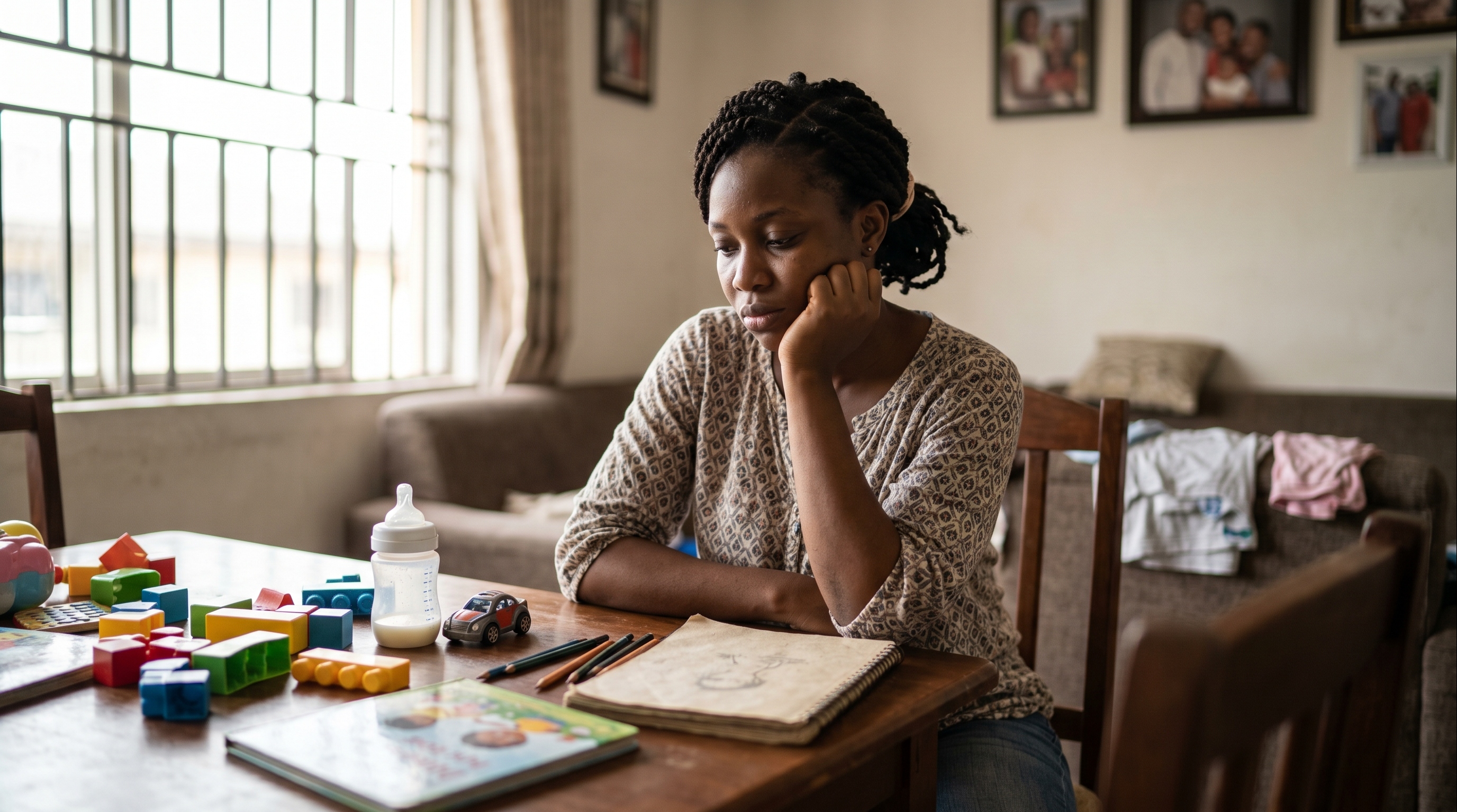
Adaeze started noticing it in small ways. She would be in the middle of a conversation with her husband, Chukwuemeka, and realise she had nothing to say about herself. Not because nothing was happening, but because she had stopped keeping track of herself as a person. When he asked, "How are you doing?" she would say "Fine" and immediately redirect to the children.
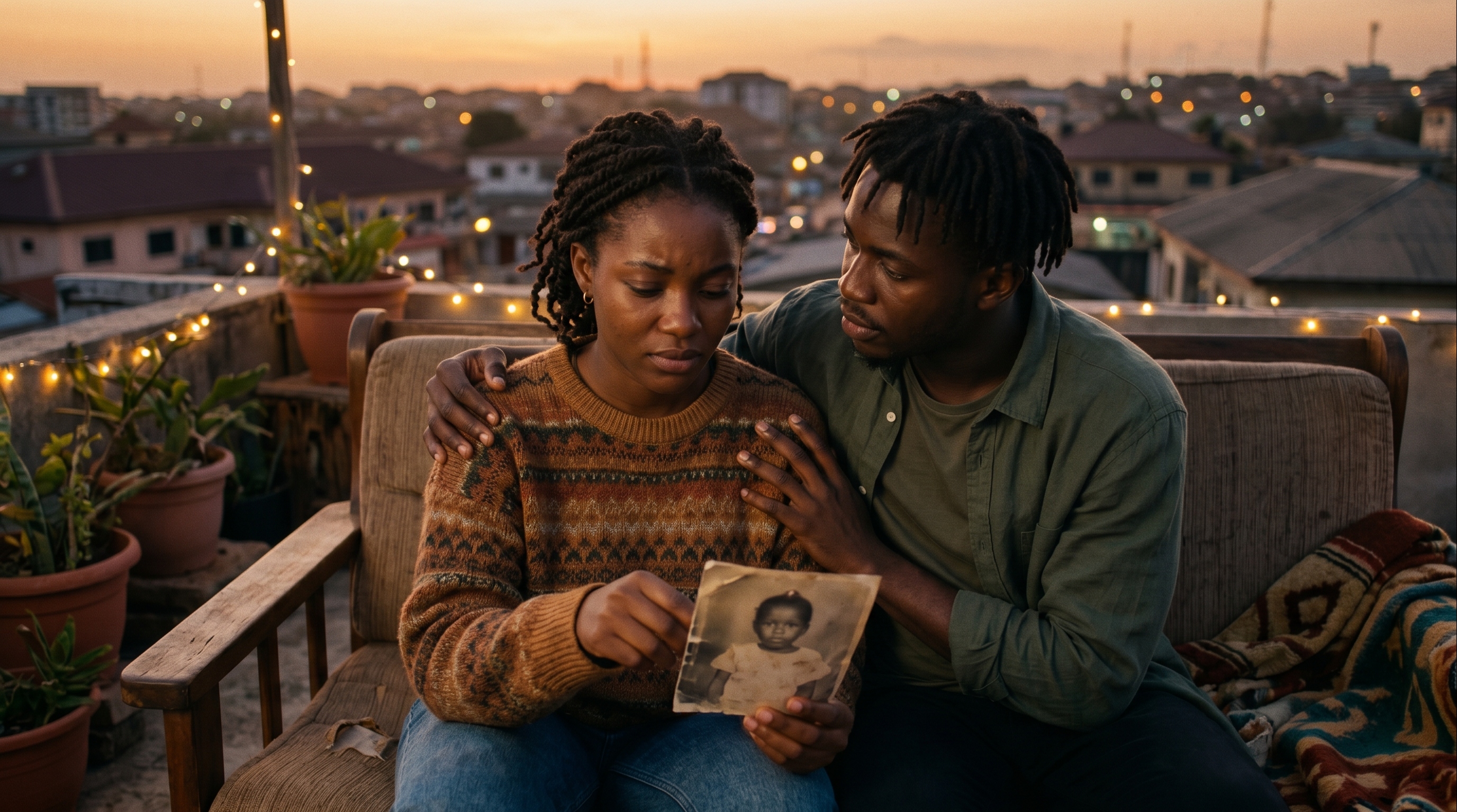
Chukwuemeka would listen, patient and present, but sometimes she caught a flicker of something in his eyes, a gentle searching, like he was looking for the woman he married in the woman sitting across from him.
What Adaeze was experiencing has a name, though most mothers never learn it until they are deep inside it. It is called identity erosion — the slow, almost imperceptible process by which a woman's sense of self becomes so entangled with her role as a mother that she loses access to the other parts of herself.
Not because those parts died, but because they went untended for so long they became hard to find. And this is not a personal failure. It is what happens when society teaches women that the highest form of motherhood is total self-sacrifice, and that any desire to remain a full, complex human being outside of parenting is, somehow, selfishness dressed in good intentions.
It comes from the aunties who say "You cannot be tired, you are a mother." It comes from the culture that measures a woman's worth by how smoothly her household runs. It comes from the guilt that rises in your chest when you want one evening, just one, to sit with your own thoughts without someone needing something.
Over time, a mother starts to believe that wanting to be seen as a person first is a betrayal of her children. So she folds that wanting up and tucks it somewhere deep, and keeps moving, keeps doing, keeps giving.
Adaeze had that moment on a Tuesday afternoon in October. She was at the supermarket, pushing a trolley full of things her children liked and things her husband preferred, and it suddenly struck her that there was nothing in that trolley for the version of herself she used to be. Not even the particular biscuits she used to love.
The signs of losing yourself in motherhood rarely announce themselves dramatically. They are quiet, accumulated, easy to rationalise away. You tell yourself you are just being practical. You tell yourself you will get back to those things "when the children are older." You tell yourself this is just a season. And the season keeps going.
The truth is that identity erosion in motherhood tends to show up in ways that look like other things. It looks like irritability — the sharp, disproportionate frustration that flares up over something minor, because you have been suppressing your own emotional needs for so long.
It looks like a flat feeling that settles over your days, not sadness exactly, more like a grey fog that makes even the good moments feel slightly muted. It looks like forgetting who you used to be in the practical way where someone asks you what you enjoy doing for yourself and you genuinely have to think hard, not because the answer does not exist but because it has been so long since you visited that question.
It looks like disconnection in your marriage, not necessarily conflict, just a growing distance between who you are now and who you were when you chose each other, a distance that can feel confusing and lonely in ways that are hard to articulate.
Because one of the cruelest things about losing yourself in motherhood is how isolating it feels, the sense that you must be ungrateful or inadequate if you are struggling with something that is supposed to be beautiful.
The love you feel for your children is genuine and fierce and total. That is precisely what makes this so complicated. You can adore your children completely and still grieve the parts of yourself that have gone quiet. Both things are true at the same time, and the sooner a mother gives herself permission to hold both truths without guilt, the sooner she can begin the quiet.
Because here is what nobody tells you clearly enough: a mother who has lost herself is not more present for her children. She is less. The well that is never refilled eventually runs dry. The person who never rests becomes increasingly brittle. The woman who stops tending to her own emotional world gradually becomes less capable of tending to anyone else's.
When you consistently ignore your own needs in service of everyone else's, you do not become more giving. You become more depleted. And depleted people give from a place of resentment, exhaustion and anxiety, even when they are giving with love.
What Adaeze found, slowly, through many small conversations and many quiet realisations, was that reclaiming herself did not require anything dramatic or expensive.
It required something harder: permission.
Permission to exist as a person inside her life as a mother.
Permission to say "I need twenty minutes alone" without qualifying it.
Permission to have interests that had nothing to do with her children's wellbeing.
Permission to look at herself in the mirror not just to check if she looked presentable, but to actually check in on herself — the way you check in on someone you love.
The practical dimensions of this matter too, because motherhood is also an intensely logistical life, and the solutions to internal struggles often have to be negotiated within real, imperfect circumstances.
This means having honest conversations with your partner, not arguments, not resentments that finally spill, but actual deliberate conversations where you say: "I have been disappearing, and I need help building myself back into our life together."
It means learning to recognise the guilt for what it is — not a signal that something is wrong, but a conditioned response to unlearning the idea that you must be a martyr to be a good mother. It means starting somewhere small, because small is real.
Mothers, you deserve to know this plainly: losing yourself in motherhood is common, it is understandable, and it is not permanent. The woman you were before you became a mother did not disappear — she is underneath, waiting.
The mirror is right there. Take a moment. Look. Really look. She is still you.

Comments (0)
Please sign in to join the conversation.
Loading comments...