


Everything Felt Normal
The community hall in Nouakchott smelled of roasted lamb and warm attaya tea the evening that Amara Diallo first noticed Suleyman Ould Bah. It was a neighbourhood gathering, and somewhere between the laughter and the clinking of glasses, their eyes met across a crowded table.
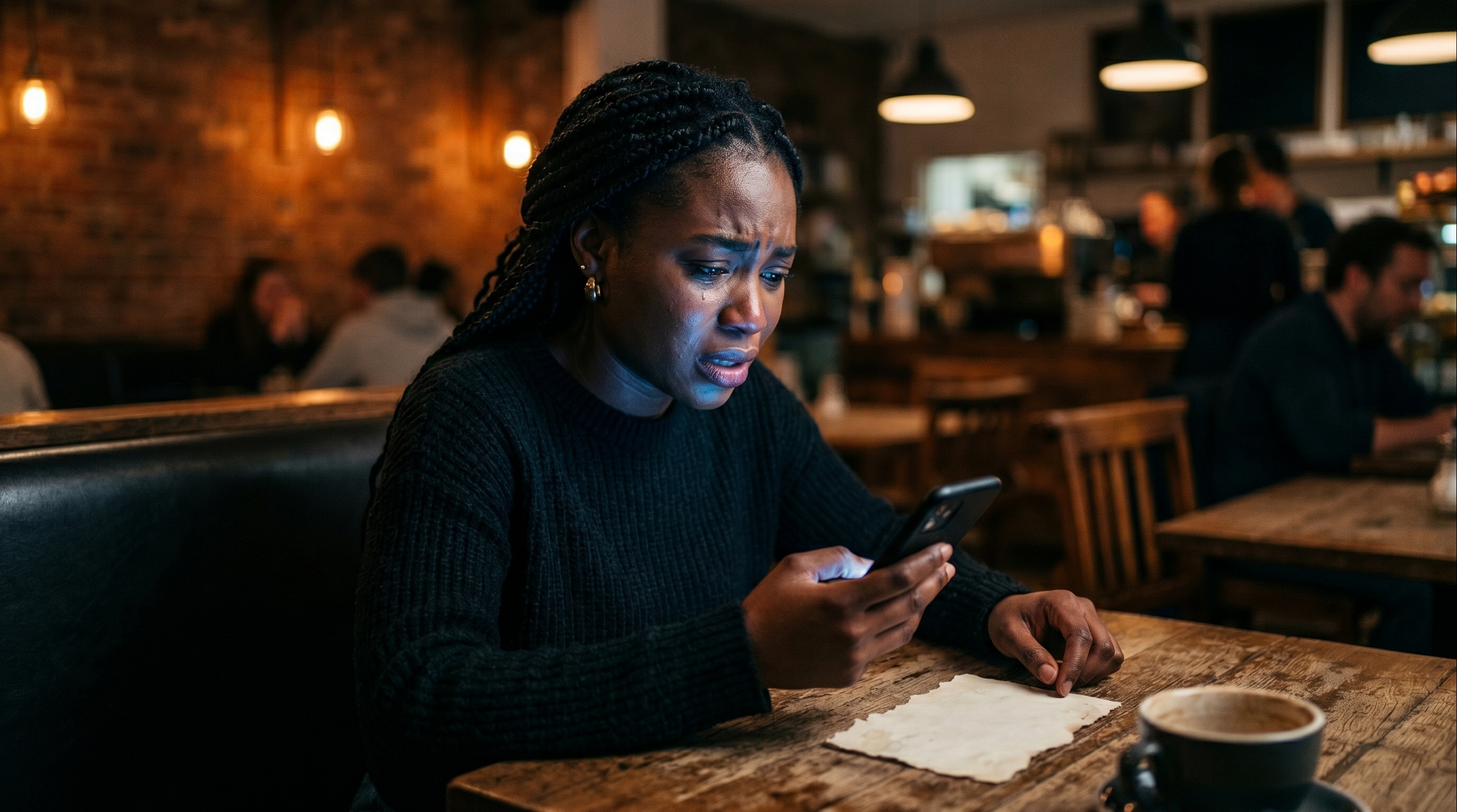
Amara, 27, and working as a hospital administrator, was not a shy woman. She was the type who made friends on public buses and remembered people's birthdays. She believed that life was short and kindness was free, so when Suleyman smiled at her from across the room, she smiled back without overthinking it.
They ended up standing near the same corner, making small talk about the neighbourhood, about their families, about the ridiculous price of tomatoes at the market that week.
It was easy. It was light. It felt like the kind of evening that seeds something real.
When Suleyman asked if he could have her number so they could continue their conversation sometime, Amara said yes.
She wrote it down on a small torn piece of notepaper that she found at the bottom of her bag, handed it over with a small laugh, and thought nothing more of it.
She drove home that night with the windows down, feeling quietly hopeful, the way you do when ordinary life surprises you with something that feels like a beginning.
Three days passed, and Amara had not heard from Suleyman.
That was fine; she was not obsessing.
But on the fourth morning, her younger cousin, Fatimata, called her, half-giggling, half-horrified, to tell her that someone had circulated Amara's number in a group chat she was not part of, accompanied by a comment that made her sound desperate for giving it out.
Amara sat in her car in the hospital car park for a full 10 minutes before she could compose herself enough to go inside. She had done nothing wrong. She had simply connected, naturally, with another person.
But somewhere between that community hall and this Monday morning, a perfectly normal human exchange had been twisted into something humiliating.
That is the world we now live in.
The act of exchanging contact details used to be the most natural beginning to any relationship.
It was not a declaration.
It was not a commitment.
It was simply a door left open.
But today, that door can swing in directions you did not anticipate, and the reasons are layered, important, and worth understanding.
1. Screens removed the social contract that used to govern contact exchange.
When Amara's parents were young, giving someone your number meant they would call the family landline, probably speak to your father first, and the social pressure of that context kept interactions respectful and measured. Today, your number unlocks a direct line to your WhatsApp, your last seen status, and your profile picture. It becomes a window into your life before a conversation has even started. The context that once surrounded the exchange of contact has been stripped away, and with it, a layer of social accountability.
2. Digital permanence changed everything.
A number written on paper can be lost. A number saved in a phone can be screenshotted, shared, broadcast, and archived. What Amara experienced is not a rare horror story. It is something that happens quietly, routinely, to people who did nothing more than be open. The digital world has a memory that human decency does not always keep pace with.
3. The culture of performance has infected the connection.
Social media changed how we communicate. For some people, receiving a number from someone has become a performance opportunity: something to share, to laugh about, to accumulate as proof of social desirability or leverage. The other person in that exchange becomes secondary to the story you tell about it. This is not a generational flaw, but a cultural one.
4. The absence of clear intentions creates dangerous ambiguity.
When Suleyman asked Amara for her number, she assumed shared intentions: friendliness, perhaps the beginning of something. But assumptions are now a fragile foundation. People exchange contacts for wildly different reasons, and without clear communication about intent, the person on the other end is left navigating in the dark.
Meanwhile, Suleyman did not share Amara's number.
A mutual acquaintance had seen him write it down and taken a photo of the paper. He found out about the group chat on the same morning Amara did, and he was horrified. He tried to reach out to apologise, but Amara had already changed her number, and the moment had closed.
Two decent people, one careless bystander, and a trust that could not be repaired.
The culture of sharing someone else's contact information without consent is not harmless banter.
It is a violation that chips away at the already fragile courage it takes to be open in a world that increasingly punishes openness.
When you share what was shared in confidence, you become part of the reason the next honest exchange does not happen.
Here is what works, what protects people, and what helps genuine connection happen in a climate that makes it harder than it should be.
State your intentions when asking. It does not have to be a formal declaration. Something as simple as "I'd love to keep talking — would you be open to exchanging numbers?" signals respect and gives the other person room to decide. It removes ambiguity and establishes that you understand this is an act of trust, not an automatic entitlement.
Use middle-ground channels first. Social media handles, especially public ones, offer a layer of comfort for people who are cautious. They allow connection to begin without the immediacy of a phone number. Meeting on neutral digital ground before escalating to more direct contact is a reasonable, modern-era version of being introduced at a community gathering.
Do not share what you were given. This should not need to be said, but here we are: a contact given to you was given to you. Not to your group chat. Not to your friends as evidence of your social life. Not to the internet. The moment you share it without permission, you have broken a covenant of basic human respect.
Read the room and respect the answer. If someone is hesitant, that hesitation is data. It is not a puzzle to solve or a wall to overcome; it is communication. Respecting it is not rejection tolerance; it is social intelligence.
Give parents language to help. If you are a young person in a family where parents do not understand why these things feel complicated, bring them specific examples to educate them. The more parents understand the landscape, the better equipped they are to support and protect you without accidentally pushing you into situations that feel unsafe.



Comments (0)
Please sign in to join the conversation.
Loading comments...