

It was one of those ordinary evenings that somehow becomes the evening everything changes. The Asante family had just finished dinner when Nana Yaw, 23, pushed his chair back from the table, carried his plate to the sink without a word, and walked straight to his room.
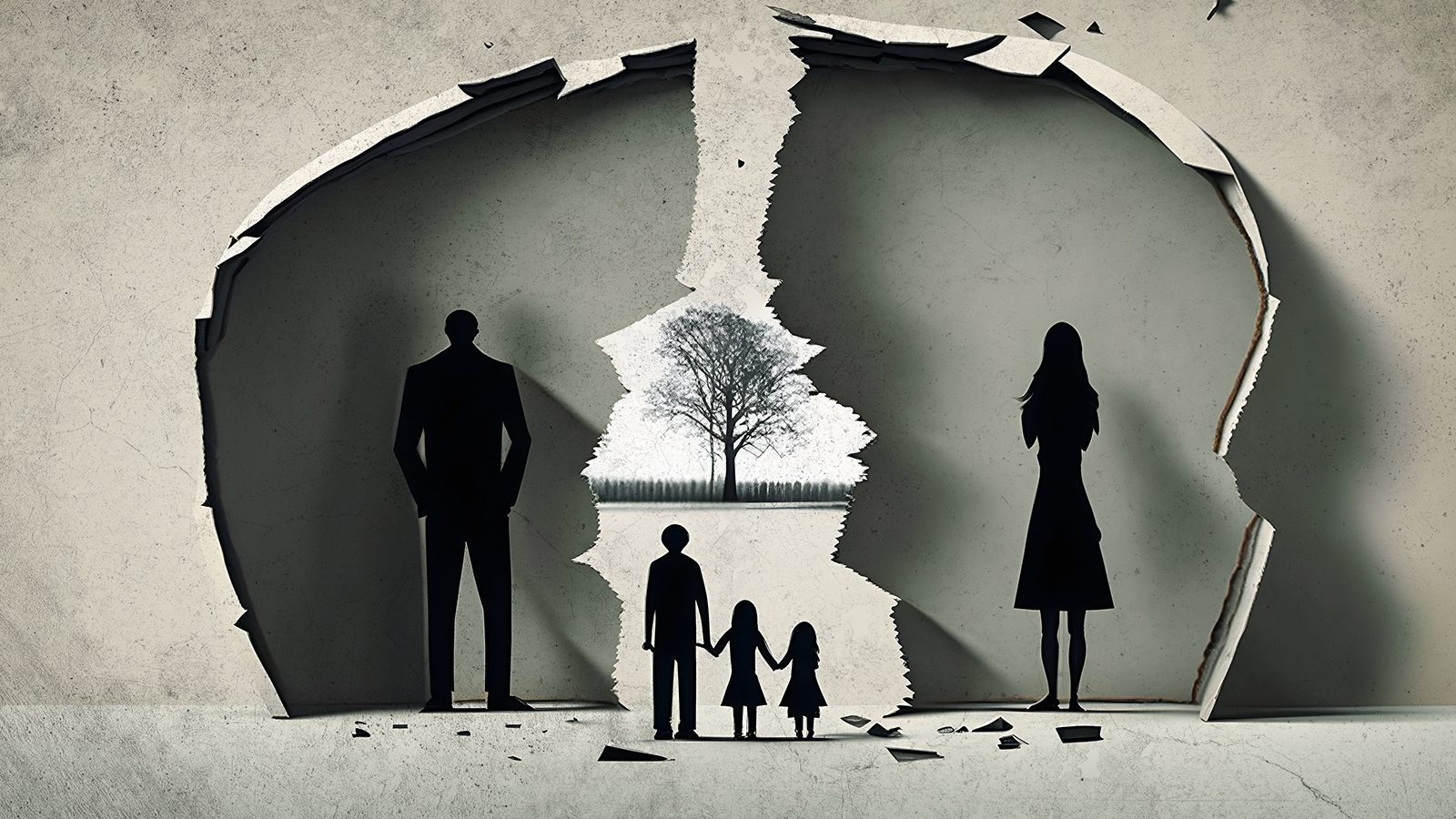
No conversation. No lingering. No "good night." Just the soft but unmistakable click of his door shutting behind him, and a silence that settled over the dining table like a second tablecloth.
His mother, Abena, looked at the space where her son had been sitting. His father, Kweku, reached for the water jug and refilled his glass. His younger sister, Efua, 18, stared at her phone a little too intently.
Nobody said anything. But everyone in that room felt it — that particular heaviness that comes when a family is hurting.
The truth was that the Asante family had been drifting for over a year. It had started the previous Christmas, during a conversation about Nana Yaw's career choices that had escalated faster than anyone expected.
Words were said that were hard to take back. Kweku had been stern in a way that felt dismissive. Abena had taken sides too quickly. Nana Yaw had felt cornered and unheard, and Efua had watched the whole thing from the corridor, wide-eyed and uncertain where to put herself.
By the time everyone went to bed that night, something had shifted quietly, permanently enough that 12 months later, they were still eating around the shape of it.
Hurt in Families Rarely Arrives as One Event.
More often, it builds through accumulated misunderstandings, conversations that went wrong, expectations that were never spoken but somehow became requirements, silences that lasted too long, and apologies that never came.
Emotional distance in families is almost always the result of people who love each other deeply but have never been given the tools to work through the moments when that love gets complicated.
And here is the thing about family hurt that makes it particularly tender: it stings more than hurt from anyone else, precisely because the stakes are higher.
A colleague who disappoints you can be avoided. A friend who lets you down can be replaced, however painful that is. But a parent, a sibling, a child — these are people you carry with you whether you see them or not.
The distance doesn't actually remove them. It just makes their presence ache differently.
So how does a family begin to heal? Through a series of small, intentional choices made by people who decide that the distance is no longer acceptable.
Here is what that actually looks like.
The first step is the hardest one: someone has to admit that something is wrong.
In the Asante household, it was Efua who said it first. Not to her parents and not to Nana Yaw, but to herself, one afternoon in January, sitting at the kitchen table doing her coursework while the house hummed with its usual careful quiet.
She looked up from her textbook and thought, with startling clarity: This is not okay. We are not okay.
And then, because Efua was the kind of person who said the things she thought even when they were inconvenient, she picked up her phone and sent her brother a voice note. Not a long one. Just: "Nana Yaw, I miss you. Not the you that comes to dinner. The real you. Can we talk?"
He listened to it three times before he replied.
Families in conflict often develop a collective agreement to pretend that things are fine. It's a survival mechanism. It keeps the peace. It means nobody has to have the difficult conversation. But it also means nobody heals. You cannot treat a wound you are pretending doesn't exist.
The first act of healing is simply the courage to say: something happened here, and we need to deal with it.
Healing requires understanding the difference between hearing and listening.
A few weeks after Efua's voice note, the Asante family had their first real conversation about what had happened at Christmas. It was not comfortable. Kweku started to explain his position, and Abena began to add to it, and for a moment it felt like the whole thing might unravel again the same way it had before.
But Nana Yaw said something that stopped the room: "I'm not asking you to agree with me. I'm asking you to understand why I felt the way I felt."
That sentence is worth writing on the wall of every home.
There is a crucial difference between hearing the words someone says and actually listening to the experience behind those words. Hearing is passive. Listening is active, deliberate, and sometimes uncomfortable.
When a family member says "I felt unsupported," the instinct for the people who love them is often to defend themselves rather than to sit with the feeling being expressed.
Healing happens when families learn to resist that defensive reflex long enough to genuinely receive what is being shared. Not to agree necessarily, but to understand. Those are different things, and the difference matters enormously.
You cannot rush an apology and expect it to land
Kweku was not a man who apologised easily. Not because he was unkind but because he had been raised in a household where apology was rarely modelled, and where moving on was understood as the same thing as making peace.
He genuinely believed, for a long time, that the Christmas argument was simply one of those things families go through, and that time would sort it out on its own.
What shifted for him was a conversation with his own younger brother, Kofi, over a phone call one Sunday morning. Kofi, who had watched the family tension with concern from a distance, said something simple: "Kweku, the boy doesn't need you to be perfect. He needs to know you see him."
Kweku sat with that for three days before he knocked on Nana Yaw's door, sat on the edge of the bed the way he used to do when his son was small, and said: "I think I made you feel like your choices didn't matter to me. They do. You matter to me. I'm sorry I wasn't clearer about that."
Nana Yaw didn't say much in response.
Some apologies don't need an answer immediately — they just need to be received, and felt, and given room to do their quiet work.
A real apology is not "I'm sorry you felt that way." It is "I'm sorry for what I did, or said, or failed to do." It takes ownership without deflecting. It doesn't come with conditions. It doesn't ask for immediate forgiveness in the same breath.
It simply offers accountability, and then it gives the other person the space to decide what to do with it.
Healing also means creating new patterns, not just resolving old ones.
One of the most common mistakes families make when they begin to heal is believing that resolution is the same as recovery. It isn't. Resolving a conflict means the immediate tension is addressed. Recovery means the relationship is actively rebuilt, over time, through consistent new behaviours.
The Asante family did not become immediately close again after Kweku's apology. What they did was start showing up differently; Abena started asking Nana Yaw about his work in a way that was genuinely curious rather than evaluative; Kweku started texting him funny things he saw during his day, small ordinary things that said I think of you; Efua made a habit of calling him every Sunday, not to check on the family situation, but just to talk.
These small new patterns are where healing actually lives. They are how trust gets rebuilt, stitch by tiny stitch. They are how emotional distance closes — not in one grand leap, but in the accumulation of ordinary moments that say, again and again: I am here. You are safe here. We are choosing each other.
For families with younger members, the healing process carries an extra layer of responsibility.
Children and young adults are watching everything. When they see conflict go unresolved, they learn that conflict is something to be survived, not navigated. When they see adults refuse to apologise, they learn that pride matters more than relationship.
But when they see the adults in their family choose repair, they learn something infinitely more valuable: that love is not just a feeling; it is a practice, and it is a practice that can be learned and chosen even when it is hard.
Efua, years later, would say that watching her parents and her brother find their way back to each other was one of the most important things she witnessed growing up. Not because it was perfect. Because it was real.
Some practical things that actually help:
Having a family check-in where each person gets to share how they are feeling without interruption is not therapy; it is maintenance.
Creating space where younger family members can express themselves without being dismissed or immediately corrected teaches them that their emotional experience is valid and worth voicing.
Letting go of the scoreboard — who was right, who started it, who owes whom what — is not weakness; it is wisdom.
Extending the same grace to your family members that you would extend to a good friend is perhaps the single most transformative habit a family can develop.
Healing is a decision you make, over and over, until it becomes the shape of your family's life together.


Comments (0)
Please sign in to join the conversation.
Loading comments...