

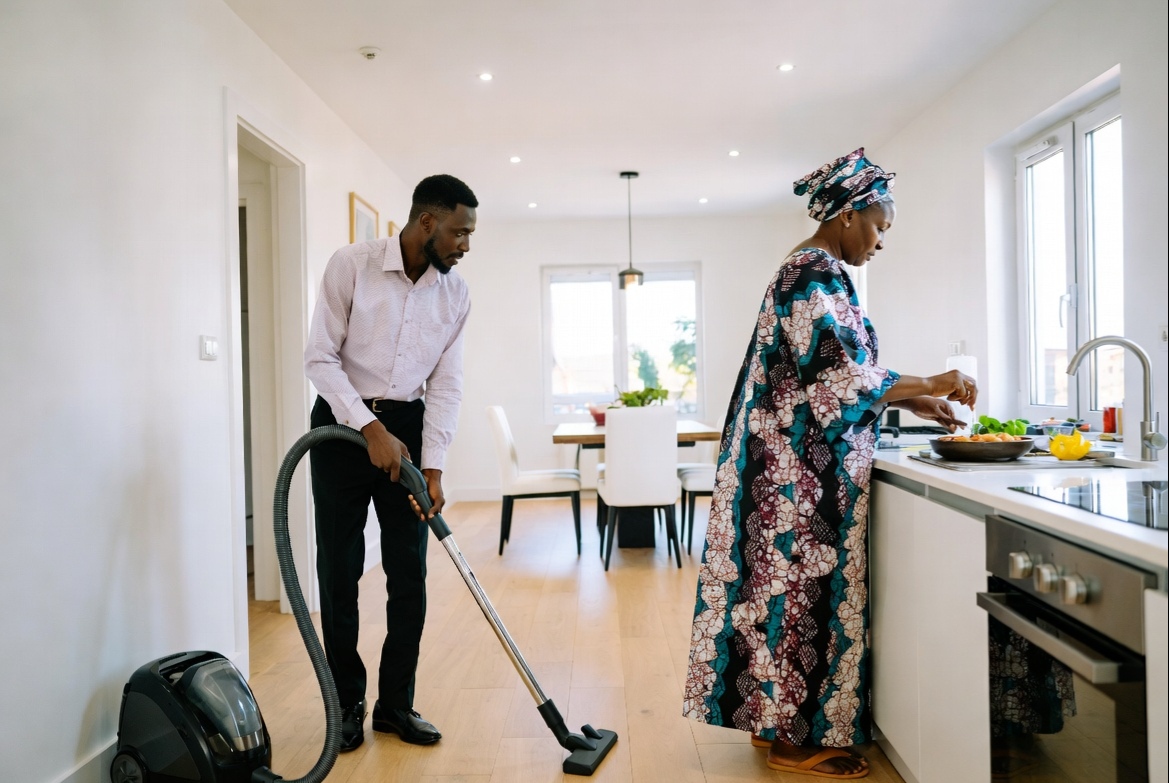
There is a conversation happening in millions of kitchens and living rooms across the country, usually just after dinner, often without words. One person reaches for the sponge. The other reaches for the remote. And somehow, nobody finds it remarkable.
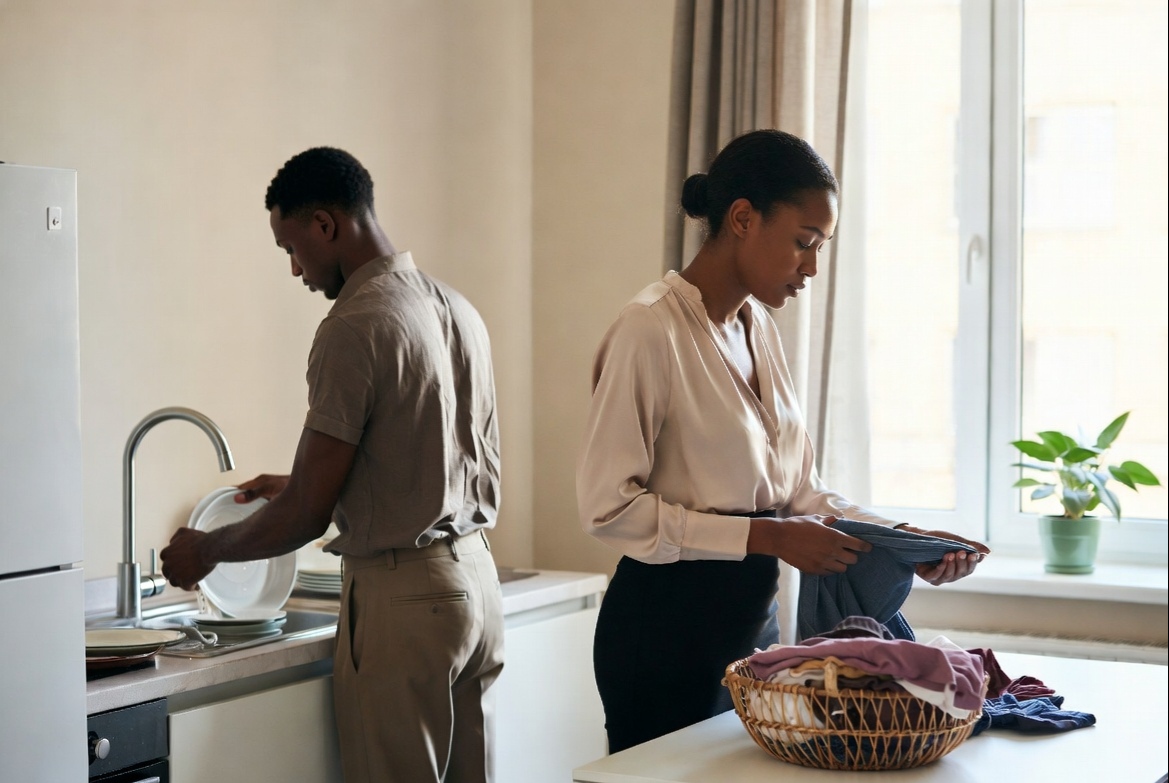
The way we divide household chores is one of the most ordinary things in daily life and, at the same time, one of the most quietly loaded. It touches on what we were taught growing up, what we expect from our partners, and what we silently believe about who is responsible for keeping a home running. And the data, frankly, does not flatter us.
Make Children's Day The Event Our Kids Will Never Stop Talking About
Studies consistently show that women carry the greater share of unpaid domestic labour, not in a minor, rounding-error kind of way, but in a significant, hours-per-week, affecting-your-career-and-health kind of way. According to statistics, women around the world spend an average of 76.2% more time on unpaid work (housework, childcare, cooking) than men do. That figure holds whether or not both partners are in full-time employment.
The Chores That Are "Hers" and the Chores That Are "His"
Even within households that try to split things evenly, there tends to be a pattern. Certain chores remain firmly in the female column, such as cooking, laundry, cleaning the bathroom, tidying up after children, making sure the fridge is stocked before it runs out. Others drift towards men, such as mowing the lawn, taking the bins out, and fixing things when they break.
What's interesting about this divide is not just the imbalance; it's the frequency. Female-coded chores happen every day, sometimes multiple times a day. Male-coded chores tend to be occasional. Cooking dinner is a daily obligation. Changing a lightbulb is not. The effort gap is wider than it first appears.
The Mental Load Nobody Talks About
There is something that sits above the physical chores and is even harder to quantify: the mental load. This is the constant background hum of tracking, remembering, planning, and anticipating. AT the same time, knowing that the school trip form is due Friday, that the dentist appointment needs rescheduling, that you're nearly out of washing powder, and that a birthday is coming up next week.
The mental load is the work before the work. It is the reason one person in the relationship is always slightly tired in a way they can't quite explain because their brain never fully clocks off from the house.
Research from institutions including University College London suggests that this cognitive labour falls disproportionately on women, even in couples where physical chores are shared more evenly. Men may do the hoovering when asked. However, the person who remembered it needed doing, decided it was urgent, and asked, that's a different kind of labour entirely.
Does Having Children Change Things?
Yes, but not in the direction most people hope. The arrival of children tends to sharpen the division of domestic work along traditional lines, even in couples who had previously shared things fairly. Mothers routinely absorb the majority of childcare and the organisational burden that surrounds it: school runs, packed lunches, sick days, clubs, homework, emotional check-ins. Fathers often increase their paid working hours. Both partners believe they are doing their fair share. Both are, in some respects, right about what they see and both are missing what the other is carrying.
This is not about blame. Most households arrive at this state not through deliberate choice but through accumulated habit, social expectation, and the path of least resistance. It is easier to keep doing what you've always done than to stop and redistribute.
What Is Actually Changing?
Younger generations are doing things differently, or at least, they report wanting to. Surveys show that millennial and Gen Z men are more likely to say they want to share domestic responsibilities equally, and some data supports that attitudes are shifting in practice, not just in aspiration. These days, some men do measurably more housework than their fathers did. Progress is real.
But progress is slow. Moreover, wanting equality and practising it are two different things, especially when work pressures mount, old habits resurface, and one partner simply steps in because they can't bear to let something slide. Good intentions are not the same as equitable systems.
A Note on What Fairness Actually Looks Like
Fairness in a home does not mean a precise 50/50 split timed with a stopwatch. It means both people feeling that the invisible work is seen, that their time and energy are valued equally, that neither person carries a weight the other doesn't acknowledge. It means that "helping out" stops being the language because help implies that one person owns the task and the other is a volunteer.
The homes that manage this well tend to share one thing: they talk about it. Openly, without defensiveness, often. They treat the running of a household as a shared project, not a default responsibility that one person was quietly handed at the altar, or the lease signing, or somewhere in between.
That conversation, honest, specific, a little uncomfortable, is the most useful domestic chore of all. Unlike the dishes, it only needs doing once in a while.


Comments (0)
Please sign in to join the conversation.
Loading comments...