

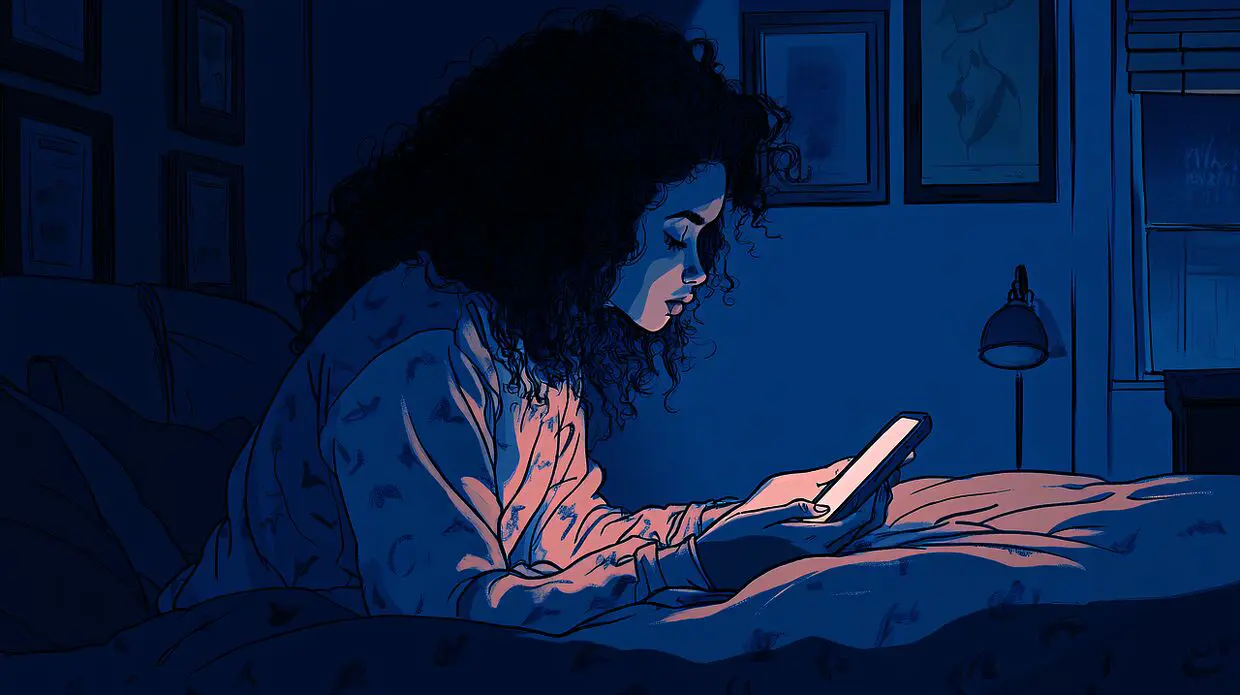
Bisi Adewale was passing her 14-year-old daughter's room when she noticed the light from her phone still glowing at half past midnight, long after lights out had supposedly happened.
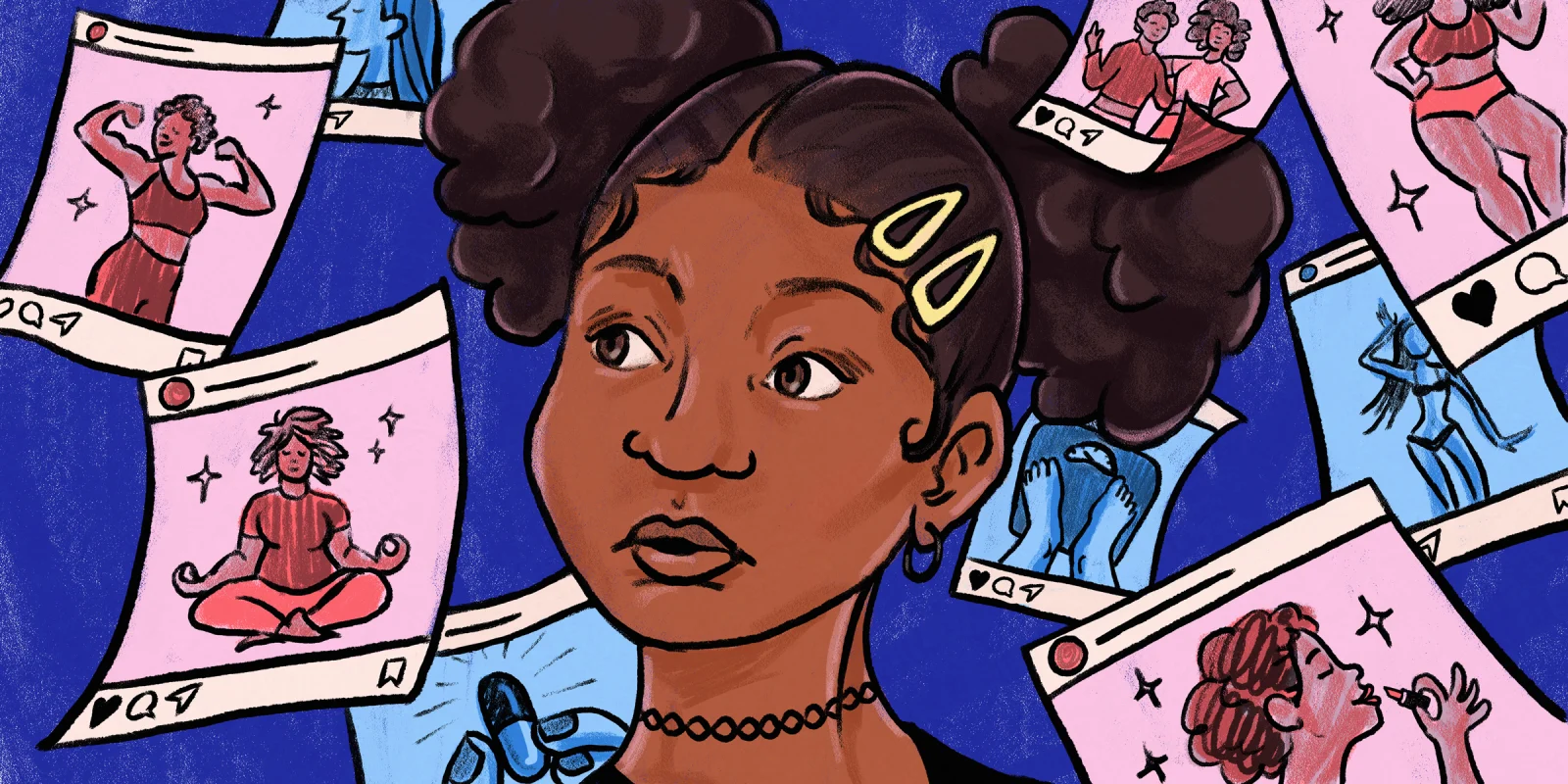
She pushed the door open gently and found Toluwalase sitting cross-legged on her bed, scrolling through her own camera roll with a frown, deleting photo after photo before she'd even posted a single one. "Baby, it's late," Bisi said softly, sitting beside her.
Toluwalase sighed and turned the phone toward her mother, showing a photo that looked perfectly lovely to Bisi's eyes.
"My nose looks weird here," Toluwalase said flatly. "And my skin isn't even. I look nothing like the girls online."
Bisi looked at the photo again, genuinely confused about what her daughter was seeing that she wasn't.
When Bisi mentioned it to her husband, Kunle, over breakfast the next morning, his first response was the same one many fathers give without meaning any harm by it: "She's just being a teenager. All girls go through this phase."
But their eldest daughter, Adaeze, 22 and studying at university in Lagos, overheard the conversation from the kitchen doorway.
She said quietly, “Dad, it's not just a phase. I went through it too. I still catch myself comparing my life to strangers online, and I'm not even a teenager anymore. It never fully leaves you once it starts that young."
Over the following weeks, Bisi paid closer attention, not just to Toluwalase's phone habits, but to the wider world her daughter was growing up inside — a world of filtered faces, curated bodies, viral beauty trends, and an endless, invisible audience judging every photo before it was even posted.
Teenage girls today are not simply more sensitive than previous generations; they are growing up inside a society and a digital world specifically engineered to make them doubt their appearance, their worth, and their place, often before they've even had the chance to fully know themselves.
Here are 13 honest reasons social media and society are crushing teenage girls today:
1. Filtered beauty standards
Heavily edited images create an impossible, artificial standard of beauty that real skin, real bodies, and real faces cannot match.
2. Constant comparison culture
Endless scrolling exposes girls to curated highlight reels of other people's lives, fueling quiet feelings of inadequacy.
3. Validation tied to likes and comments
Self-worth becomes dangerously linked to online approval rather than a girl's own sense of identity.
4. Early sexualization in media
Girls are often exposed to adult standards of appearance and attention long before they're emotionally ready for it.
5. Colourism and narrow beauty ideals
Many young girls internalise harmful messages about skin tone, hair texture, and features that don't reflect their natural beauty.
6. Cyberbullying and public judgment
Harsh comments on appearance or posts can happen instantly and publicly, leaving lasting emotional scars.
7. Influencer culture creating unrealistic lifestyles
Curated wealth, beauty, and "perfect" routines set standards most real families and bodies cannot sustain.
8. Pressure to grow up too fast
Trends often push younger girls toward adult styles, language, and behaviour before they're developmentally ready.
9. Society's double standards
Girls are frequently judged more harshly than boys for identical behaviour, appearance choices, or social media presence.
10. Academic and appearance pressure combined
Girls are often expected to excel academically while also maintaining a certain look, adding invisible extra weight.
11. Limited media literacy education
Many teens aren't taught how to critically question what they see online, so they absorb it as truth.
12. Silence around mental health struggles
Anxiety and low self-esteem linked to social media often go unspoken, mistaken by families as normal teenage moodiness.
13. Lack of safe, judgment-free conversations at home
Without open dialogue, many girls process these pressures entirely alone, without guidance or reassurance.
If your daughter is quietly deleting photos, comparing herself to strangers, or growing unusually quiet about her online world, know that this isn't vanity, and it isn't something she can simply be told to "get over."
It's the natural result of growing up inside a society and a digital culture built, often unintentionally, to make girls doubt themselves.
The most powerful thing any family can offer is a consistent presence, reminding teen girls, again and again, in ways they can actually hear, that their worth was never up for public vote in the first place.


Comments (0)
Please sign in to join the conversation.
Loading comments...