

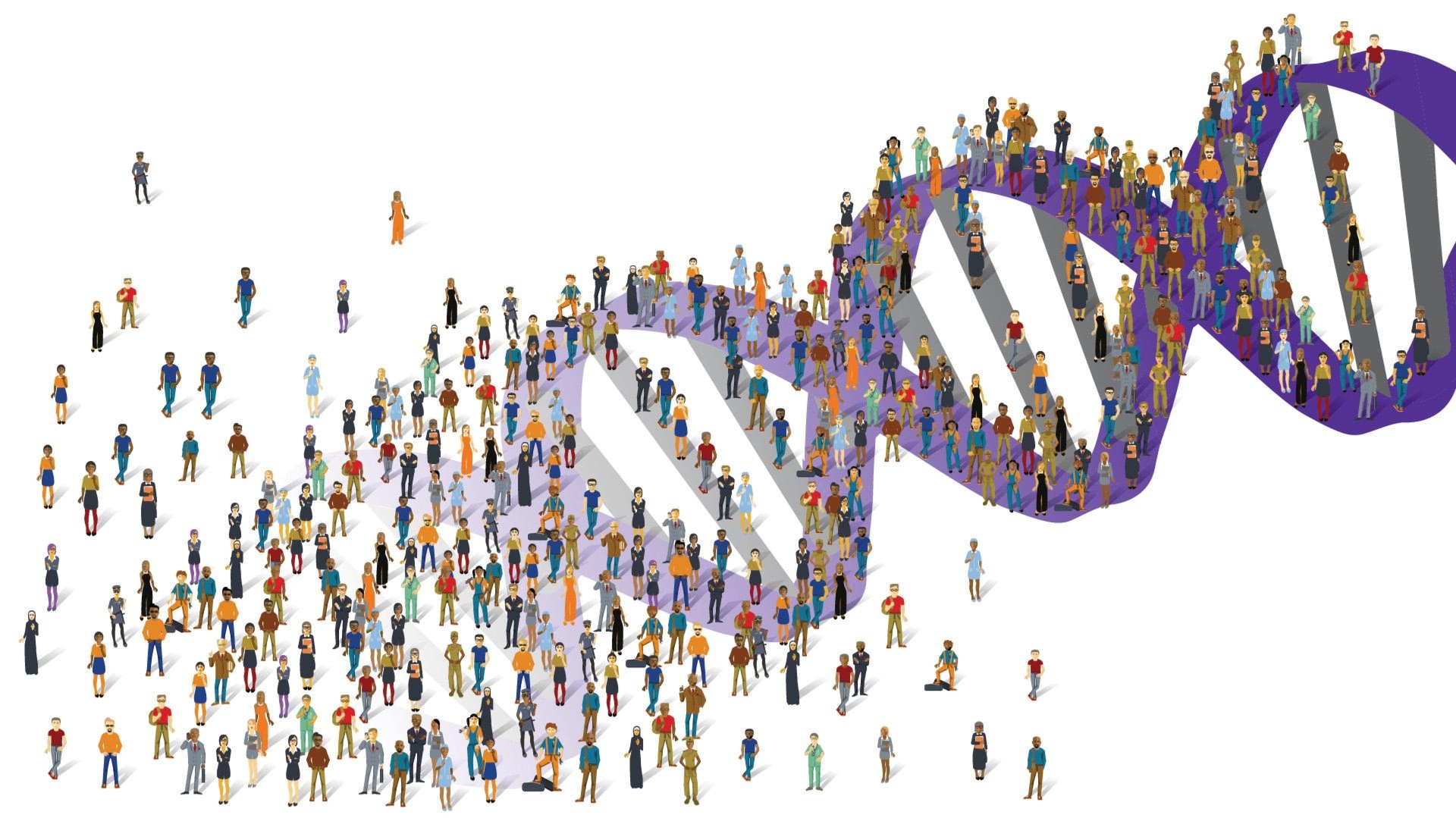
There are things we are taught from a very young age that bodies come in two neat, distinct types. Male or female. Blue or pink. Simple and sorted. But biology, as it turns out, has never read that rulebook. Nature is far more creative, far more varied, and far more human than any textbook has ever given it credit for.
That is where the word intersex comes in and it deserves far more than a footnote.
So, What Does Intersex Actually Mean?
An intersex person is someone born with physical sex characteristics. That is, chromosomes, hormones, genitalia, or reproductive organs that do not fit neatly into the typical definitions of male or female. This is not a condition someone develops later in life. It is simply the way some people are born.
Why DNA Testing Costs a Fortune Even Though Your Blood is Free
It is important to say this clearly: being intersex is not a disease. It is not an illness, a malformation, or something that needs fixing. It is a natural variation of the human body, in the same way that some people are born with different eye colours, different blood types, or different heights.
The term "intersex" covers a wide range of biological variations. Some people are born with chromosomes that do not follow the typical XX (female) or XY (male) pattern. Some have hormonal differences. Others may have internal reproductive anatomy that differs from what is expected. In some cases, the variation is visible at birth, whilst in others, it only becomes apparent during puberty or even adulthood, sometimes discovered entirely by chance.
How Common Is It Really?
You might be surprised. Estimates suggest that roughly 1.7% of the global population is born with intersex traits. To put that into perspective, that is about the same frequency as people born with red hair. Intersex people are not rare anomalies. They are your neighbours, your colleagues, your family members. They have always been here.
Yet despite this, many people have never heard the word, or if they have, they confuse it with other things entirely.
Intersex Is Not the Same as Being Transgender or Gay
This is one of the most common misunderstandings, and it is worth addressing directly. Being intersex refers to biological and physical characteristics. Rather, it is about the body one is born with. It has nothing to do with gender identity (how a person feels about who they are) or sexual orientation (who a person is attracted to).
An intersex person may identify as male, female, non-binary, or any other identity. They may be straight, gay, bisexual, or anything else. Their intersex status does not determine any of that. The two things are simply separate.
The Medical World Has Not Always Got It Right
Here is the part that needs to be said plainly and honestly: for decades, the medical establishment caused serious harm to intersex people, often with the best of intentions, but harmful all the same.
When intersex babies were born, doctors frequently recommended and parents often consented to surgical procedures performed in infancy to make the child's body conform to either male or female norms. These surgeries were carried out before the child could ever speak for themselves, before they could say what they wanted, before they had any say in what was done to their own body.
The consequences have been severe. Many intersex adults who underwent these procedures as infants speak of pain, loss of sensation, psychological trauma, and a profound sense of violation. They were never given a choice. Their bodies were altered, not because they were ill, but because their bodies made others uncomfortable.
Human rights organisations across the world, including the United Nations, have now condemned non-consensual intersex surgeries on children. The call is clear: wait, listen, and let the individual decide when they are old enough to do so.
What Intersex People Actually Want You to Know
If you speak to intersex people, and there are many who now speak openly and bravely about their lives, a few things come up again and again.
They want to be seen as whole people, not medical curiosities. They want their bodies to be respected, not corrected. They want doctors to offer information and support rather than scalpels and shame. They want parents to be given honest, compassionate guidance rather than fear. Above all, they want the world to understand that difference is not deficiency.
Many intersex people live full, happy, healthy lives. They fall in love. They pursue careers. They raise families. They laugh. They grieve. They are, in every meaningful sense, simply people with lives as rich and complex as anyone else's.
Why This Conversation Matters Right Now
We live in a moment when conversations about bodies, identity, and medical ethics are louder than ever. Yet intersex people are often left out of those conversations, too easily overlooked, too often spoken about rather than listened to.
The more we understand intersex variation as a normal part of human diversity, the better we become at building a world where every person, regardless of how their body was naturally made, is treated with dignity and care.
Nature drew no hard lines. Perhaps it is time we stopped pretending it did.

Comments (0)
Please sign in to join the conversation.
Loading comments...