


The short answer is that it depends entirely on what you compare it to, what tools you use, and, honestly, what you have been taught to believe about your own hair.

Natural hair simply means hair that has not been chemically altered to change its texture. No relaxers, no texturisers. Just your hair, growing exactly the way it came out of your scalp.
That sounds simple enough. However, if you have 4C coils or tightly packed 4B curls, you already know that "simple" is not the first word that comes to mind when Monday morning rolls around and you have somewhere to be by eight o'clock.
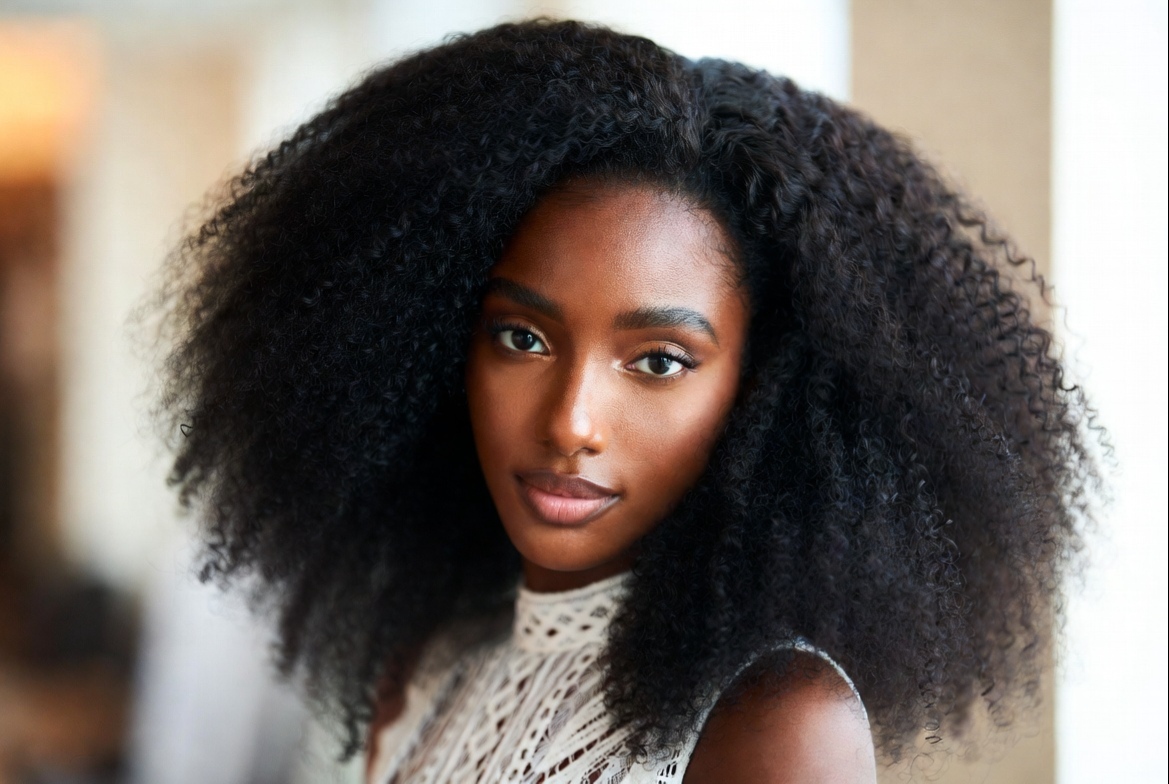
Natural hair, particularly Type 4 textures, which are most common among women of African descent, tends to be:
Highly porous, meaning it absorbs moisture quickly but also loses it just as fast.
Tightly coiled, which makes it harder for natural scalp oils to travel down the hair shaft, leading to dryness.
Prone to tangling, especially at the ends, because the curls loop back and catch each other.
Shrinkage-heavy, with some textures shrinking up to 75% of their actual length when dry.
None of this means natural hair is a burden. It means it has specific needs. Once you understand those needs, caring for your hair stops feeling like a fight and starts feeling like a rhythm.
What Relaxed Hair Demands in Exchange
A relaxer chemically breaks the protein bonds in your hair and reforms them in a straighter pattern. The result is hair that is easier to comb, quicker to style, and behaves more predictably, at least on the surface.
But here is what people often forget to mention.
Relaxed hair is permanently altered hair. That means it is, by definition, more fragile than it was before the chemical process. The same bonds that gave your natural coils their elasticity and strength? Gone. That is why relaxed hair requires very careful handling to avoid breakage, thinning, and long-term damage.
Maintaining relaxed hair properly means regular touch-ups, deep conditioning treatments to replace lost protein and moisture, heat styling that, if done too often, layers damage on top of already-processed strands, and avoiding overlapping chemicals, which can cause serious breakage at the line of demarcation, the point where your new growth meets the relaxed hair.
It is not easier. It's just a different kind of demanding.
Time, The Real Currency of Hair Care
Ask any natural hair woman how long wash day takes and watch her face. It is not unusual for a full routine from detangling to washing, deep conditioning, and styling to take anywhere from three to six hours for dense, longer natural hair.
That sounds daunting. For someone switching from a relaxed routine, it genuinely is an adjustment.
Here is what the narrative leaves out. Relaxed hair maintenance is not quick either. Factor in the time spent at the salon every six to eight weeks. Add the drying and flat-ironing time to get it smooth again after every wash. Count the days spent trying to preserve a style before the next touch-up.
The time difference exists, but it is far smaller than most people imagine, especially once you find the products, techniques, and protective styles that work for your specific hair.
The Moisture Equation Nobody Explains Properly
This is the real difference between the two, and once you understand it, everything else makes sense.
Natural hair is thirsty. Its coiled structure means natural oils cannot easily coat the entire strand, so the hair dries out faster. The solution is not complicated; it is just consistent. Water is the foundation of every natural hair routine. Leave-in conditioners, sealing oils like castor or jojoba, and regular deep conditioning treatments are the tools.
Relaxed hair also needs moisture, often more than people realise, because the chemical process strips the hair of its natural moisture barriers. The difference is that relaxed hair tends to look fine even when it is dry, right up until it snaps off.
Natural hair is more honest with you. It tells you when it is unhappy through shrinkage, frizz, and tangling. Relaxed hair often hides its damage until it is already significant.
Why It Matters
Something significant has been happening over the last decade. Across West Africa, the United Kingdom, the United States, Brazil, and the Caribbean, more women are returning to their natural texture. In Nigeria alone, the natural hair movement has exploded into a full industry, from local hair brands to YouTube tutorials to community groups with hundreds of thousands of members.
This is not just a trend. It is a reclamation.
For generations, textured hair was treated as something to be managed, controlled, or corrected. Relaxers were sold not just as a styling option but as a form of social currency. That is, a way to appear more professional, neat, and acceptable. Many women were introduced to their first relaxer before their tenth birthday, before they had any say in the matter.
Going natural, for many, is not just a hair decision. It is a cultural one.
So, Which Is Harder?
Neither is harder than the other in absolute terms. Natural hair is harder to learn. Relaxed hair is harder to sustain without damage. They are both hair that needs consistent care, the right products, and a routine that fits your life.
Natural hair asks for more moisture, more patience during detangling, and more time in the early stages of learning what your texture needs. Relaxed hair asks for careful handling, regular professional treatments, and vigilance around breakage at the line of demarcation.
The hair that is "harder" is whichever one you are doing without the right knowledge.
Where to Start If You Are Transitioning
If you are considering going natural, whether by transitioning gradually or doing a big chop, the most important thing to know is that there is a learning curve. Interestingly, that is completely normal.
Start with three simple pillars. Keep your hair moisturised. Handle it gently, especially when it is wet. Protect it at night with a satin or silk bonnet or pillowcase.
Everything else from the products to the styles and techniques, you will learn as you go. Your hair will teach you if you pay attention.
The hardest part of natural hair was never the hair itself. It was unlearning the idea that it needed to be fixed.
Comments (0)
Please sign in to join the conversation.
Loading comments...