

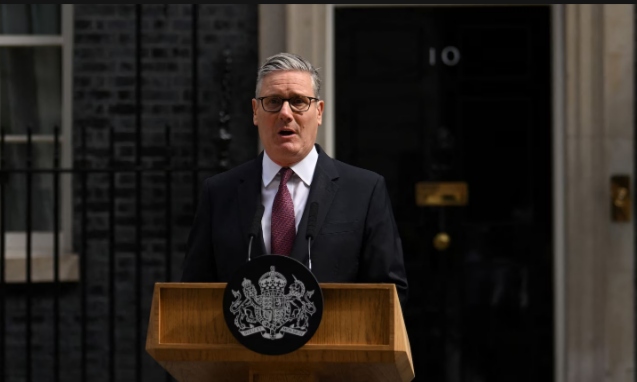
Keir Starmer, has announced his resignation as leader of the Labour Party, ending a tenure that took him from opposition wilderness to Downing Street in one of Britain's most dramatic political turnarounds, only to unravel in less than two years under the weight of mounting pressure from within his own ranks.
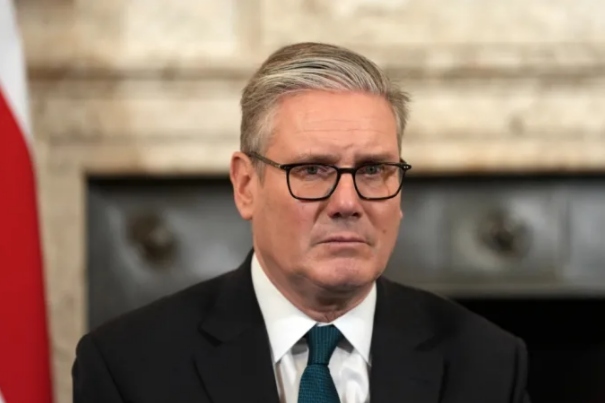
Speaking outside 10 Downing Street on Monday morning, Starmer confirmed he had already informed King Charles III of his decision, making official what days of intense speculation had made inevitable.
"I will resign as leader of the Labour Party. I have spoken to His Majesty the King this morning to inform him of my decision," he said.
The contest to elect his successor will begin in July, Starmer said, with the transition expected to be completed before Parliament returns from its summer recess in September.
He made clear he intends to remain in post as Prime Minister throughout the process, determined to ensure the country is not left without stable governance during the changeover.
"I will remain in post as prime minister until the contest is complete, and I will do everything I can to ensure an orderly handover of power," he added.
The immediate trigger for Starmer's decision was Andy Burnham's emphatic victory in last week's Makerfield by-election that sent shockwaves through the Labour Party and gave the former Greater Manchester mayor the parliamentary platform he needed to mount a formal leadership challenge.
Burnham's return to Westminster crystallised what many in Labour had been whispering for months: that the party needed a new direction, and a new face to lead it.
Burnham, widely regarded as the favourite to succeed Starmer, has repeatedly signalled his readiness to contest the leadership and is expected to be the dominant figure when the race formally opens.
His blend of northern pragmatism, populist appeal, and distance from the current government's difficulties has made him the instinctive choice for a party searching for renewal.
For Starmer, the resignation carries a particular sting.
Less than two years ago, he led Labour to a landslide general election victory that ended more than a decade of Conservative rule, a result that felt, in the moment, like the beginning of something.
He arrived in Downing Street as the man who had rescued Labour from the wreckage of the Corbyn years, rebuilt its credibility with voters, and delivered a majority that seemed to vindicate years of disciplined, methodical opposition.
That legacy now sits uncomfortably alongside the reality of a resignation delivered not on his own terms, but on the party's.
Britain now waits to see who will walk through that same black door next, and whether Labour, once again, can hold itself together long enough to find out.
THE NATION

Comments (0)
Please sign in to join the conversation.
Loading comments...