

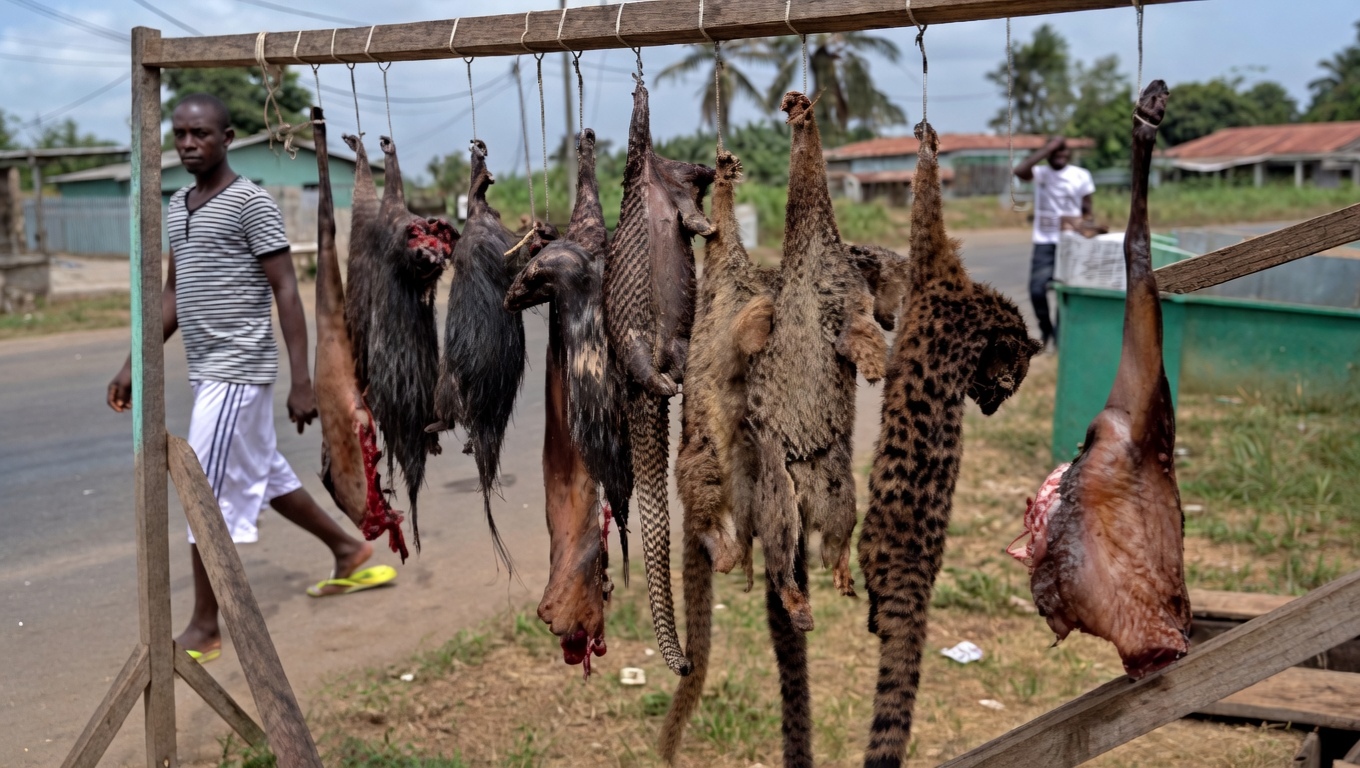
In many parts of Africa, bushmeat is not just food. It is culture, identity, and survival rolled into one. From the dense rainforests of the Democratic Republic of Congo to the rural villages of Sierra Leone, Guinea, and Nigeria, the sight of smoked antelopes, monkeys, bats, and forest rats hanging at the market is completely ordinary. For millions of people, bushmeat is the most accessible and affordable source of protein available. It has been eaten for generations, prepared by grandmothers who learnt from their grandmothers before them, and shared at family gatherings with great pride.
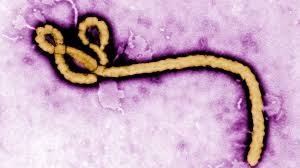
But here is the uncomfortable truth that no one wants to say out loud at the dinner table. Eating bushmeat, particularly certain wild animals, can expose you and your entire family to the Ebola virus. Meanwhile, Ebola, as many communities across West and Central Africa know all too well, is not something you want anywhere near your household.
What Exactly Is Ebola, and Why Is It So Dangerous?
Ebola virus disease is one of the most severe illnesses known to science. It causes what doctors call viral haemorrhagic fever. Meaning the virus attacks the body from the inside, damaging organs and causing bleeding that the body simply cannot control. Without proper medical care, the fatality rate can reach as high as 90 per cent in some outbreaks. You can be perfectly healthy on Monday and fighting for your life by Friday.
Your Belly Filling With Fluid? Here's What It's Telling You
The virus first appeared in 1976 in two simultaneous outbreaks, one near the Ebola River in what is now the Democratic Republic of Congo, and another in Sudan. Since then, it has returned again and again, tearing through communities in Uganda, Liberia, Sierra Leone, Guinea, and Nigeria. The 2014–2016 West African outbreak was the largest in history, killing over 11,000 people and devastating entire health systems.
So, Where Does Bushmeat Come In?
Scientists have spent decades trying to understand where Ebola comes from. The evidence, gathered through years of research across African rainforests, points firmly in one direction, wild animals. Specifically, fruit bats of the Pteropodidae family are widely believed to be the natural reservoir of the Ebola virus. This means the virus lives inside these bats without necessarily killing them, making the bats walking or rather, flying, carriers.
From bats, the virus can spread to other animals. Chimpanzees, gorillas, forest antelopes, and porcupines have all been found infected with Ebola in the wild. These are precisely the animals that end up in the bushmeat trade.
The moment a hunter comes into contact with an infected animal, whether through handling a carcass, being scratched, or coming into contact with blood during butchering, the virus can enter the human body. From that single point of contact, the infection can silently move into a family, a village, and eventually a region. Scientists call this a spillover event, and it is how almost every major Ebola outbreak in history has started.
The Bushmeat Chain
Think about the journey that bushmeat takes before it reaches your plate. A hunter goes into the forest and kills or finds a dead animal. He handles the carcass with his bare hands, sometimes carrying it on his back. He brings it to a market where a trader, often a woman, butchers it further, washing it and preparing it for sale. Customers handle the raw meat. Someone takes it home and cooks it. Multiple people eat from the same pot.
At any point along this chain, if the original animal was infected with Ebola, the virus has an opportunity to jump. Cooking the meat thoroughly does kill the virus because heat destroys it. However, the risk is greatest during handling, before the meat ever reaches the fire.
This is why public health experts consistently warn that the greatest danger is not in eating fully cooked bushmeat. Instead, it is in touching raw, infected carcasses with unprotected hands.
Why Communities Are Particularly Vulnerable
In many rural communities, the relationship between people and the forest is centuries old. Wild game has long been part of local diets, traditions, and survival systems long before modern food systems reached these regions. So for many people today, hunting is deeply connected to cultural identity, local knowledge, and a way of life passed down through generations.
The problem is compounded by a lack of veterinary surveillance. Unlike domestic animals, wild animals are not monitored for disease. There is no way for a hunter to look at a dead chimpanzee at the edge of the forest and know whether it died of old age or Ebola. In fact, finding a freshly dead or unusually lethargic animal in the forest can seem like good fortune, since it's easy meat and no effort required. However, dead and dying animals are among the highest-risk sources of infection.
What Can Actually Be Done?
The conversation around bushmeat and Ebola must be honest, respectful, and rooted in reality. Telling communities to simply "stop eating bushmeat" without offering viable alternatives is not a solution. Rather, it is an insult to the complexity of the situation.
What genuinely helps is education that reaches people where they are. Communities need to know which animals carry the highest risk, particularly bats and non-human primates like chimpanzees and gorillas. They need practical guidance on protective handling such as wearing gloves when butchering, washing hands thoroughly, and avoiding contact with animals found already dead.
Governments and health organisations across must invest in community health workers who can carry these messages into villages in local languages, without condescension and without asking people to abandon their culture entirely.
There also needs to be a serious investment in food security. When people have reliable, affordable alternatives to bushmeat, the demand for high-risk wild animals naturally reduces. This is a long-term solution, but it is the right one.
In Conclusion
Bushmeat is part of African heritage. That truth deserves respect. So does the truth that certain wild animals, particularly bats, chimpanzees, and antelopes, can carry the Ebola virus, and that handling them without protection has started outbreaks that have killed thousands of people across the continent.
The goal is not to shame anyone for what they eat or how they have always lived. Rather, it is to ensure that families get to keep their traditions without paying for them with their lives.



Comments (0)
Please sign in to join the conversation.
Loading comments...