

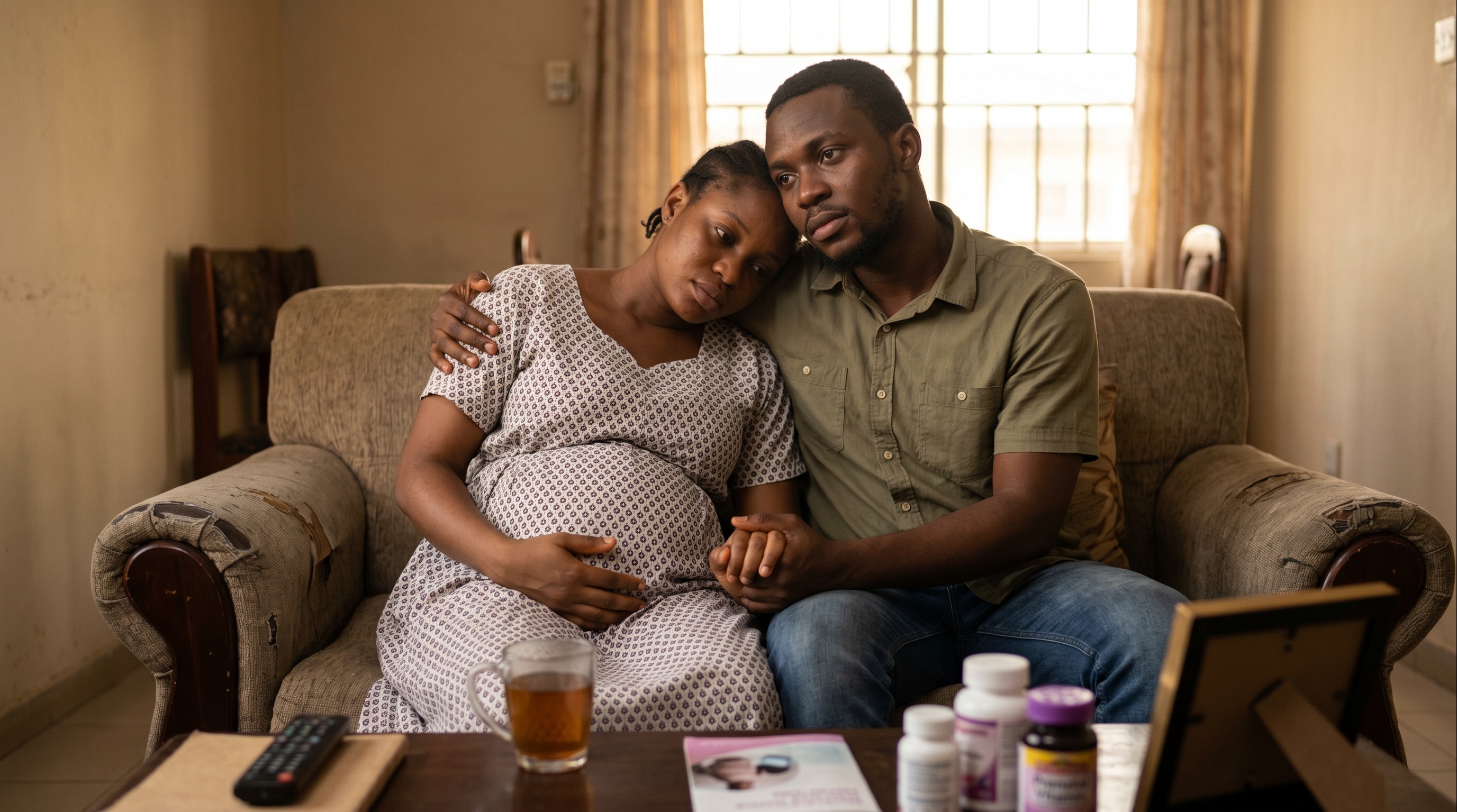
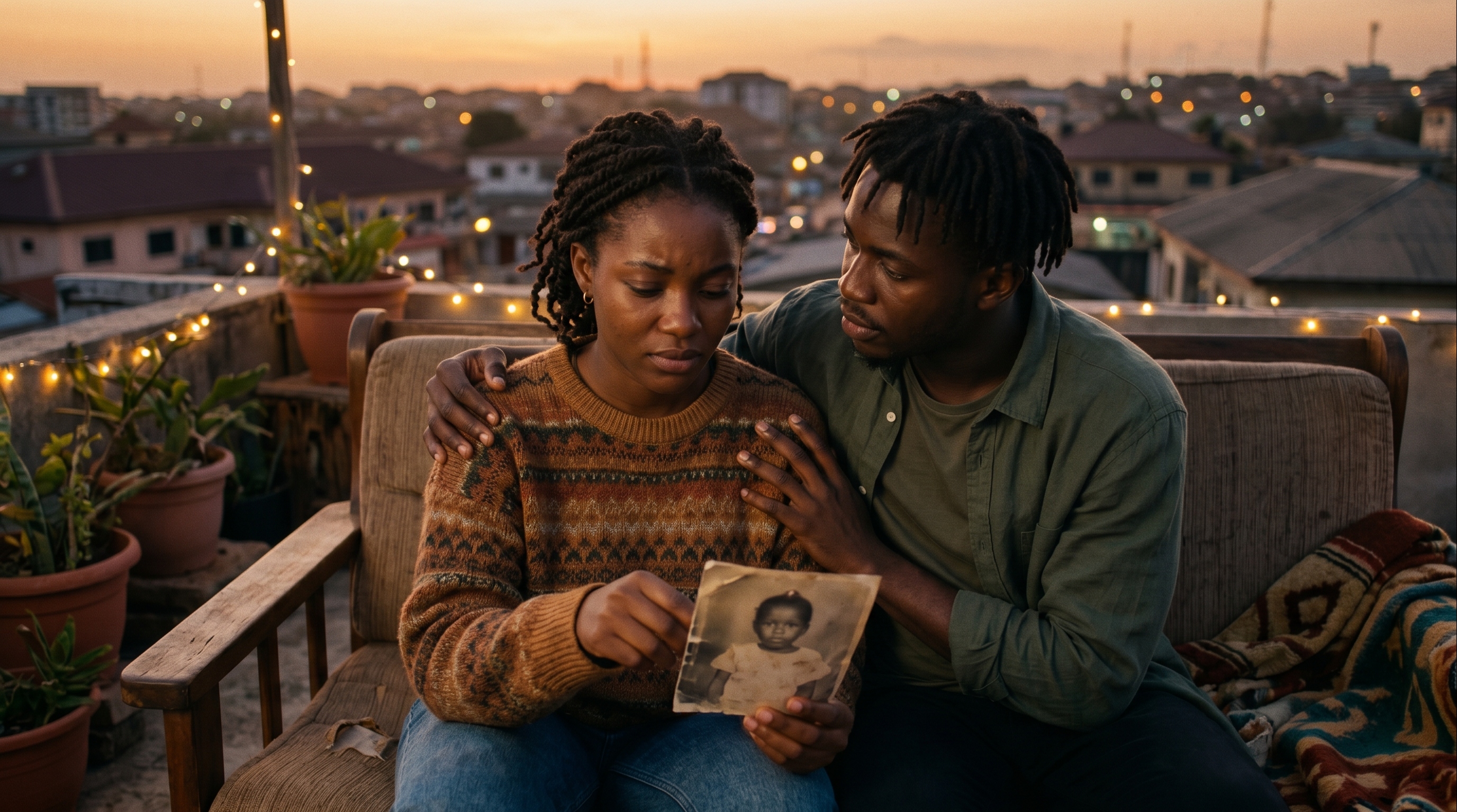
It started on a Tuesday morning when Adaeze, 31 years old and sixteen weeks pregnant, sat on the cold tiles of her bathroom floor and cried, not because something had gone wrong medically, but because she could not explain why she felt so hollow inside. Her body was doing everything right. The scans looked perfect.
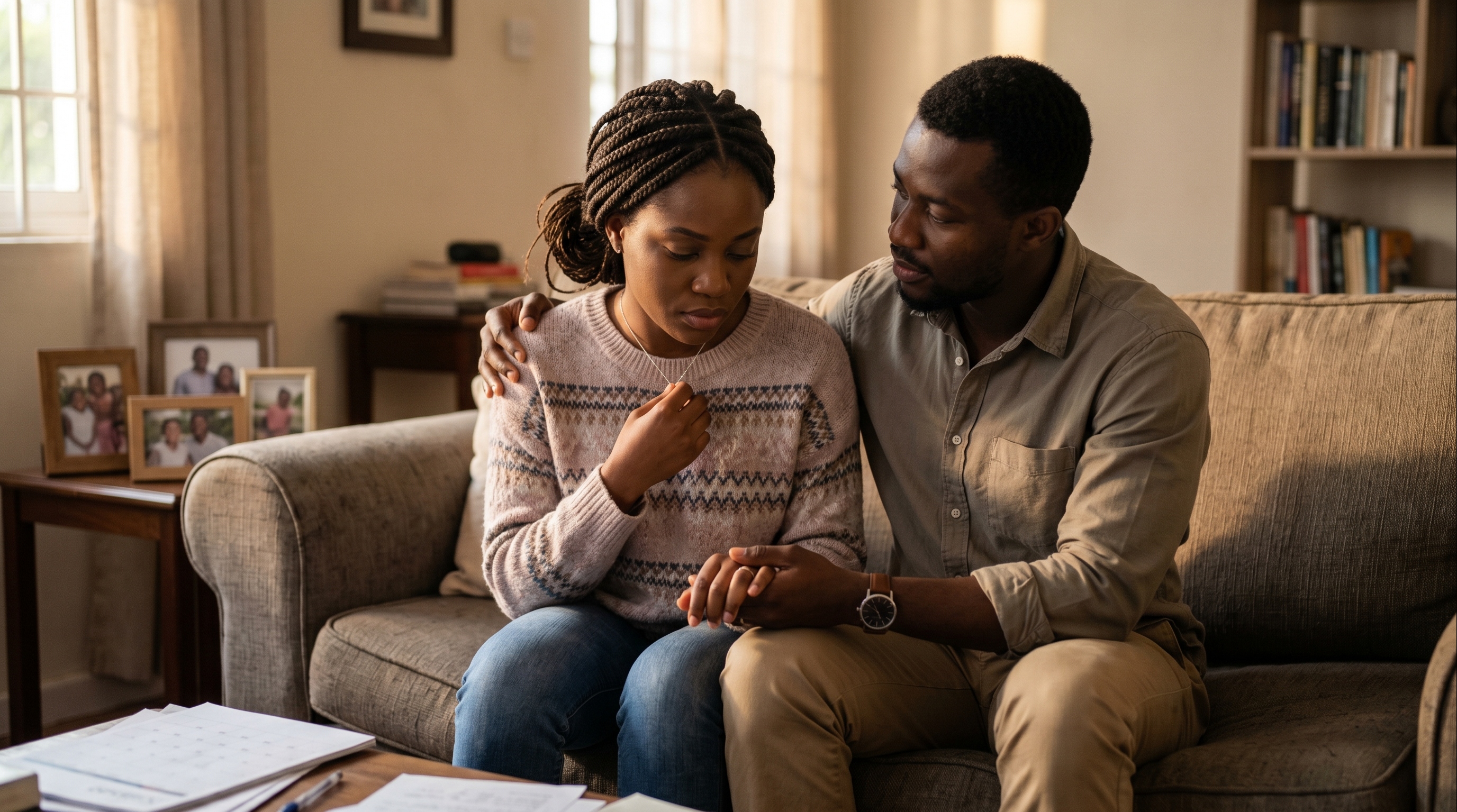
The doctor had said, "Congratulations, everything is progressing beautifully," and Adaeze had smiled and nodded, clutching her handbag as she walked out of the clinic, stepping into the bright Lagos afternoon, and thinking — why don't I feel beautiful at all?
She had wanted this baby. She and her husband Emeka had tried for over a year, praying, planning, hopeful. When the test finally showed two lines, she had screamed and he had lifted her off the floor in pure joy.
But somewhere between the first trimester nausea and the slow swell of her belly in the second, something she hadn't expected crept in — a quiet, persistent emotional fog that made her question everything she thought she knew about herself, her marriage, her readiness, and her worth.
Adaeze did not know how to name what she was feeling. So she did what many women do — she folded it neatly and put it somewhere deep inside, and kept moving.
Here is what nobody tells you about pregnancy: the emotional experience of growing a human being is not a straight line of joy and glowing skin and wholesome cravings. It is a deeply complex psychological journey that involves grief, fear, identity upheaval, relational strain, and a kind of loneliness that is hard to articulate precisely because everyone around you insists you should be happy.
When society hands a pregnant woman a script of cheerfulness and gratitude, and her inner world does not match that script, she is left with a very specific kind of isolation: the isolation of feeling out of place in her own story.
Antenatal Depression and Prenatal Anxiety affect a significant number of pregnant women worldwide, and yet they remain dramatically underdiagnosed and underdiscussed where the prevailing cultural narrative around pregnancy tends to emphasize communal celebration and gratitude over individual emotional truth.
The pressure to perform happiness during pregnancy is not just a social expectation. To be pregnant and unhappy is somehow read as ingratitude, or worse, as a bad omen.
And so women swallow it.
The truth about emotional pregnancy struggles is that they are not a sign of weakness, instability, or unreadiness for motherhood. They are, in many ways, a sign of depth of a woman who is paying attention to the enormity of what is happening inside and around her.
You are not just growing a baby; you are growing a new version of yourself, and that process involves a kind of dying of who you were before, of what your body looked like and felt like before, of the freedom you had before, of the version of your relationship that existed before.
Grief for what is changing is not the opposite of love for what is coming. Both things are true at the same time, and allowing yourself to feel both is not a contradiction.
The rise of pregnancy content on social media has created a parallel universe of curated gestational bliss, and while none of that is wrong in itself, it creates a background noise of inadequacy for women whose experience looks and feels nothing like that.
The fear of loss. For women who have experienced miscarriage, failed pregnancies, or fertility challenges before, every week of a new pregnancy can feel like walking through a minefield of hope and dread simultaneously.
The fear of joy. The inability to be present in a good thing because you have been ambushed by good things before. If this is you, please know that what you are doing is not pessimism. It is survival.
Your body is doing something extraordinary and strange and physically demanding, and the way it changes, producing emotions that are difficult to sit with.
You do not have to pretend that every part of this is beautiful, in order to be a good mother. You do not have to love every stage of pregnancy in order to love your child. Your emotional honesty is not a threat to your baby. Seeking support is not weakness. It is one of the most responsible things you can do during this season.
You deserve that understanding. You deserve to be in spaces where your emotional truth about pregnancy is received without judgment and without the pressure to rearrange it into something more palatable.
Pregnancy is not the enemy of your emotional health. But silence is.
The version of pregnancy that asks you to fold your fears away and perform wellness for the comfort of others is the version that isolates you, exhausts you, and robs you of the support you deserve.
And being human, fully and honestly human, is the very best thing you can bring into the room when your child arrives.
Comments (0)
Please sign in to join the conversation.
Loading comments...