

The Darko household had been buzzing all week with the kind of happy noise that fills a home when something good is coming. Kobina was turning ten, and his mother Serwa had promised him a proper celebration with his three closest friends from school, a chocolate cake from the bakery on the main road, and the particular freedom of a Friday afternoon with nowhere to be.
The sitting room had been cleared and decorated with orange and yellow streamers that Kobina's younger sister Akua, seven, had insisted on hanging herself, climbing on the dining chairs with the focused seriousness of someone performing surgery.
Their father Fiifi had blown up balloons until his cheeks ached and then pretended not to notice when Akua sat on two of them, and they burst like gunshots, sending her tumbling backwards onto the sofa in a shriek of laughter.
It was a good afternoon. The kind of afternoon families talk about with warmth.
By Sunday, it was a different story entirely.
Kobina woke up holding his stomach with both hands, his face carrying the particular grey look that parents recognise immediately and dread. By midday, two of the three friends who had attended the party had called to say their children were unwell too.
By Monday morning, Serwa had received a message from the school group chat confirming that four children in Kobina's class were all experiencing stomach upsets. The school nurse had asked parents to check that children were washing their hands properly, especially before eating.
Serwa sat with her phone in her hand for a long moment after reading that message.
She knew, with the clarity that parents eventually arrive at, exactly what had happened.
She had watched Kobina and his friends eat the birthday cake with hands that had spent the afternoon touching balloons, door handles, the television remote, each other's snacks, and the compound floor where they had played.
She had meant to ask them to wash their hands before the cake. She had been distracted by the candles and the singing and the camera. She had assumed, in the way that busy parents assume things, that someone would have washed somewhere along the line.
Nobody had.
Hygiene is one of those things that feels obvious until it isn't.
Every parent knows, in theory, that children should wash their hands and brush their teeth and bathe regularly. But knowing something in theory and building it into the living, breathing, sometimes chaotic daily rhythm of family life are two very different things.
Hygiene habits are not instinctive. They are taught, modelled, reinforced, and practised until they become second nature. And the window for establishing them firmly is childhood, specifically the years when children are still in the family home, and the family environment is their entire world.
What happened at Kobina's birthday party was not a catastrophe. No one was seriously ill. But it was a clear, gentle lesson about what poor hygiene habits or the absence of enforced hygiene habits can do in a very short time, in a very ordinary situation. And Serwa, to her enormous credit, decided to treat it as exactly that: a lesson.
So she sat down with Kobina and Akua that Monday evening, after dinner had been cleared and the kitchen was quiet, and she said: "I want us to talk about something important. Not because anyone is in trouble. But because I think we've been a bit careless about some things, and I want us to fix that — together."
Fiifi joined them at the table with his glass of water, and what followed was one of the most genuinely useful family conversations the Darkos had ever had.
Here is what came out of it — hygiene practices that are truly non-negotiable.
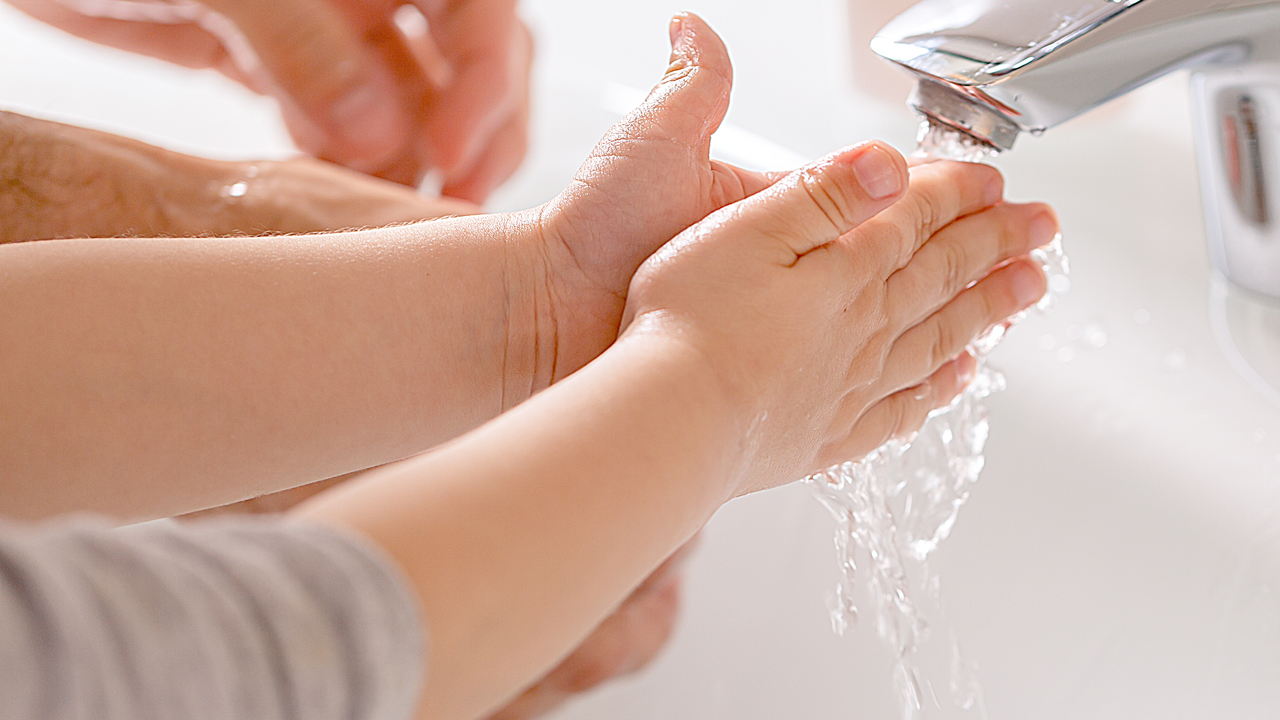
Handwashing: the single most powerful hygiene habit in existence.
This is not an exaggeration. Clean hands prevent more illness than almost any other single action a person can take. The human hand touches between 300 and 600 surfaces per hour, door handles, phones, bags, food, faces, other people, and each surface is a potential vehicle for bacteria and viruses that cause everything from the common cold to serious gastrointestinal infections. The critical moments for handwashing that children must understand and practise without exception are: before eating anything, after using the toilet, after touching animals, after coughing or blowing the nose into the hand, after playing outdoors, and after touching shared surfaces in public places like schools and markets. Washing must use soap and clean water for at least twenty seconds — not a quick rinse, but a proper, thorough wash including between the fingers and under the nails. Kobina, when Serwa demonstrated this properly, admitted that he had never actually counted to twenty in his life while washing his hands. He started that evening.
Dental hygiene: protecting the gateway to your whole body.
Akua had a loose tooth and was deeply invested in the mythology of the tooth fairy, which gave Fiifi an excellent opening to explain that healthy teeth were worth protecting for reasons far beyond appearances. The mouth is directly connected to the rest of the body, and poor oral health contributes to infections, heart conditions, and digestive problems over time. Children must brush their teeth thoroughly twice daily: once in the morning after waking and once at night before sleeping. Brushing must cover all surfaces of every tooth and take at least two minutes. Rinsing after meals when brushing is not possible, flossing for older children, and attending dental check-ups at least once a year are all practices that must be established early and maintained consistently. The sugar in the snacks and drinks that children consume most often feeds the bacteria that cause tooth decay. Children who understand this connection make better choices, not out of fear, but out of knowledge.
Bathing and body hygiene: daily, thorough, and non-negotiable.
Bathing every day is not a luxury — it is a basic health requirement, particularly for children who are physically active, play outdoors, and are in close contact with other children throughout the day. Sweat, dust, bacteria, and dead skin cells accumulate on the body continuously, and without regular washing, they create conditions for skin infections, body odour, and fungal issues that can become persistent and uncomfortable. Bathing must cover all areas of the body, including areas that are easy to miss — behind the ears, between the toes, in the armpits, and the scalp. Hair must be washed regularly as well, and kept clean and neat, because the scalp can harbour bacteria and fungi that cause itching and infection. Serwa made a specific point of explaining to Kobina and Akua that bathing quickly without soap, which both of them had been known to do when in a hurry, was not actually bathing — it was just getting wet. The soap is the point. The thoroughness is the point.
Nail hygiene: small spaces, big risks.
Long, dirty fingernails are one of the most efficient vehicles for transferring bacteria and parasites from surfaces into the mouth and body. Children who bite their nails, eat with unwashed hands, or handle food with long nails are creating direct pathways for illness into their digestive systems. Nails must be trimmed regularly and cleaned thoroughly every time hands are washed. This applies to toenails as well, which are often neglected and can develop fungal infections when kept long and in warm, enclosed footwear. Fiifi, who was a meticulous man about his own nails, made this point with perhaps slightly too much personal conviction, but both children listened.
Nose and throat hygiene: managing what goes out matters as much as what goes in.
Sneezing and coughing into an open hand, and then continuing to touch surfaces, food, and other people, is one of the fastest ways to spread respiratory infections. Children must learn, from as early as possible, to cough and sneeze into the crook of their elbow, not their palm. When tissues are available, they should be used and disposed of immediately after one use. Blowing the nose should always be followed by handwashing. These habits feel small, but in a classroom of thirty children where one child is carrying a respiratory virus, the difference between a child who covers properly and one who doesn't can mean the difference between the virus staying with one person or moving through an entire class in a week.
Ear hygiene: gentle, consistent, and careful.
Children are often fascinated by their ears in ways that lead to dangerous habits like using sharp objects, fingers, or pencils to clean inside the ear canal, which can damage the delicate skin and eardrum and introduce bacteria. The outer ear should be cleaned gently with a cloth during bathing. The ear canal is self-cleaning and does not require internal intervention. If a child complains of pain, itching, or discharge in the ear, that requires a medical professional, not a cotton swab poked too far in. Teaching children to respect the limits of self-care is itself an important part of health education.
Eye hygiene: protecting sight with simple daily habits.
Rubbing the eyes with unwashed hands is one of the most common ways eye infections are transmitted among children. Conjunctivitis travels almost entirely via hand-to-eye contact. Children must understand that the eyes are sensitive, and that touching them with unwashed hands, sharing eye drops or towels, or rubbing them when outdoors in dusty conditions creates real risk. Eyes should be gently cleaned with clean water during bathing, and any redness, discharge, or persistent irritation should be reported to a parent and assessed medically.
Toilet hygiene: completing the process properly.
This is a conversation that parents sometimes feel awkward about having explicitly, but children need it said clearly. Using the toilet correctly is a non-negotiable hygiene practice. Children who develop careless toilet habits carry bacteria on their hands that cause intestinal infections, and they do so without any awareness that it is happening. Serwa had noticed, not for the first time, that Kobina's version of "washing hands after the toilet" had been disturbingly brief. She was direct about this, and specific, without making it a source of shame — just a clear expectation with a clear reason attached to it.
Food hygiene: what touches your food matters.
Children must understand that food safety begins before the first bite. Eating with unwashed hands, sharing utensils without washing them, eating food that has been sitting uncovered for long periods, and drinking from shared bottles or cups all create risk. At school, in particular, where children share snacks informally and eat in environments that may not have adequate handwashing facilities, children who have strong personal hygiene habits are their own best protection. Packing food in covered containers, carrying a small hand sanitiser for situations where soap and water aren't available, and understanding that food on the floor is not safe to eat, are all practical lessons that belong in every child's knowledge bank.
Clothing and uniform hygiene: what you wear carries what you've been through.
School uniforms and daily clothing accumulate sweat, dust, bacteria, and environmental contaminants throughout the day. Wearing the same clothes for multiple days without washing is a hygiene risk. Children must have a consistent habit of changing out of school clothes immediately upon arriving home, and school uniforms must be washed regularly, not just when they visibly need it. Socks and underwear must be changed daily without exception. Shoes, particularly closed shoes worn without socks, can become breeding grounds for fungi that cause conditions like athlete's foot, which is a persistent and uncomfortable infection that is entirely preventable with the right habits.
Hygiene education is not a one-time conversation, but a continuous, living part of how a family functions.
Children who are told why a habit matters, rather than simply commanded to do it, are far more likely to internalise it. They are also far more likely to practise it when you are not watching, which is the entire point.
The goal is a child who washes their hands because they understand what is at stake and they have made that knowledge their own.
That kind of understanding is built at home, in ordinary conversations, over many ordinary evenings, and ends with everyone knowing something important that they didn't know before.


Comments (0)
Please sign in to join the conversation.
Loading comments...