

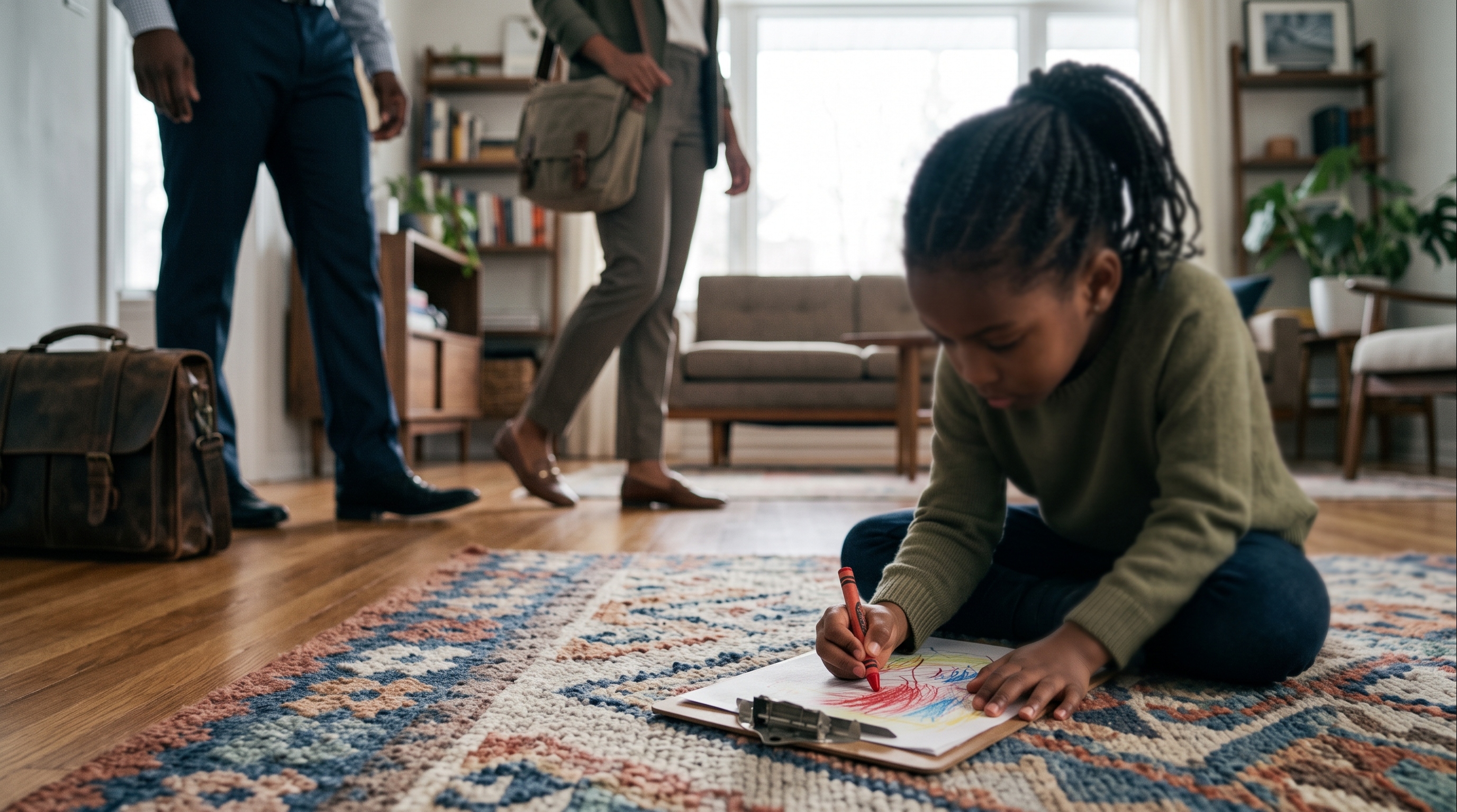
Ndapewa was seven years old, sitting cross-legged on the living room floor in Windhoek, colouring a picture of a lion she had drawn herself, when her parents walked in from work within minutes of each other.
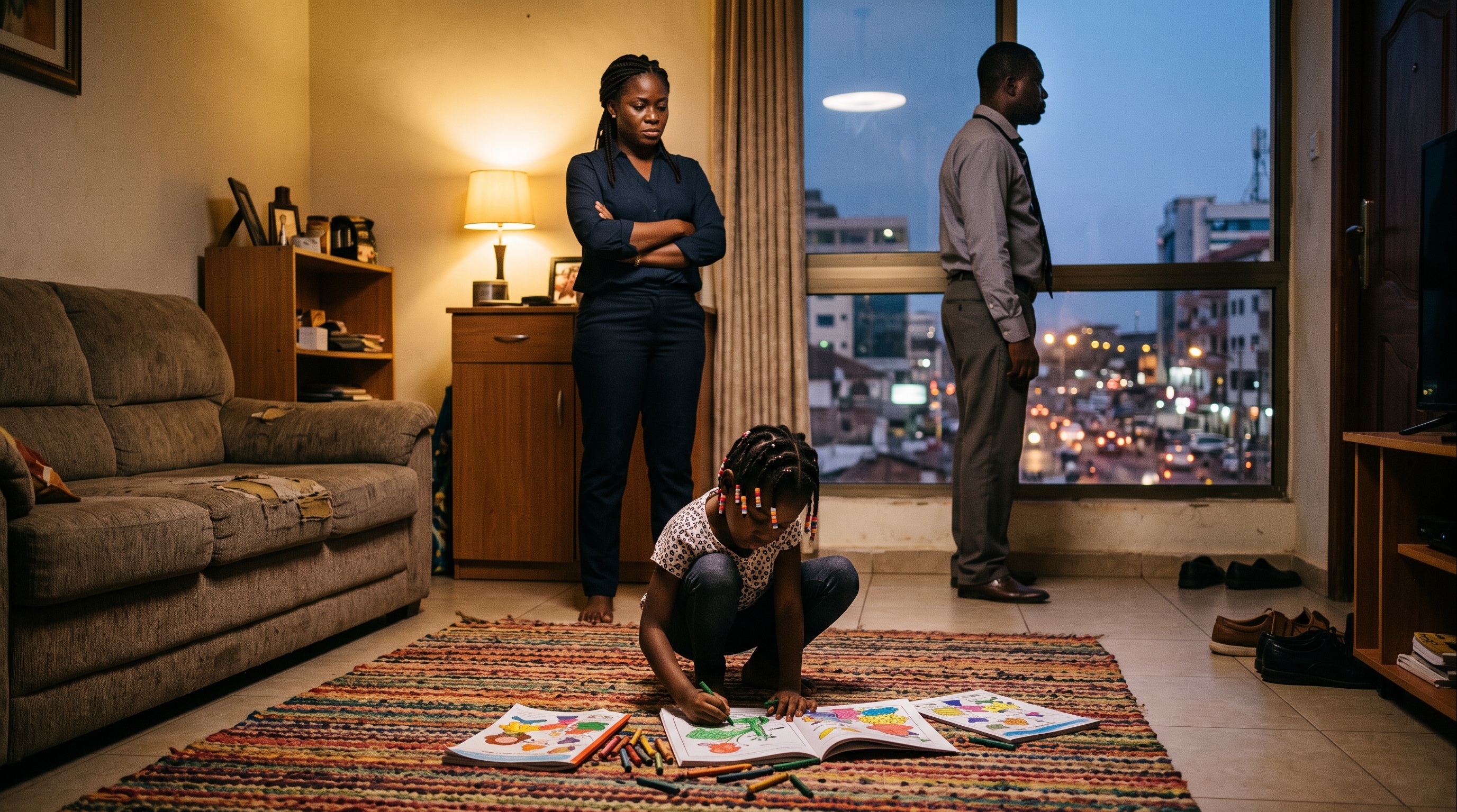
Her father, Tjikuua, came in first with his jacket half off, phone already to his ear, a sharp exhale escaping him before he had even shut the door properly. Her mother, Kauna, followed shortly after, arms full of groceries, eyes reading the room immediately.
The two of them exchanged no greeting.
Just a tight silence that settled over the house like harmattan dust; invisible but suffocating.
Ndapewa looked up from her drawing for just a moment. Then she looked back down. She said nothing. She just coloured a little harder.
Nobody in that room knew it then, but something was being written into Ndapewa that evening. In her nervous system.
Children are not passive recipients of the lessons we plan for them. They are extraordinarily active observers of the lessons we do not plan at all.
The way Tjikuua handled his frustration that evening, the way Kauna absorbed the tension and went quiet, the way the house shifted its entire emotional temperature based on what two adults carried through the front door was unwritten, unintended, but deeply absorbed.
This is called observational learning.
But you do not need a textbook to understand it. You just need to think back to your own childhood and ask yourself which lessons from your parents you remember most vividly.
You can tell a child to be kind a thousand times. But if they watch you speak to your spouse with contempt, they are learning something else entirely.
You can teach a child to apologise, but if they have never seen an adult in their home genuinely say sorry and mean it, they will not truly understand what accountability looks and feels like.
You can talk to a child about respect until your voice gives out, but what registers deepest is whether the adults in their world show respect to each other — especially when things are hard.
The moment you understand that your child is watching and internalising far more than you realise, you begin to see your own behaviour through a completely different lens.
Your home is your child’s first classroom, and you are their first and most influential teacher, not because of what you say, but because of what you do, how you handle anger, how you treat people you disagree with, how you respond to disappointment, how you love, how you repair, and how you show up on the days when showing up is genuinely difficult.
Here are the specific things children are absorbing from the adults around them, often without a single word being spoken:
1 - They are learning what love looks like by watching how the adults in their home treat each other.
2 - They are learning how to handle conflict by watching every disagreement that plays out in front of them.
3 - They are learning their own self-worth by observing how much they are listened to, acknowledged, and made to feel that their presence in a room matters.
4 - They are learning what emotional safety feels like, or does not feel like, based on the atmosphere of the spaces they inhabit daily.
5 - They are learning relationship patterns that they will carry directly into their friendships, their romantic relationships, and eventually their own families.
6 - They are learning whether vulnerability is safe or dangerous based on how the adults around them respond to emotion.
7 - They are learning the value of repair, whether mistakes can be acknowledged and corrected, or whether they are simply swept under the rug and silently carried.
None of these lessons appears on a school timetable. But every single one of them is being taught, every single day, in the ordinary moments of home life.
What children need is something far more achievable: they need to see the adults in their lives trying.
They need to witness repair after rupture.
They need to observe what it looks like when a grown person recognises they were wrong and chooses to do better.
They need to see emotions being handled honestly.
The goal is not a home without hard days.
The goal is a home where hard days are handled in ways that teach children resilience, emotional intelligence, and the foundational understanding that people who love each other can still disagree, still struggle, still fall short, and still choose each other and themselves, again.
Comments (0)
Please sign in to join the conversation.
Loading comments...