

Uatjitue Kaurivi sat at the small wooden desk in his room, laptop screen glowing against the evening dark, three browser tabs open at once — one for a coding scholarship application, one for a university prospectus his aunt had sent him, and one, quietly minimised, for a music production tutorial he watched every night but never told anyone about.
His mother, Uapavi, knocked gently and found him staring blankly at the screen, cursor blinking in an empty text box, visibly stuck.
"What's wrong?" she asked, sitting on the edge of his bed.
He exhaled slowly and said, "Everyone keeps telling me what I could become. Nobody's asked me what I actually want to become."
That sentence captures, almost perfectly, the strange, layered reality facing teenagers today.
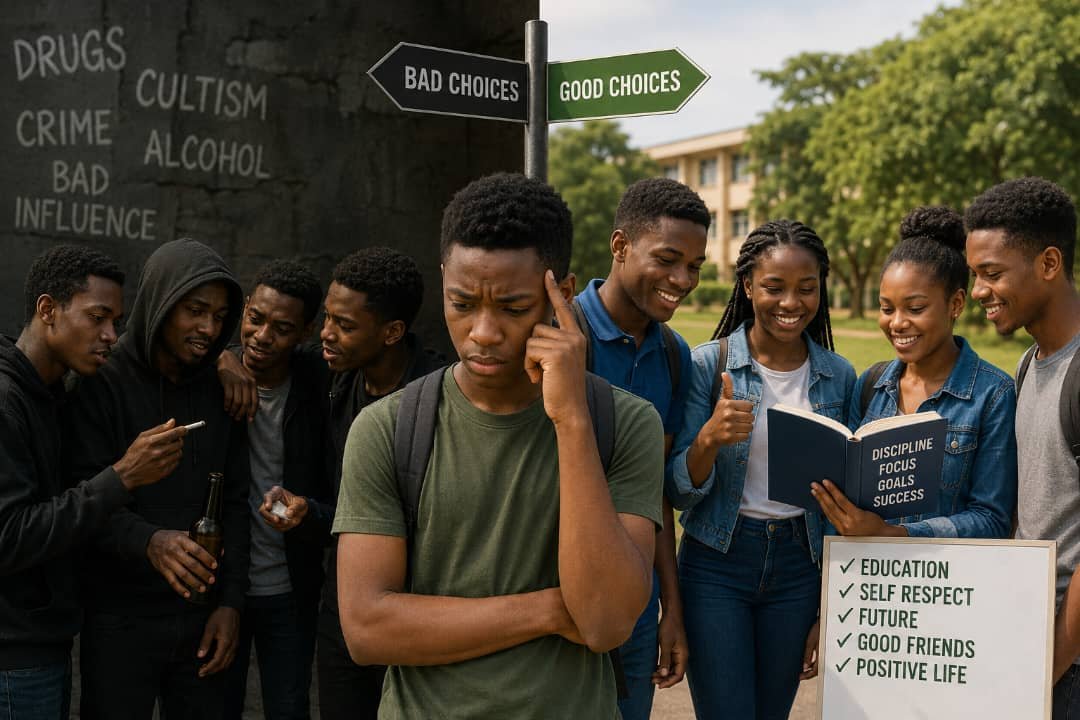
Today's teenagers are standing at an unusual crossroads, one earlier generations never quite faced in the same way.
They have more genuine opportunity available to them than almost any generation before, yet that same openness has arrived bundled with pressures that can feel quietly overwhelming.
Neither the opportunity nor the pressure tells the full story on its own.
Understanding both, side by side, is what actually helps parents support their teenagers well.
1. The internet has handed teenagers genuine access to global opportunity. Uatjitue could realistically apply for an international coding scholarship from his bedroom, something entirely unavailable to his own parents at his age, and that access is a real, meaningful gift.
2. That same access creates decision fatigue few previous generations experienced. With dozens of visible paths — content creation, coding, entrepreneurship, traditional careers — choosing one path can feel less like freedom and more like quiet paralysis.
3. Social media has turned peer success into constant, visible comparison. Watching classmates announce scholarships or business launches online creates a steady undercurrent of pressure that previous generations only encountered occasionally, at reunions or through gossip.
4. Economic uncertainty makes "traditional" career paths feel less guaranteed. Many teenagers watch older siblings or cousins struggle to find stable work despite qualifications, which quietly reshapes how much trust they place in following a strictly conventional path.
5. Entrepreneurship has become both a genuine promise and an unspoken expectation. Starting a small online business feels achievable now in ways it never did before, but that same possibility has created pressure to "hustle" constantly, even during ordinary teenage years meant for simply growing up.
6. Mental health conversations have opened up, but not evenly. Uatjitue's generation talks about anxiety and burnout more openly than his parents ever could, yet support systems and understanding adults haven't always caught up at the same pace.
7. Identity exploration now happens partly in public view. Where earlier generations quietly figured out their interests and values privately, today's teenagers often do this work while being watched, judged, or celebrated online, raising the emotional stakes considerably.
8. Education itself has diversified beyond the classroom. Free online courses, tutorials, and communities mean a teenager can genuinely teach themselves skills that once required formal, expensive training, expanding what's possible far beyond what a school timetable alone can offer.
Please know that indecision at this stage isn't failure. It's a completely reasonable response to an unusually wide, unusually fast-moving set of choices.
9. Financial pressure often arrives earlier than it used to. Many teenagers now feel expected to contribute financially to their households or fund their own ambitions through side income, compressing childhood timelines that once allowed more space simply to explore.
10. Community expectations and personal ambition don't always align neatly. Uatjitue's extended family expected a conventional degree path, while his own quiet curiosity pulled toward music production, creating a tension between honouring family hopes and pursuing personal interest.
11. Global exposure has broadened what teenagers believe is possible for their futures. Seeing peers worldwide achieve unconventional success has genuinely expanded the imagination of what a life can look like, well beyond previously familiar career templates.
12. That same exposure can quietly erode appreciation for local, achievable paths. Chasing a distant, glamorised version of success sometimes overshadows perfectly solid, realistic opportunities closer to home, simply because they don't look as exciting online.
13. Teenagers today are expected to be both ambitious and emotionally resilient simultaneously. Balancing visible achievement with genuine emotional wellbeing has become an unspoken, exhausting expectation that few adults explicitly acknowledge or help them navigate.
14. Promise exists clearly, even amid the pressure. Despite everything layered on top, today's teenagers genuinely do have more tools, more information, and more room to shape unconventional paths than almost any generation before them, and that promise remains real and worth holding onto.
Uatjitue closed his laptop that night still uncertain, still torn between the scholarship, the prospectus, and the tutorial he'd been too shy to mention out loud.
What changed was his mother's next sentence, spoken quietly before she left his room: "Whatever you choose, I just want to understand why it matters to you."
Weeks later, Uatjitue applied for the coding scholarship, but kept the music tutorials running quietly in the background, refusing to let one choice fully cancel out the other, and Uapavi, to her credit, never asked him to pick just one.
Comments (0)
Please sign in to join the conversation.
Loading comments...