

The name "ringworm" has confused people for centuries. You hear it and immediately think something is crawling beneath your skin. The truth? There's no worm involved. Not even close. What we're dealing with here is a crafty little fungus that has been living on human skin since the beginning of time, spreading quietly, thriving in warmth, and causing that maddening itch that just won't quit.

Ringworm does not discriminate. It doesn't care about your age, race, income, or how often you shower. It is one of the most common skin infections on the planet, and yet millions of people still mistake it for something else entirely, delay treatment, and end up spreading it to others without realising it.
This is the article that clears all of that up.
So, What Actually Is Ringworm?
Ringworm, known medically as tinea, is a fungal infection caused by a group of fungi called dermatophytes. These fungi are specialists. Their sole job is to feed on keratin, the protein that makes up your skin, hair, and nails. The moment they find a warm, slightly damp patch of skin, they settle in and start multiplying.
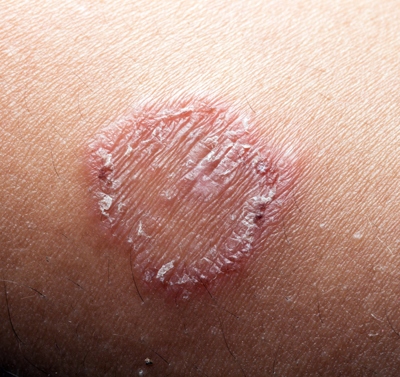
The infection gets its misleading name from the shape it creates on the skin, a circular, ring-like red rash with clearer skin in the middle. It looks, to the untrained eye, like something is burrowing in a circle. Hence the name. But again, no worm, no parasite, just fungus doing what fungus does best.
Why the Skin? Why Not Somewhere Else?
This is a fair question, and it gets to the heart of understanding the infection.
Dermatophytes cannot survive deep inside the human body. They need oxygen, they need keratin, and they love moisture. The outer layer of your skin gives them everything. It's exposed to the air, it sweats, it stays warm, and it produces keratin constantly. For a dermatophyte, your skin is practically a five-star hotel.
Different parts of the body create slightly different environments, which is why ringworm has different names depending on where it appears. On the scalp it's called tinea capitis, on the body it's tinea corporis, in the groin it's tinea cruris (commonly called jock itch), and on the feet it becomes tinea pedis, better known as athlete's foot. Same fungal family, different location, same discomfort.
The skin also acts as the gateway. Once the fungus lands on a surface and that surface touches your skin, it gets in. Shared towels, combs, gym equipment, clothing, or even the floor of a public bathroom can carry these fungi from one person to another with disturbing ease.
What Does It Actually Feel Like?
Globally, one of the biggest reasons ringworm spreads so freely is that people don't recognise it early enough. Here's what to watch for.
In the early days, the infected area may feel slightly itchy and look a little pink or red. You might dismiss it as a heat rash or a small irritation from clothing. Then the rash begins to grow outward in a ring shape. The edges become raised, redder, and scaly, while the centre clears up a little, giving it that distinctive circular appearance.
The itch can range from mild to absolutely relentless. In some people, especially children, the scalp becomes infected and you might notice patches of hair falling out or scaling around the hairline. On the nails, the fungus causes them to thicken, discolour, and become brittle.
Left untreated, the infection grows larger, spreads to other parts of the body, and becomes considerably harder to treat.
How Does It Spread?
Understanding how ringworm travels is crucial, both for treating it and stopping it from moving to those around you.
From person to person. Direct skin contact with an infected person is the most common route. A handshake, a hug, sharing a bed, or even any skin-to-skin contact can do it.
From animals to humans. This is far more common than most people realise. Cats, dogs, cattle, and other animals can carry ringworm fungi on their skin or fur and show no symptoms whatsoever. A child playing with an infected kitten can develop scalp ringworm within days.
From surfaces and objects. Fungi can live on surfaces, such as towels, pillowcases, combs, scissors, and shower floors, for extended periods. Shared spaces like gyms, swimming pools, changing rooms, and schools are hotspots.
From the soil. Certain species of dermatophytes live in the ground. Gardeners and farmers who work with bare hands or feet can pick up infections this way.
Humidity and heat accelerate all of this. Warmer climates and sweaty, tight clothing create ideal conditions for these fungi to thrive.
What's the Solution?
Here's the good news: ringworm is highly treatable. The key is starting early and being consistent.
Topical antifungal creams are the first line of defence for most skin infections. Interestingly, these products are widely available in pharmacies across the world. You apply the cream directly to the rash, and importantly, a couple of centimetres beyond the visible edge of the ring, once or twice daily. Treatment typically lasts two to four weeks. Even if the rash disappears earlier, you must continue applying the cream for the full duration; otherwise, the fungus can return.
Oral antifungal medication becomes necessary when the infection is on the scalp or nails, is widespread across the body, or hasn't responded to creams. A doctor may prescribe applicable medications for this. Scalp infections in particular require oral treatment because the fungus roots itself in the hair follicles, where topical creams simply cannot reach.
Hygiene and lifestyle changes are just as important as medication. Keep the infected skin clean and dry. Wear loose, breathable clothing, especially in warm climates. Wash towels, bedding, and clothing frequently in hot water. Don't share personal items. If you have a pet you suspect is infected, take them to a vet, as they can reinfect you even after you've been treated.
Natural remedies such as tea tree oil and coconut oil have shown some antifungal properties in research settings, but they should be seen as supportive measures, not replacements for proper antifungal treatment. If you're in a situation where medical care is not immediately accessible, these can offer temporary relief, but please follow up with a clinician.
When Should You See a Doctor?
If the rash covers a large area, affects your scalp or nails, doesn't improve after two weeks of antifungal cream, or if you have a weakened immune system, go see a doctor without delay. Immunocompromised individuals, including those living with HIV, diabetes, or undergoing chemotherapy, can develop more severe or widespread infections that require aggressive treatment.
Conclusion
Ringworm is common, contagious, and caused entirely by fungus, not worms, not poor character, not bad luck. It thrives wherever there is warmth, moisture, and close human contact, which is why it exists on every continent and affects people of every background.
The real issue isn't catching it. The real issue is not knowing what it is, waiting too long to treat it, and inadvertently passing it on to others.
Now you know. Catch it early, treat it properly, and break the cycle, literally.


Comments (0)
Please sign in to join the conversation.
Loading comments...