

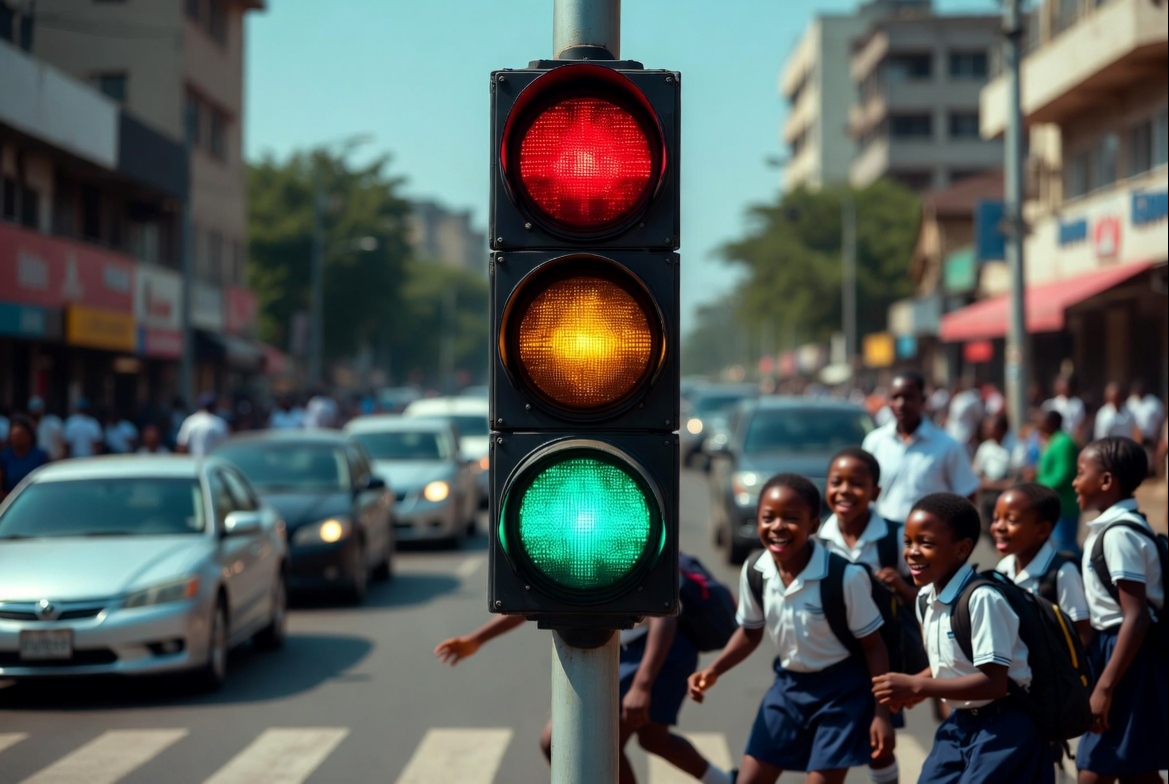
Every day, millions of people stand at street corners, sit behind steering wheels, or glance up at a set of three glowing circles and think absolutely nothing of it. Red. Amber. Green. You obey, move, and get on with your day.
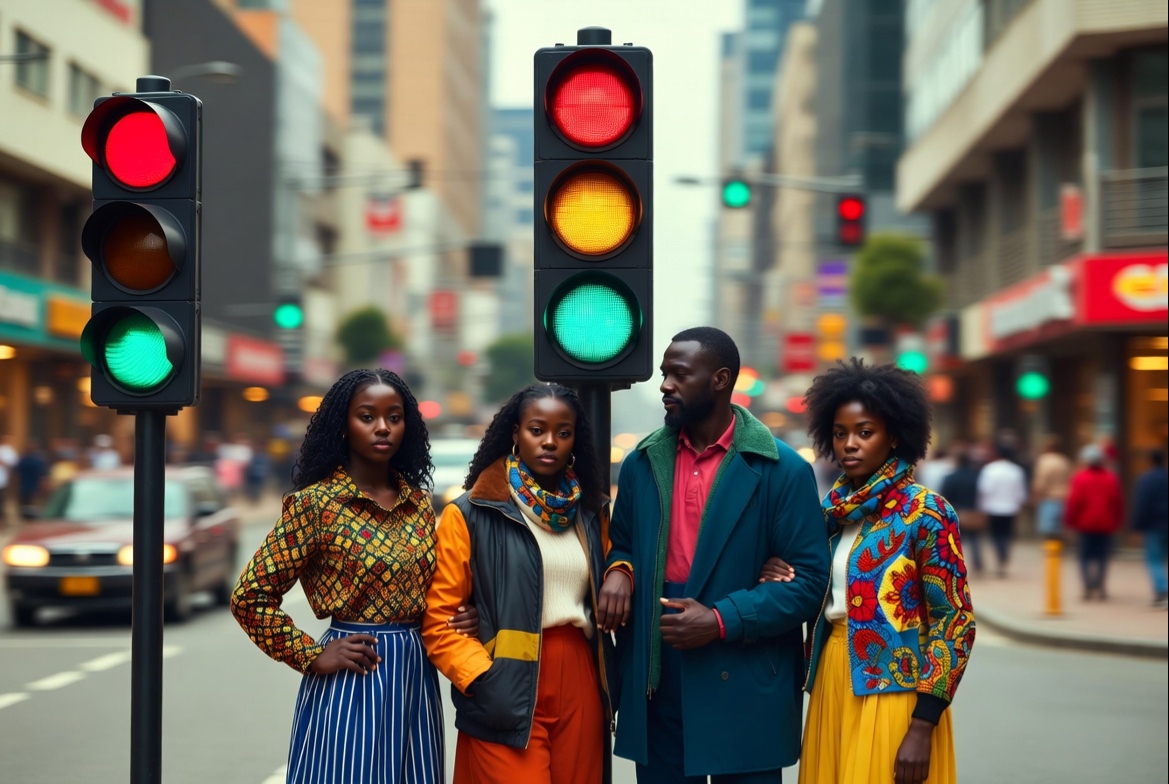
But what if those three colours have been quietly teaching you something far more important than when to cross the road?
What if the traffic light is, in fact, one of the most underrated life coaches on the planet?
🔴 RED: The Courage to Stop
In a world that glorifies hustle, busyness, and "never giving up," red is a radical act of resistance.
Red says: pause. Not because you've failed. Not because you're weak. But because stopping is sometimes the most intelligent, most powerful thing a person can do.
Think about it from a global lens. In Japan, there is a practice called "ma", the art of meaningful pause, the intentional space between moments. In many indigenous cultures across Africa and the Americas, rest is not laziness; it is spiritual discipline. In meditation traditions from India to the monasteries of Tibet, stillness is not the absence of action. It is the foundation of all meaningful action.
Red teaches you to stop before you damage something you cannot repair. A heated argument. A reckless financial decision. A relationship pushed to breaking point. The smartest people in any room are often those who know when not to speak, when not to act, when not to move.
Red is not a failure. Red is wisdom in colour.
🟡 AMBER: The Wisdom of Transition
Amber is the most overlooked colour on the light. Drivers either speed through it recklessly or slam on their brakes in a panic. Very few people actually do what amber asks of them, which is to think clearly in a moment of change.
This is perhaps the deepest lesson of the three.
Life is full of amber moments. The space between a job you're leaving and a career you haven't yet started. The pause between ending a relationship and beginning again. The threshold between who you were and who you are becoming.
Across the world, cultures have long rituals for this in-between space. In West African tradition, rites of passage are not simply celebrations; they are structured periods of transition, held carefully, treated with respect. In European monastic life, the novitiate period before full commitment is treated as sacred preparation. In many South American communities, the time between adolescence and adulthood is marked by solitary reflection in the wild.
Amber asks: Are you ready? Have you looked in both directions? Have you thought this through?
It does not demand that you stay. It does not demand that you rush forward. It simply asks you to be present in the moment of transition. To make a conscious choice rather than a reactive one.
Amber is not confusion. It is clarity in the making.
🟢 GREEN: The Permission You Already Have
Here is the uncomfortable truth about green: most people are waiting for someone else to give it to them.
They are waiting for permission to start the business, write the book, take the trip, say the words, make the call. They are waiting for a parent's approval, a boss's blessing, society's nod, or the universe to arrange itself into something that finally feels "right enough."
Green says: go. Now. With what you have.
Across cultures, this is a universal human struggle. In North America, there is immense pressure to have everything figured out before you begin. In parts of East Asia, social conformity can make individual initiative feel unsafe. In many parts of Africa and South Asia, family expectations can hold people at a standstill long after the light has turned.
Yet, the green light has been on for a very long time.
The science of action confirms this. Research in behavioural psychology consistently shows that motivation does not precede action; it follows it. You do not feel ready, and then start. You start, and then feel ready. The green light is not a guarantee of a clear road ahead. It is simply an invitation to move.
Green is not certainty. Green is courage dressed in permission.
The Full Sequence
Taken together, Red, Amber, and Green form a remarkably complete life philosophy. One that works at the street corner and equally well in the boardroom, the classroom, the hospital ward, and the kitchen table.
Stop when it matters. Pause when you need clarity. Go when the moment calls.
In the UK, where the traffic light was first introduced in 1868 outside the Houses of Parliament, it was quite literally a tool to manage human movement in a chaotic world. What nobody anticipated was that it was also encoding a kind of emotional and philosophical intelligence into the fabric of daily life.
You teach your children to look at traffic lights and see safety. Perhaps it is time you also taught them, and yourself, to look at those same lights and see meaning.
Finally,
The next time you are standing at a crossing, waiting for the green, notice what you feel. Is it impatience? Frustration? Or, if you let it, something that feels a little like trust?
Trust that the red moment will end. Trust that the amber moment is doing important work. Trust that the green will come and that when it does, you will be ready.
The traffic light has always been more than a road sign.
It has been a mirror.


Comments (0)
Please sign in to join the conversation.
Loading comments...