

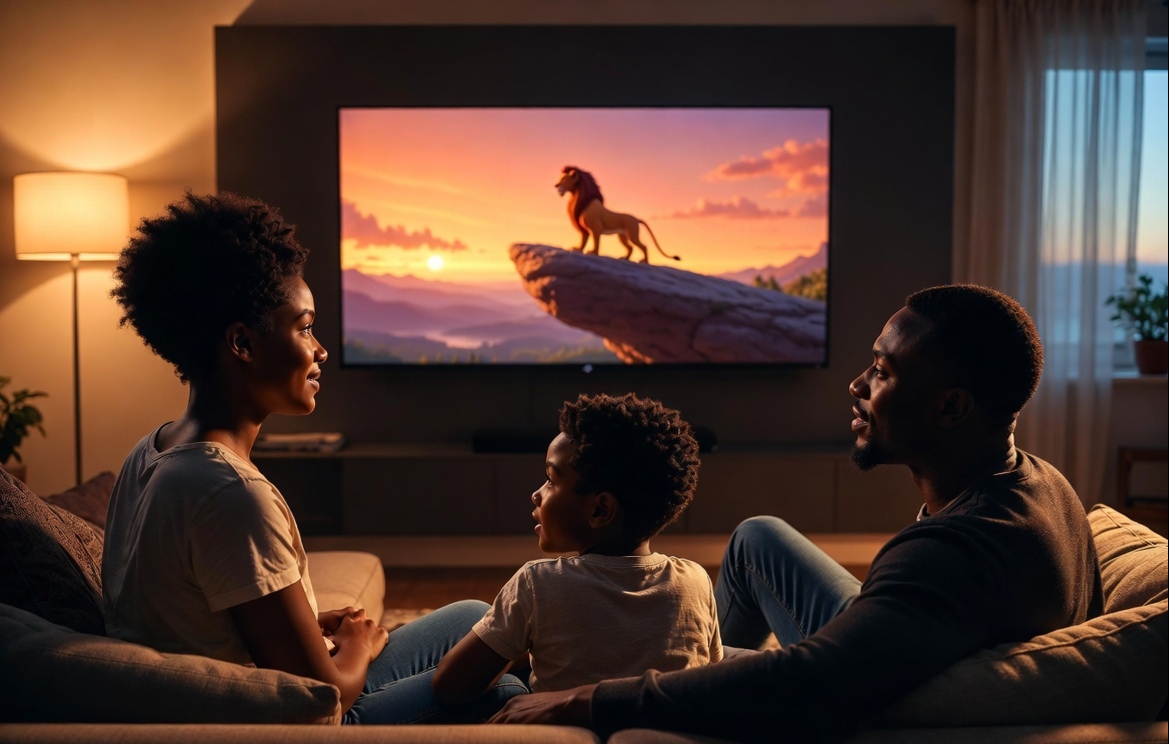
Rewind to when you were young. Perhaps it was The Lion King, Matilda, or a battered old VHS of E.T. creased from too many rewatches. Whatever it was, chances are it left something in you. A feeling, a lesson, or a quiet understanding of the world that no classroom quite managed to give you.
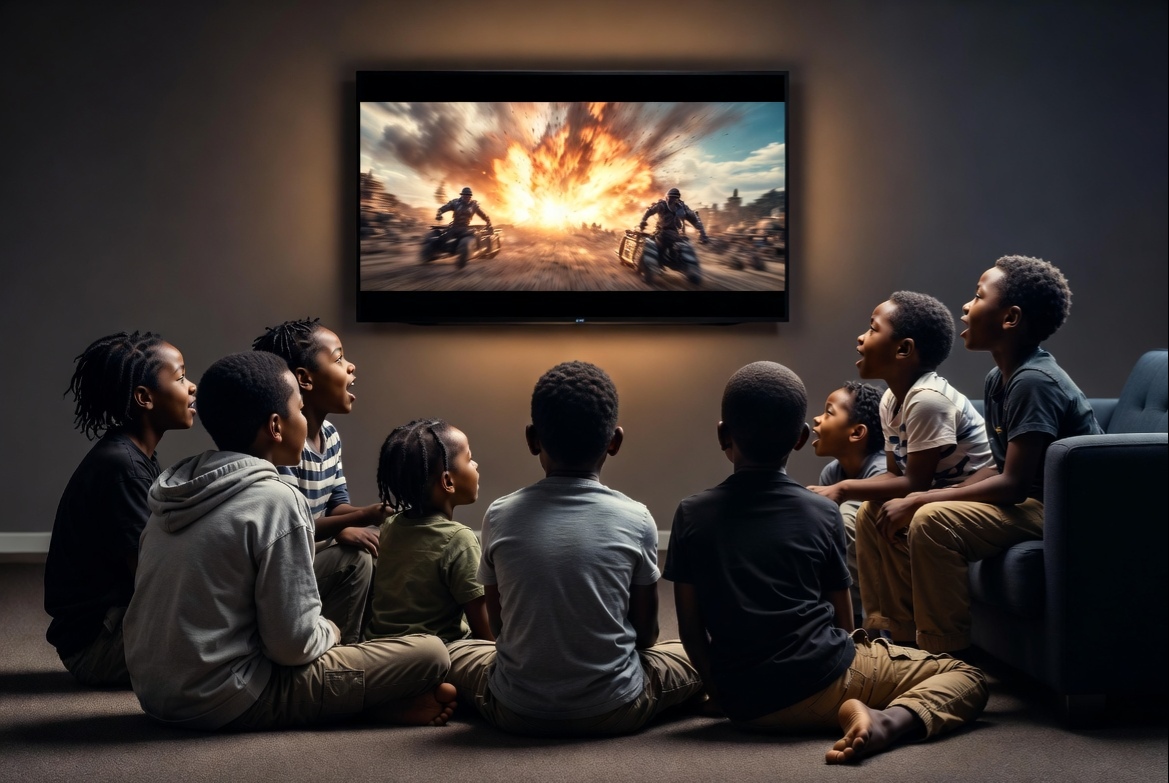
Now your children are doing the same thing, planted on the sofa, eyes wide, utterly lost in a story. Whilst many parents fret about screen time, the truth is rather more encouraging than the headlines suggest. Across every culture on earth, from Nairobi to Norway, Lagos to London, storytelling through film does something profound to the young mind.
The Simple Game Night That Can Bring Your Family Back Together
Below are some of the benefits attached which is quite notable.
1. Emotional Intelligence
When your child watches Simba lose his father, or sees Moana wrestle with self-doubt, something important happens: they practise grief, fear, and courage in a completely safe environment. Child development researchers call this "emotional rehearsal."
Your child does not have to experience loss to understand it, as they can borrow the character's experience, process it, and store it away. Over time, children who engage regularly with emotionally rich films develop a wider vocabulary for their own feelings, and crucially, for the feelings of others. This is the foundation of empathy, one of the most important skills a human being can ever develop.
2. Language and Communication
Films expose children to language they would never ordinarily encounter, such as different accents, idioms, formal speech, poetic dialogue, and even other languages entirely. Children who watch a broad range of films develop larger vocabularies and stronger reading comprehension. A seven-year-old who has watched Paddington has heard formal British courtesy used with warmth and humour. A nine-year-old who has watched a subtitled Studio Ghibli film has been gently introduced to a foreign language without a single grammar lesson.
3. Cultural Awareness
A child in Manchester who watches Coco is introduced to Día de los Muertos; Mexican traditions, family bonds, and the idea that death is not to be feared but honoured. A child in Lagos watching Spirited Away encounters Japanese mythology and aesthetics.
Cinema is, in many ways, the most painless geography and history lesson available. Children who grow up watching a variety of global films tend to hold more tolerant, open-minded attitudes toward people who are different from themselves. In a world that desperately needs more of that, it matters.
4. Critical Thinking
Good films don't hand children all the answers. They raise questions. Why did that character make that choice? Was it right? What would you have done? When you sit with your child after a film and ask those questions, something remarkable happens. Your child begins to think critically, weigh up right and wrong, and understand that the world is rarely black and white.
This is particularly visible in films like Zootopia, a film ostensibly about talking animals that has sparked serious conversations about prejudice and systemic bias in living rooms around the world.
5. Moral and Ethical Development
Children have an extraordinary capacity for moral reasoning, but it needs fuel. Stories have always been that fuel, and long before the cinema, every culture on earth used narrative to pass down its values.
Films do the same. Whether it is Harry Potter's enduring loyalty or Atticus Finch's quiet courage, children absorb moral structures from the characters they admire. They internalise those systems and, over time, begin to apply them to their own choices. This is not soft or incidental. Rather, it is one of the most important aspects of moral education a child will receive.
6. Social Bonding
There is something deeply human about sitting in the dark together and watching a story unfold. In families, watching films together creates shared reference points, inside jokes, and a common emotional language. "Remember when Dobby died?" is not a trivial sentence. It is a shared memory, a moment of collective emotion, a bond.
Across the globe, from family film nights in South Korea to communal cinema screenings in parts of West Africa, film-watching is a social ritual. For children, those moments of shared laughter, fear, and wonder with their parents and siblings are the fabric of childhood.
7. Creativity and Imagination
After the credits roll, a child's imagination does not switch off, it ignites. Children re-enact, reimagine, and extend the stories they love. They draw characters, invent sequels, argue about alternate endings.
This kind of imaginative play, inspired by film, is cognitively rich work. It develops storytelling skills, narrative thinking, and creative problem-solving, all of which are among the most valued attributes in the modern economy. Many of the world's most successful writers, artists, and filmmakers cite childhood films as the moment they realised stories could be made, not just received.
A Word About Balance
None of this is an argument for unlimited, unmonitored screen time. The age-appropriateness of content matters enormously. Passive consumption of low-quality content offers far fewer of these benefits. The magic is in the watching together, the conversation afterwards, and the variety of what is watched.
Think of film not as a babysitter, but as a shared experience. Something to be chosen thoughtfully, watched with curiosity, and talked about afterwards. Done that way, the sofa becomes a classroom, the screen becomes a window, and your child grows a little every single time.


Comments (0)
Please sign in to join the conversation.
Loading comments...