

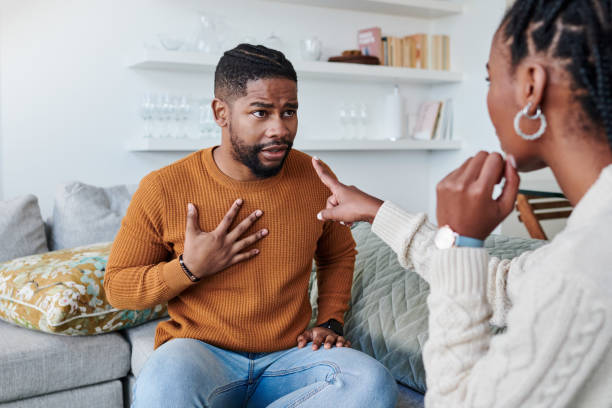
Ndapewa still remembers three years ago, the smell of fresh vetkoek drifting from the counter, and Tangeni across from her talking with his hands the way he always did when he was excited about something. Back then, they talked about everything from his dreams of opening a small logistics business and her fears about her mother's health to the silly argument they'd once had about whether pap should be soft or firm.

Nothing was off limits. Nothing felt too small to say out loud.
Fast forward to an evening last month. Same two people, same kitchen table, except now the silence between them had weight to it. Tangeni scrolled through his phone. Ndapewa stared at a pot of oshifima that didn't need stirring anymore.
Neither one was angry.
That was the strange part. There was no fight to point to, no betrayal, no single moment either of them could identify as "the beginning of the end."
And yet, somehow, the talking had stopped.
If this sounds familiar, you are not broken, and neither is your relationship. What happened to Ndapewa and Tangeni happens to couples everywhere, in every culture, across every generation.
Communication does not usually die in one dramatic explosion. It dies slowly, in the small silences we tell ourselves don't matter.
What actually happened in their story?
Tangeni had a rough week at work and didn't mention it, not wanting to "bring problems home." Ndapewa noticed he seemed distant but assumed he needed space, so she didn't ask. A few days later, she was upset about something her sister said at a family gathering. Still, she'd already convinced herself Tangeni was "too busy" to listen properly, so she kept it to herself too.
Multiply these tiny withholdings by weeks, then months, and you get two people sitting in the same house, living entirely separate emotional lives.
Here are the honest reasons couples stop talking - and we mean not the polished version:
1. Fear of conflict. Many people would rather swallow a feeling than risk an argument, especially in households where raised voices were feared growing up.
2. Emotional exhaustion. Life, wherever you are, comes with real pressures: work, family obligations, money stress. Sometimes there's simply no energy left for deep conversation.
3. Assuming instead of asking. Ndapewa assumed Tangeni needed space. She never actually asked him.
4. Fear of being a burden. Tangeni didn't want to "add stress" to Ndapewa's plate, so he carried his own silently.
5. Cultural conditioning around gender roles. In many households, men are raised to be providers and protectors, not necessarily emotional communicators, while women are often taught to keep peace rather than stir it.
6. Resentment that was never named. Small hurts pile up until they become a wall neither partner can explain.
7. Different communication styles. One partner processes out loud; the other needs quiet time first. Without understanding this, it looks like avoidance.
8. Technology filling the gap. Phones become easier company than difficult conversations.
9. Fear of "opening a can of worms." Sometimes couples avoid one topic so long that they start avoiding all topics, just to be safe.
10. Loss of curiosity. Long-term couples sometimes stop asking each other questions, assuming they already know the answers.
11. Unprocessed past hurts. An old wound that was never fully addressed keeps resurfacing quietly, shutting down new conversations before they start.
12. Family and in-law pressure. Extended family opinions can create tension that couples don't know how to discuss without feeling disloyal to someone.
13. Financial stress. Money is one of the most avoided topics in relationships, often because it touches pride, fear, and shame all at once.
14. Exhaustion from parenting or care-giving. When you're stretched thin caring for children or ageing parents, deep conversation can feel like a luxury.
15. Simply forgetting how. After years together, some couples genuinely forget that connection takes intention; it doesn't happen automatically just because you live under one roof.
Notice something important here:
Relationship content out there makes people feel judged for struggling. Struggling to communicate is not a character flaw. It is a signal that is entirely fixable.
Rebuilding honest communication is manageable, but it takes deliberate effort:
I. - Name what you're noticing, gently and without blame, the way Tangeni did.
II. - Set aside phone-free time daily, even just fifteen minutes.
III. - Ask direct questions instead of assuming your partner's feelings or needs.
IV. - Share stress instead of hiding it "to protect" your partner; protection often becomes distance.
V. - Revisit old unresolved hurts calmly, ideally when neither of you is tired or upset.
VI. - Talk about money openly, even when it's uncomfortable, before resentment builds.
VII. - Understand your partner's communication style instead of expecting them to match yours.
VIII. - Involve trusted family or a counsellor when in-law tension affects your peace, rather than avoiding the topic entirely.
IX. - Stay curious about your partner, even after years together; ask questions as if you're still learning who they are, because you are.
X - Celebrate small wins in conversation, like a good talk after a long silence, instead of only noticing when things go wrong.


Comments (0)
Please sign in to join the conversation.
Loading comments...