

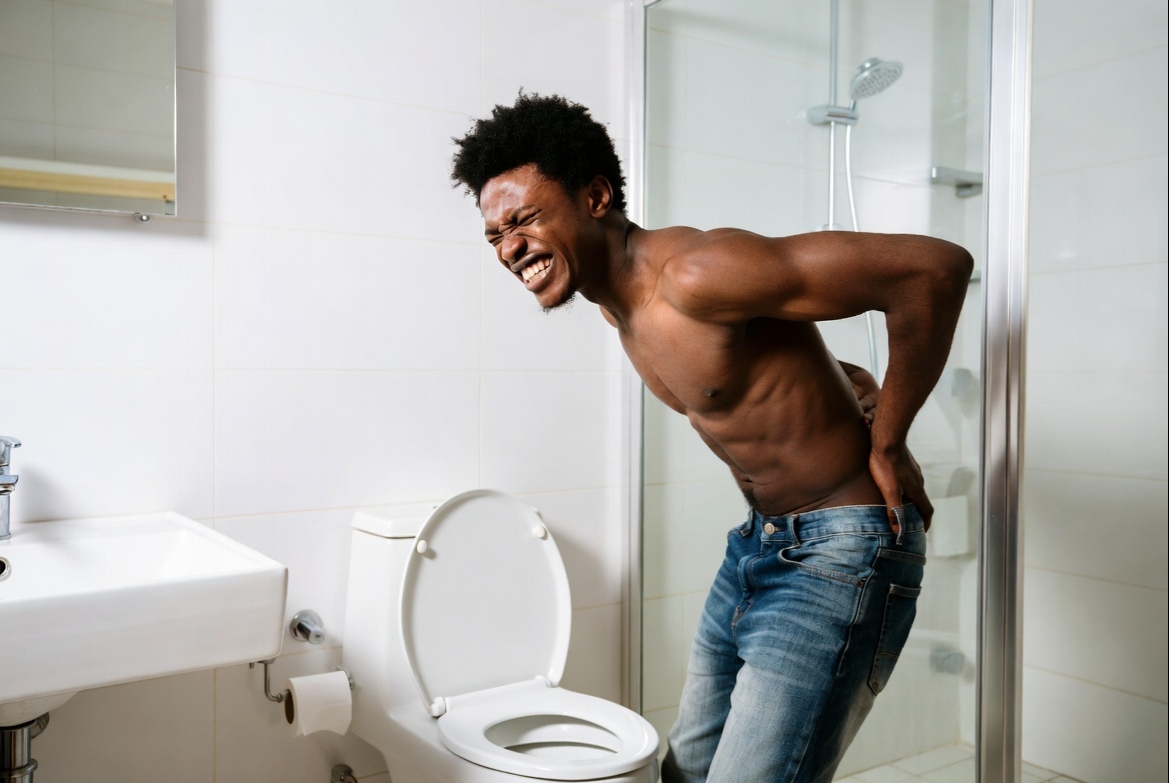
At first, Monica thought spending extra time on the toilet while scrolling through his phone was harmless. But after months of sitting for long periods every day, she began experiencing painful swelling, pressure, and difficulty during bowel movements. A hospital visit later revealed that the habit had strained her lower bowel area and increased her risk of rectal prolapse and hemorrhoids.

Nobody wants to talk about it. It involves a part of the body people are already shy about, and the condition itself sounds alarming at first mention. But rectal prolapse is a genuine medical condition that affects thousands of people every year, from elderly women to young children, and the silence around it means many suffer far longer than they need to. Let us change that.
So, What Exactly Is Rectal Prolapse?
Your rectum is the final stretch of your large bowel, the section just above the anus where stool gathers before you go to the toilet. In a healthy body, the rectum is held firmly in place by a system of muscles and ligaments.
It Happens Monthly Like Clockwork, But Nobody Told You Why It Hurts So Much
Rectal prolapse happens when those muscles and supporting tissues weaken to the point that the rectum slips down and protrudes outside the body through the anus. In some cases, it is only partial, where the inner lining comes through. In more advanced cases, the entire wall of the rectum pushes outward.
The sight of it can be deeply distressing if you notice it for the first time, a soft, reddish, fleshy protrusion. It can appear only when you strain on the toilet, or in severe cases, it can remain outside the body even when you are standing or walking around. It is not life-threatening, but it is far from harmless, and it absolutely warrants medical attention.
Who Does It Affect?
The most commonly affected group is women over the age of 60. In fact, women are six times more likely to develop rectal prolapse than men. The reasons are largely anatomical; the female pelvis is wider and the pelvic floor endures enormous strain during pregnancy and childbirth. Years of pushing, lifting, and ageing gradually loosen the very structures that keep the rectum in place. However, it is important to know that rectal prolapse is not exclusively a condition of older women. Men can develop it too, often linked to years of constipation and straining. Also, in young children, particularly those under three years of age, rectal prolapse is actually one of the more common bowel complaints and can sometimes be linked to conditions like cystic fibrosis or malnutrition.
Important: If you notice a bulge or protrusion from the back passage in yourself or a child, do not try to manage it alone. See a doctor as soon as possible. Early treatment is far simpler and far more effective.
What Causes It?
There is rarely a single cause. Instead, rectal prolapse develops over time due to a combination of factors that gradually erode the muscular support around the rectum. Chronic constipation and the long-term habit of straining on the toilet are among the most significant contributors. Each time you strain, you are placing intense downward pressure on pelvic structures that are not designed to withstand it repeatedly over years and decades. Persistent diarrhoea can have a similar effect. Pregnancy and vaginal childbirth, particularly multiple deliveries or a very difficult labour, stretch and sometimes damage the pelvic floor in ways that do not always heal fully. The natural process of ageing reduces muscle tone and connective tissue strength throughout the body, and the pelvic floor is no exception. In some people, underlying neurological conditions, such as spinal cord injuries or multiple sclerosis, can interfere with the nerve signals that keep pelvic muscles toned and responsive. Previous pelvic surgery can also disturb the anatomy enough to raise the risk.
Recognising the Symptoms
The symptoms of rectal prolapse can creep in gradually, and many people initially dismiss them as haemorrhoids or simply "something that happens with age." The most obvious sign is a visible protrusion from the back passage, a rounded, moist, reddish tissue that appears during or after a bowel movement. Some people notice it only when straining; others find it present more or less continuously.
Alongside this, many people experience a sensation of incomplete emptying after going to the toilet, as if there is always something left behind. Faecal incontinence, difficulty controlling when stool or mucus is released, is common and is one of the most distressing aspects of the condition. There may also be a dull aching or discomfort in the lower abdomen or back passage, and some people notice bleeding or a wet, mucus-like discharge from the anus.
These symptoms significantly affect quality of life. People often stop socialising, avoid travel, and withdraw from activities they love. The psychological toll can be considerable, and the embarrassment frequently stops people from talking to their doctor, sometimes for years.
How Is It Diagnosed?
A doctor or colorectal specialist will typically be able to diagnose rectal prolapse with a straightforward physical examination. They may ask you to strain as if on the toilet so that the prolapse becomes visible. In some cases, further investigations are ordered, such as a colonoscopy to rule out other bowel conditions or imaging studies to assess how the pelvic organs are positioned.
There is nothing frightening about this process, and your dignity will be carefully protected throughout. Do not let the thought of an examination put you off going. The doctor has seen this many times before and their only focus is helping you.
Treatment Options
Treatment depends on the severity of the prolapse, your age, your general health, and how much the condition is affecting your day-to-day life. For mild or partial prolapse, particularly in children, conservative management is often the first approach. This involves treating the underlying cause, such as addressing constipation with dietary changes and adequate hydration, using stool softeners, and avoiding straining. In children, this conservative approach resolves the problem in the vast majority of cases without any further intervention.
For adults with more significant prolapse, surgery is usually the most effective long-term solution. There are several surgical options, and the choice depends on individual circumstances. One common procedure is rectopexy, in which the rectum is lifted back into place and secured to the sacrum, the bone at the base of the spine, using stitches or a mesh. This is frequently performed via keyhole (laparoscopic) surgery, meaning a shorter recovery time.
Another approach, particularly for older or frailer patients, is perineal surgery, which is performed through the back passage itself without any abdominal incision. The specific technique used will be discussed carefully with your surgeon based on your situation.
Pelvic floor physiotherapy plays an important supporting role, both before and after surgery, and can help strengthen the muscles that support the rectum, improve continence, and speed up recovery.
Good news: With the right treatment, the majority of people with rectal prolapse see significant improvement. Surgery has high success rates, and many patients regain full control and comfort. You do not have to simply live with this.
Life After Treatment
Recovery from rectal prolapse surgery varies. Keyhole procedures typically mean a hospital stay of one to three days, with most people returning to normal activities within four to six weeks. Open surgery may require a longer recovery. After surgery, preventing recurrence matters enormously, and that means committing to the lifestyle habits that protect the pelvic floor long term.
A high-fibre diet rich in fruit, vegetables, and wholegrains keeps stools soft and reduces the need to strain. Drinking plenty of water supports bowel regularity. Maintaining a healthy body weight reduces abdominal pressure on the pelvis. Avoiding heavy lifting, particularly in the months following surgery, allows the repaired structures to heal fully.
For some people, especially those who have had long-standing prolapse, some degree of incontinence may persist after surgery. This does not mean the surgery has failed; it often reflects nerve and muscle damage that takes time and targeted physiotherapy to improve. Patience, a specialist physiotherapist, and the support of your surgical team make an enormous difference in how life looks after treatment.
The Most Important Thing You Should Know
Rectal prolapse is a medical condition, not a consequence of poor hygiene, not a reflection of your character, and certainly not something you should endure quietly out of embarrassment. Your bowel health matters. Your comfort and dignity matter. If something does not feel right, if you have noticed any of the symptoms described in this piece, please speak to your doctor.
You will not be judged. You will be helped. Moreover, with the right care, life can genuinely get much, much better.



Comments (0)
Please sign in to join the conversation.
Loading comments...