

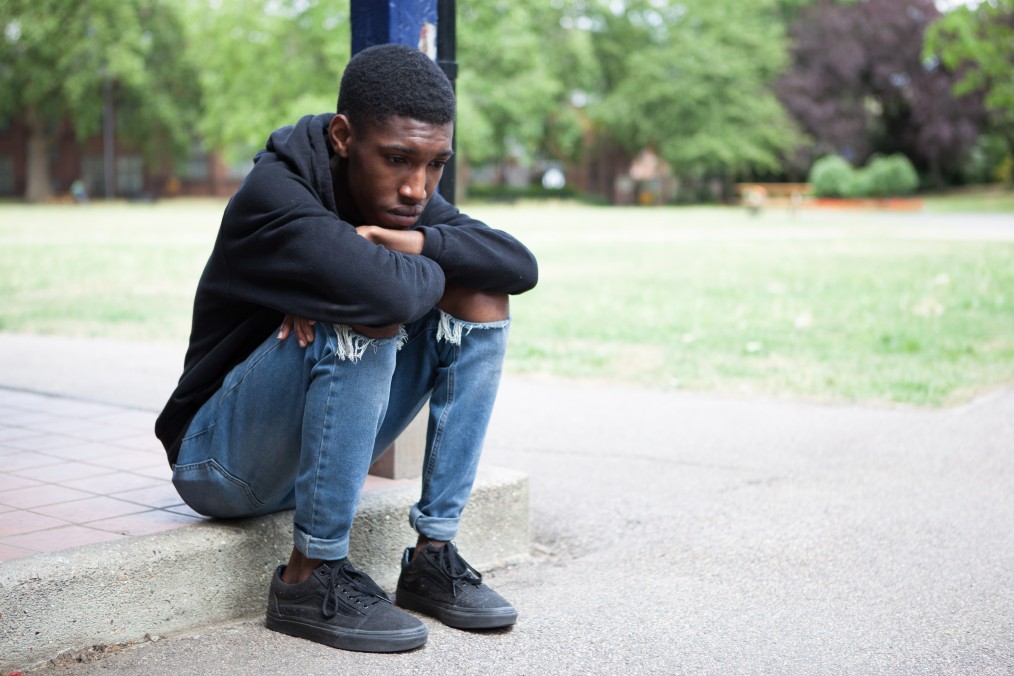
Ngozi Adeyemi noticed it first, the way mothers usually do. Her son Tobiloba, 15 and suddenly taller than her by half a head, had stopped answering "how was school" with anything more than a shrug and a mumbled, “fine." He used to narrate his entire day the moment he walked through the door, complete with impressions of his teachers and dramatic retellings of playground disputes.
Now he came home, dropped his bag by the shoe rack, and disappeared into his room with his headphones already in. One Thursday evening, she knocked gently and asked if something was wrong, and he looked up at her with tired eyes and said, "Mummy, I'm fine, honestly," in a tone that ended the conversation before it began.
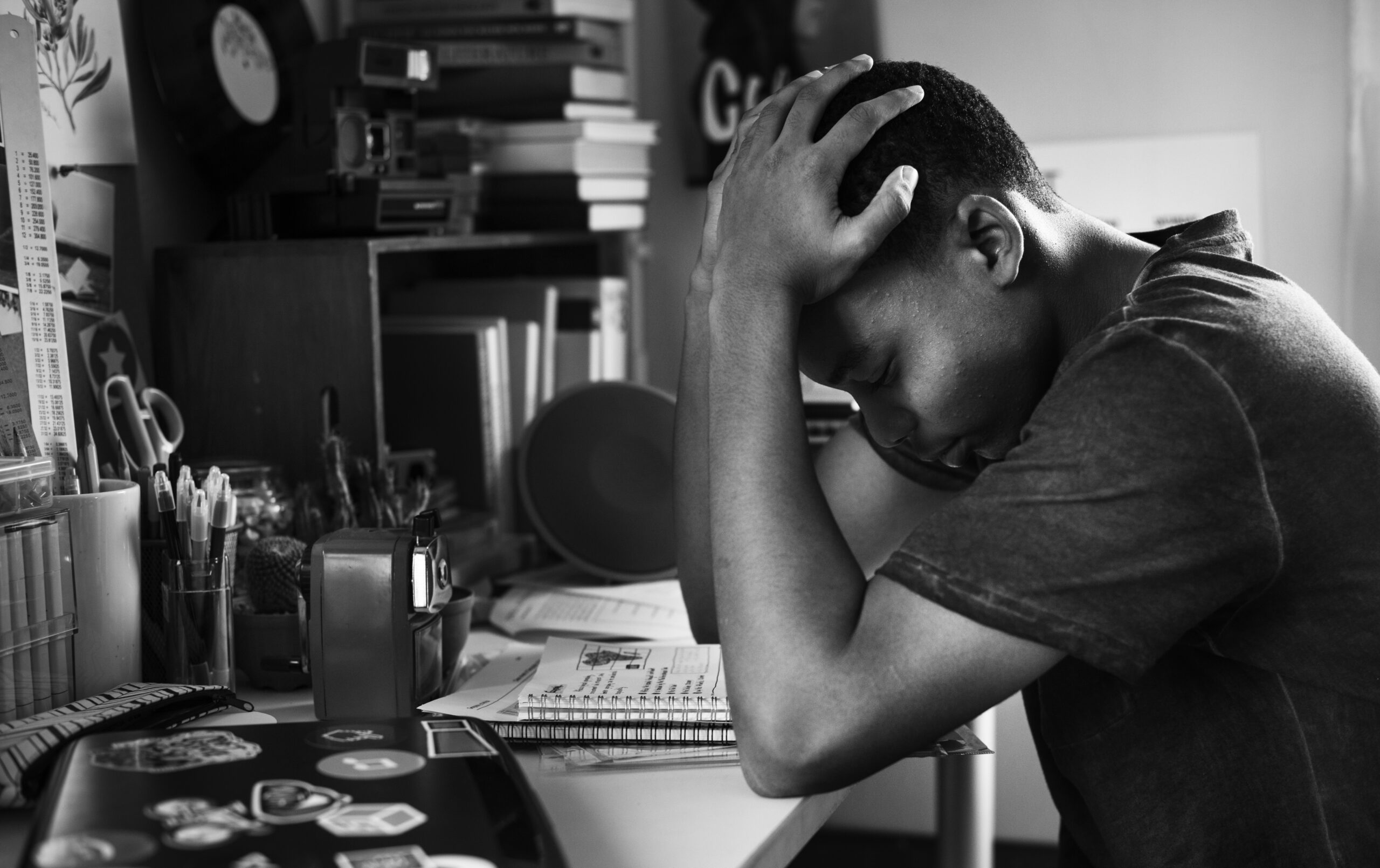
Her husband, Ifeanyi, noticed it too, but from a different angle. He'd come home from work in Ikeja, ask Tobiloba about football training, and get one-word answers delivered without eye contact.
Teenage boys aren't naturally incapable of emotional expression; however, they're culturally trained out of it, one small correction at a time, until silence feels safer than honesty. Understanding the reasons behind this shutdown is the first real step toward reaching a son before he disappears completely into himself.
One night, sitting in the car outside their compound, Ifeanyi turned to Ngozi and said, "Is this normal, or are we losing him?"
Ngozi made a decision — instead of forcing conversation, she'd try to understand what was actually happening inside her son's mind, and inside the minds of boys like him everywhere.
What Ngozi and Ifeanyi eventually discovered, through patient observation, honest conversations with other parents, and a fair amount of trial and error, is that Tobiloba's silence wasn't rebellion, but a coping mechanism that boys are taught, often without anyone directly teaching it, from the moment they're old enough to be told to "man up" after a fall.
Here are 18 honest reasons why teenage boys struggle to express their emotions, drawn from real patterns parents encounter every day:
1. Early conditioning to "be strong" — many boys are told from toddlerhood that crying is for girls, planting the idea that emotion equals weakness.
2. Fear of being mocked by peers — showing sadness or fear at school can invite ridicule, so boys learn to mask instead of express.
3. Lack of emotional vocabulary — many boys were never taught words beyond "angry" or "fine," so they genuinely don't know how to name what they feel.
4. Cultural pressure to appear tough — in many African households, toughness is praised, while vulnerability is quietly discouraged, even unintentionally.
5. Fathers who themselves don't express emotion — boys mirror what they see, and a silent father often raises a silent son.
6. Fear of disappointing parents — some boys hide struggles because they don't want to add "more problems" to what they see as already burdened parents.
7. Social media comparison — constant exposure to curated lives online makes boys feel like they're the only ones struggling, so they hide it.
8. Hormonal and developmental changes — puberty brings mood swings boys don't understand, and confusion often gets buried instead of discussed.
9. Being punished for past emotional outbursts — a boy scolded harshly for crying once may never risk showing tears again.
10. Lack of safe spaces at home — if every conversation ends in lecture or correction, boys stop initiating them altogether.
11. Bottling as a form of control — some boys believe holding everything in makes them appear more mature or in control.
12. Fear of being labelled "soft" by siblings or cousins — family teasing can be just as damaging as outside bullying.
13. Academic and future pressure — the weight of exams, career expectations, and "making the family proud" often goes unspoken.
14. Limited male role models who model openness — without seeing healthy emotional expression modelled, boys have no template to follow.
15. Distrust of adults keeping confidences — if a boy shares something once and it becomes gossip among relatives, he learns silence is safer.
16. Substituting anger for sadness — many boys express distress as irritation or aggression because anger feels more socially acceptable than sadness.
17. Fear of therapy or counselling stigma — mental health support is still seen by some as "not for boys" or "not necessary," reinforcing silence.
18. Genuine uncertainty about what's normal — many boys simply don't know if what they're feeling is normal, and silence feels less risky than asking.
Armed with this understanding, Ngozi changed her approach entirely. Instead of asking Tobiloba direct questions about his feelings, she started doing things beside him like folding laundry while he did homework nearby, driving him to training and letting silence sit comfortably in the car rather than filling it with questions.
Slowly, without pressure, he began talking, not because she asked him to, but because the space felt safe enough to fill on his own terms.
One evening, out of nowhere, he mentioned that a boy at school had been mocking another classmate for crying after a bad exam result, and Tobiloba admitted quietly, "I didn't say anything because I didn't want them to do that to me too."
Ifeanyi made his own adjustment too. He started sharing small, honest moments from his own day, modelling the exact vulnerability he hoped to see in his son. He simply let Tobiloba see that grown men have feelings too, and that expressing them doesn't erase strength; it actually builds it.
Over the following months, Tobiloba didn't transform into an open book overnight, and that's an honest, important detail to hold onto. There were simply more conversations than before, more moments of him initiating rather than retreating, and a slowly rebuilt trust that his emotions wouldn't be mocked, punished, or dismissed at home.



Comments (0)
Please sign in to join the conversation.
Loading comments...