

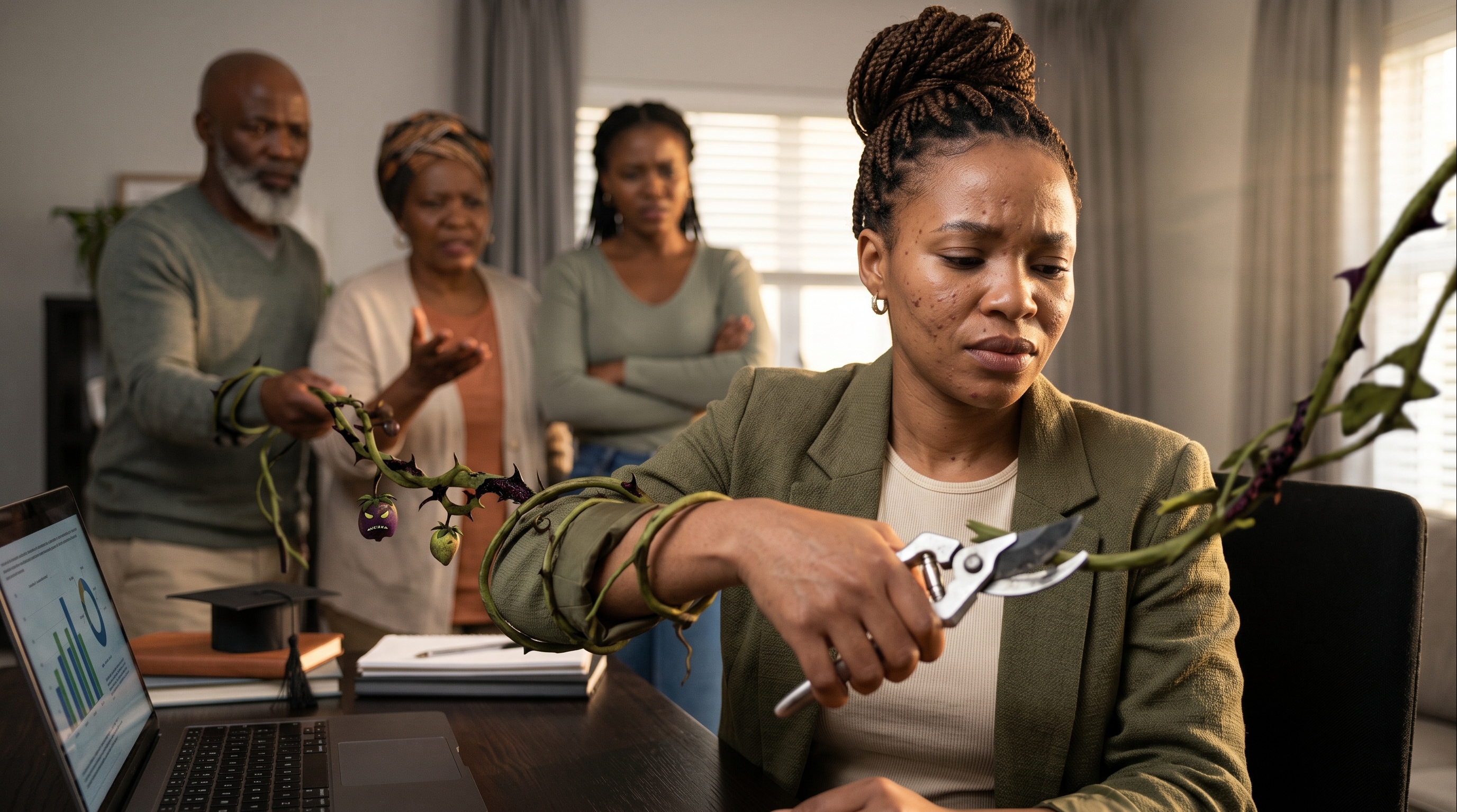
Ifeoma's uncle, with his deep baritone that once comforted her as a child, and an aunt whose kitchen stories filled the house with the aroma of egusi soup and yam, had often painted her entrepreneurial visions as foolish distractions from "proper" stability. Ifeoma had absorbed these comments in the family living room, where sunlight danced on the tiled floor, and the old radio played highlife music softly in the background. The pressure built gradually through her twenties, especially after she left her entry-level job in Enugu to pursue supply chain solutions that addressed the real struggles of transporters dodging bad roads and inconsistent fuel.

She felt the emotional pull of loyalty, but the constant subtle undermining chipped away at her confidence until she made the thoughtful decision to limit deep interactions with those specific voices. She focused instead on nurturing relationships that lifted her, channelling her energy into building her venture step by step.
By her early thirties, Ifeoma's company had flourished, employing young graduates and creating steady income streams for rural partners who sent produce northward without the usual losses. She looked back with gratitude for the clarity that came from that protective choice, now envisioning a future where her business expanded into tech-enabled tracking for farmers nationwide, mentoring others to recognize when certain influences hinder growth. That chapter closed with a deep sense of peace as she sat in her office one evening, watching the sun set over the Lagos skyline, knowing her path had honoured her potential while preserving her kind heart.
This experience of Ifeoma's speaks directly to so many of us navigating ambition in African families today, especially young couples balancing relationships and finances, where external voices can quietly erode progress. When family members, even with good intentions shaped by their own hardships, repeatedly poison your future vision through doubt and limitation, protecting your space becomes essential for building something sustainable.
For young men supporting partners like Ifeoma, understanding this dynamic means offering steady encouragement that reinforces her inner strength rather than trying to mend every family tie. It is about recognising that love for family does not require absorbing negativity that stalls your shared dreams of financial security and personal fulfilment.
The reasons to create distance from such influences often stem from how they affect your daily mindset and decision-making in practical ways. In many Nigerian and broader African contexts, economic realities like inflation and job scarcity have made older relatives prioritize caution above all, leading them to discourage bold steps that could actually secure better futures. Ifeoma noticed how those comments left her second-guessing investments in her early business supplies, delaying her momentum until she stepped back.
Young couples can learn from this by discussing together how certain conversations impact motivation and then setting gentle boundaries that allow focus on joint goals, such as saving for business capital or skill development programs available locally. This approach keeps family connections respectful while safeguarding the emotional energy needed for growth.
Financially, protecting your ambition from draining influences helps maintain clearer planning and reduces unnecessary stress that spills into money matters. Ifeoma built her logistics network by tracking every naira carefully during uncertain months, avoiding the mental fog that came from absorbing limiting beliefs about what women could achieve in business.
For relationships, this means creating a united front where both partners prioritize ventures that align with your realities, perhaps exploring opportunities in agriculture value chains or small-scale trading that match local demands.
Young men, your role here is to listen empathetically to your partner's experiences with discouraging relatives and respond with practical support, like helping review business proposals or celebrating incremental wins such as securing the first contract with a distributor.
Emotionally, the weight of poisoned ambition can feel isolating, especially when cultural emphasis on family unity makes distance seem conflicting. Ifeoma found solace in morning routines along the quiet streets near her home, where the smell of baking bread from nearby shops and the sight of children heading to school reminded her of steady forward movement.
Couples benefit when they foster open dialogues about these feelings without blame, building empathy that strengthens their bond. This creates space for honest reflections on how past family patterns, formed during times of limited opportunities, may not fit your current ambitions, shaped by better access to information and markets.
In our shared perspective as young people building lives across cities like Lagos, Abuja, or Enugu, cutting off toxic influences often reveals how much mental clarity it brings to financial decisions. Without constant subtle doubts, Ifeoma could confidently negotiate deals with suppliers, understanding the rhythms of seasonal harvests and transportation challenges firsthand.
Practical guidance comes in recognising patterns early—perhaps through journaling moments when interactions leave you drained versus energised—and then choosing interactions that nourish your goals. For young men in relationships, this might involve taking on more household steadiness during your partner's high-focus periods, allowing her the bandwidth to pursue ambitions freely.
The social impact of these choices ripples outward, encouraging broader conversations in our communities about balancing respect for elders with the need for personal evolution.
Ifeoma's success demonstrated that ambition thrives when protected, inspiring her network of women in logistics to share similar stories of quiet boundary-setting that led to stronger businesses.
Young couples can draw on this by investing time in community networks, such as professional groups for entrepreneurs facing similar family dynamics, where shared experiences provide encouragement rooted in African realities like navigating infrastructure hurdles or market fluctuations.
Timeline reflections show how past limitations, when addressed thoughtfully, open doors to future stability. Ifeoma now looks ahead to training programs that equip young professionals with tools for resilient ventures, mixing memories of her Enugu roots with visions of expanded impact across regions.
This progression underscores why addressing poisoning influences matters—it prevents ambition from withering and allows finances to stabilise through consistent effort rather than scattered doubts.
Relationships deepen when both partners understand that family love can coexist with selective closeness, creating a home environment focused on mutual upliftment. A young man walking alongside his ambitious partner might find greater connection through shared planning sessions at home, perhaps over plates of jollof rice and discussions about upcoming opportunities, free from external draining narratives. This fosters emotional intelligence that values progress without erasing heritage.
Ultimately, Ifeoma's path highlights the liberating truth that protecting your future sometimes requires thoughtful space from voices that limit it, paving the way for success that benefits not only you but those who genuinely support your growth.
For young couples in Nigeria and across Africa, this approach turns potential obstacles into opportunities for stronger foundations, where finances improve through focused action, relationships gain resilience through empathy, and ambitions bloom into realities that honour your unique journeys.
Family ties remain part of your story, but on terms that allow everyone to thrive without the weight of unnecessary limitations. In the end, choosing this path leads to a fulfilling life where your efforts create lasting impact, proving that safeguarding your vision is an act of wisdom, care, and forward-thinking love for the future you are building together.



Comments (0)
Please sign in to join the conversation.
Loading comments...