


There is a moment that almost every girl remembers. It's the moment she first got her period and had absolutely no idea what was happening to her body. For many, that moment was terrifying. For others, it was embarrassing. Also, for far too many, it was made worse by the fact that no one had ever spoken about it openly at home.
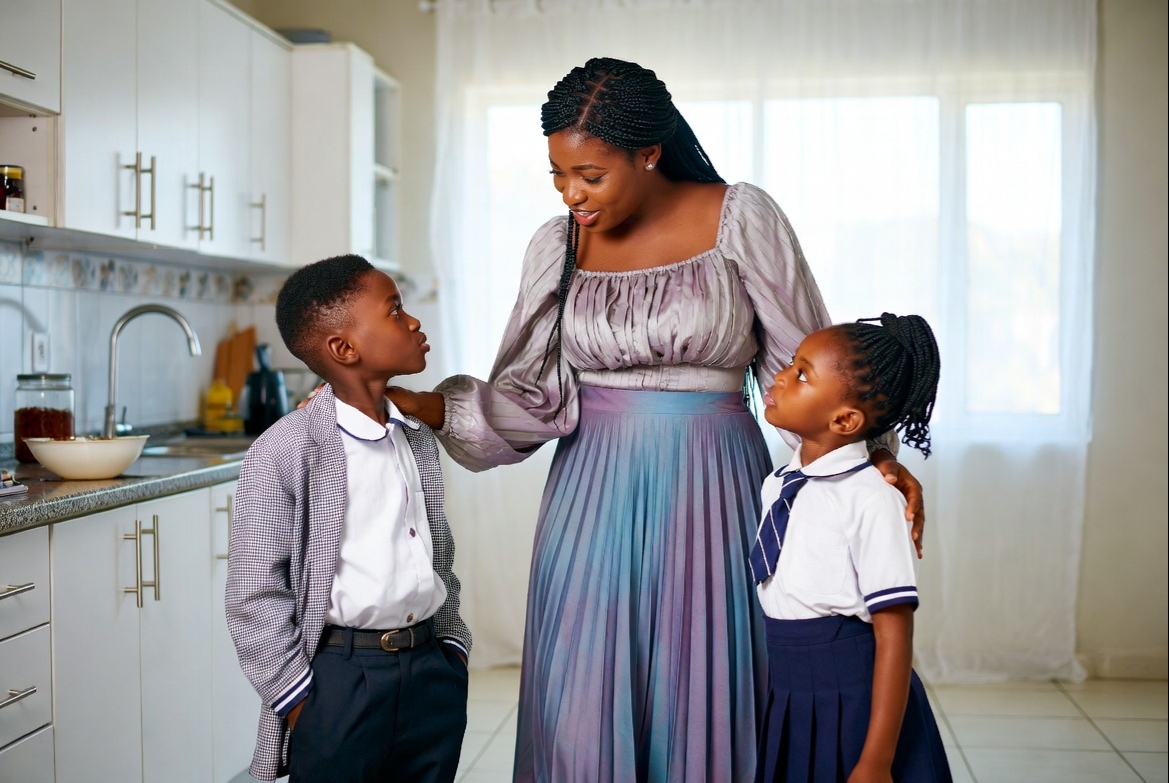
Now imagine that same girl at school. She needs to change her pad, but she has to smuggle it up her sleeve like it is a criminal act. A male classmate notices and sniggers. He does not mean to be cruel; he simply was never taught any better. Nobody talked to him about it either.
What Happens When Your Children Watch You Keep Malice
That is the real problem. We have made menstruation a secret that only girls are supposed to carry, and then we are surprised when it becomes a source of shame, stigma, and suffering for everyone involved.
The Silence You Pass Down Like an Heirloom
For generations, menstruation has been treated as something to be whispered about, if spoken about at all. Mothers pulled daughters aside for hushed, hurried conversations. Fathers left the room. Brothers were shooed away. The message children received, without anyone saying it directly, was this: periods are dirty, private, and not for everyone's ears.
However, silence does not protect children. It simply leaves them to fill the gaps with misinformation, playground gossip, or worse, shame.
When you exclude boys from these conversations, you are not shielding them. Instead, you are training them to see periods as something strange and other. You are building the very attitudes that lead to grown men dismissing women's pain, colleagues making uncomfortable jokes, and partners who have no idea how to offer support during a difficult time of the month.
What Boys Gain When You Include Them
Teaching your son about menstrual hygiene is not about making him uncomfortable. It is about making him human.
When your boy understands that menstruation is a completely normal biological process, that it happens to roughly half the people on the planet, every single month, for several decades of their lives, something shifts in him. He stops seeing it as gross or funny. Rather, he starts seeing it as just... life.
This understanding builds empathy in a way that few other conversations can. A boy who knows what period cramps feel like, in terms he can relate to, is a boy who will not mock his classmate for needing to sit out during PE. He is the teenager who will quietly hand a friend a pad without making a fuss. He is the adult man who will pick up the right products at the pharmacy without being asked twice.
These are not small things. They are the building blocks of the kind of respectful, emotionally intelligent men your daughters, sisters, and female colleagues deserve to live and work alongside.
What Girls Gain When Boys Are Educated Too
Here is something we do not say enough. Girls benefit enormously when boys are educated about menstrual health.
When periods are treated as a shared piece of human knowledge rather than a guarded female secret, the shame around them begins to dissolve. A girl who knows that the boys in her class understand what a period is, and do not find it disgusting, is a girl who can ask for a spare pad without going red in the face. She is less likely to suffer in silence when she has cramps. On the contrary, she is more likely to speak up if something about her cycle does not feel right medically, because she has grown up in an environment where bodies are not taboo.
Period poverty is also a conversation that requires everyone at the table. In many parts of the world, and even in developed countries, girls miss school because they cannot afford sanitary products or because schools lack proper facilities. Boys who understand menstruation grow into men who advocate for change. They become councillors, teachers, policymakers, and fathers who ensure that period products are accessible and that no girl has to choose between her education and her dignity.
How to Have the Conversation at Home
You do not need a medical degree or a prepared script. You simply need to be willing to speak.
Start early and keep it natural. When your daughter starts her period, do not send your son out of the room. Use age-appropriate language and treat it the same way you would treat any other health topic, matter-of-factly, with warmth and without fuss.
Explain what menstruation is. Let them know that it is the body preparing for a potential pregnancy each month, and shedding the uterine lining when that pregnancy does not occur. Explain that it can be uncomfortable, sometimes very painful, and that it requires sanitary products such as pads, tampons, or menstrual cups to manage hygiene safely.
Let your children ask questions. The awkward ones are often the most important. Answer them honestly and without embarrassment, because your calm reaction teaches them that this is normal, because it is.
The World You Will Be Building, One Conversation at a Time
Every time you choose to includey our sons in conversations about menstrual health, you chip away at a stigma that has caused real harm to real people for a very long time. You raise boys who become better friends, better partners, better colleagues, and better fathers.
Moreover, every time you allow your daughters to talk about their periods without shame, in front of the whole family, not just behind closed doors, you tell them that their bodies are not something to be embarrassed about.
That is a powerful message. Interestingly, it starts at home, around your kitchen table, in the most ordinary of conversations.
Start the conversation today. Your children are ready, even if you think you are not.


Comments (0)
Please sign in to join the conversation.
Loading comments...