

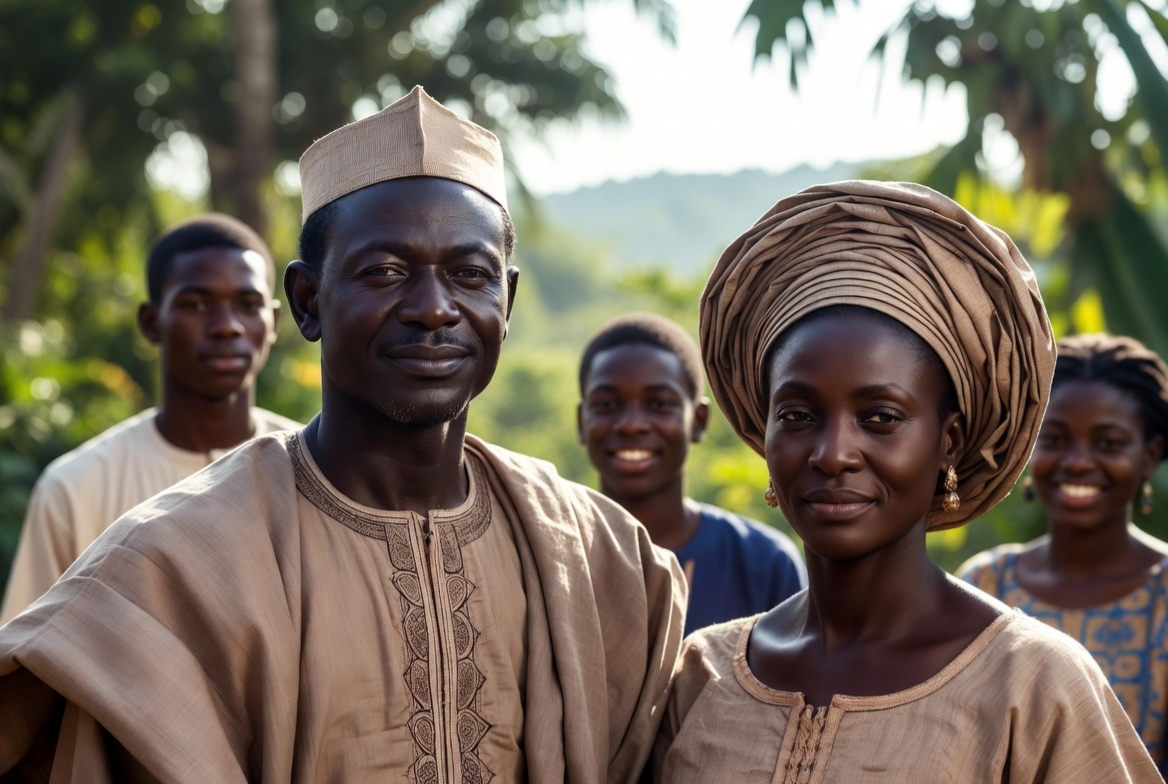
Joshua Bello stared at the WhatsApp message from his uncle in Sokoto that had just arrived, the screen light casting long shadows across the faces of his wife Esther and their two young children. It was 2025, nearly eight years into their marriage, and the old family land dispute that had simmered since his father’s passing in 2018 was boiling over again, threatening to pull them back into the cycle of accusations, late-night calls, and endless family meetings that had defined his childhood. Joshua, a 34-year-old accountant with roots in Sokoto State, felt the familiar knot in his stomach, but this time, as he looked at Esther’s tired but steady eyes, he knew they had to choose a different path if they wanted to see their children grow up with parents who lived fully, not just survived.
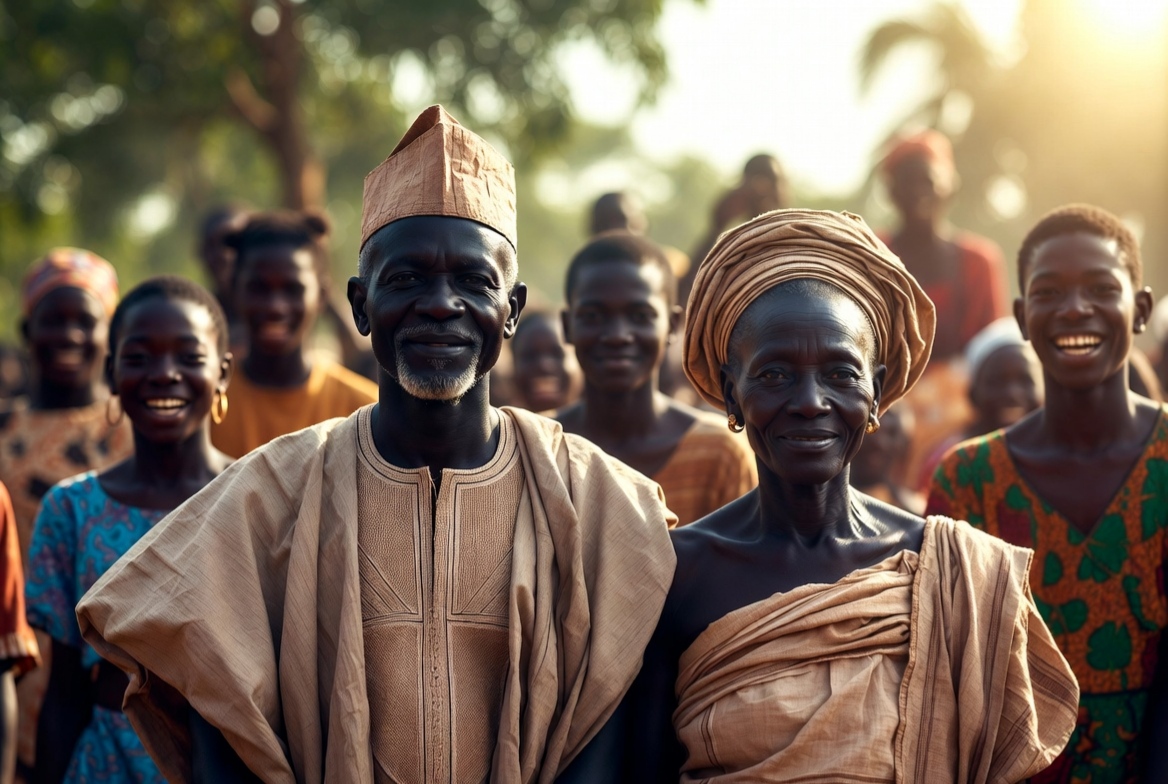
Esther, 32, a teacher whose own family had navigated quiet tensions back home, placed a hand on his shoulder. “Remember how it started for us?” she asked softly. That simple question pulled them both into a flashback to their early days together, when the weight of inherited battles first tried to claim their future.
It was 2016 in Sokoto, during one of those harmattan seasons when the dry wind carried dust and old stories alike. Joshua and Esther, then young Christian adults in their mid-twenties, had just begun courting seriously after meeting at a church youth fellowship. Joshua came from a large extended Bello family known for its strong Christian faith amid the region’s dynamics, but also for its deep-seated land disagreements that traced back to his grandfather’s passing in the early 2000s. His father and uncles had fought bitterly over plots of family land and a small trading business, turning every festive gathering into a battlefield of whispers and pointed fingers. By the time Joshua was a teenager around 2010, holidays meant watching adults shout over survey documents instead of sharing meals in peace.
The toll of those battles had already begun shaping lives in measurable ways. Joshua recalled his father’s high blood pressure diagnosis in 2012, the frequent hospital visits that drained savings and joy. Chronic stress from family grudges, experts note quietly in health conversations across Nigeria, accelerates wear on the heart, weakens immunity, and can shave years off life expectancy through inflammation and constant mental load. Esther’s own family, though less dramatic, carried unspoken resentments over support during hard times, teaching her early that “family” could mean both anchor and anchor-weight.
When Joshua’s father died suddenly in 2018, the battles intensified. Uncles demanded shares, cousins took sides, and court papers started flying. Joshua, grieving and newly married to Esther in 2017, found himself pulled in. “We cannot run from blood,” one relative had insisted during a tense family meeting in Sokoto that year. But as the couple navigated their first years of marriage building a home in Lagos while sending money back north, the fights began affecting everything: sleepless nights, arguments between Joshua and Esther over whether to engage, and even their health. Joshua’s blood pressure started climbing by 2020, mirroring his late father’s.
Yet it was during a quiet moment in 2022, right after the birth of their first child, that the turning point whispered in. Esther had been reading her Bible one evening, reflecting on stories of reconciliation like Joseph forgiving his brothers in Genesis. “We are building our own legacy here,” she told Joshua. “Do we want our children to inherit peace or the same chains?” That conversation marked the start of their deliberate choice not to inherit the battles.
One of the deepest challenges in family battles is how they quietly erode health and longevity. Joshua and Esther learned this the hard way. By 2023, the ongoing pressure from calls demanding Joshua “fight for what is ours” had led to his occasional chest pains and Esther’s bouts of anxiety. Joshua noticed how arguments over “the family matter” left him drained at work, less present with the kids. Esther saw their daughter, now five in 2025, mimicking tense phone voices. “Family battles don’t just steal land,” Joshua later reflected to a close friend. “They steal time, sleep, and years.” The couple began setting small boundaries: polite but firm responses limiting discussions to facts, not emotions, and focusing energy on their nuclear family’s stability.
Practical guidance here starts with awareness and small steps.
They created a simple “family peace jar” at home which was a literal container where they wrote down blessings and future goals whenever a triggering call came.
This shifted focus from past wrongs to building. For many young couples in Nigeria, especially those bridging urban hustle and rural roots, this means scheduling limited times for family calls rather than letting them dominate evenings. It is manageable when you treat it like protecting your own vineyard.
Another real challenge is the cultural pull of “not breaking family unity.”
Loyalty often means joining the fray, whether over inheritance, business shares, or old slights. Joshua’s uncles framed non-involvement as betrayal. But as Christians, the couple drew from teachings on forgiveness though not as weakness, but as strength that frees one to live longer and better. Matthew 6:14-15 speaks to this release, and they saw it as permission to honor parents without repeating their conflicts.
During a heated family gathering, Joshua had almost signed documents aligning with one side. Esther’s calm interventio of “Let’s pray first and sleep on it” prevented escalation. That night, they drove back reflecting on how many elders they knew who died younger, burdened by endless disputes. “We choose life,” they whispered, echoing Deuteronomy’s call.
Insightfully, breaking the cycle does not mean cutting ties completely; it means redefining them.
Joshua and Esther maintained respectful contact of sending greetings during Christmas and Eid periods, contributing to communal needs without entering feuds. This balanced approach preserved relationships where possible while guarding their peace. For men like Joshua, it meant stepping into leadership by modeling calm; for women like Esther, it involved supporting without being pulled into emotional labor that exhausts.
By 2024, as their second child arrived, the difference was clear.
Joshua’s health check showed improved metric and Esther felt more energetic for teaching and mothering. Their home became a place of laughter, not tension spillover. They even started a small side savings plan explicitly for their children’s future education, bypassing the uncertainty of disputed family assets. In practical terms, this looks like documenting your own will early as Joshua did in 2023 with a trusted lawyer to prevent passing battles forward. It involves teaching children stories of resilience, not victimhood. Emotional intelligence required cannot be overstated because family battles test marriages deeply, but Joshua and Esther turned theirs into a team effort.
They scheduled monthly “no-family-drama” dates, even if just walks around their Lagos neighborhood, to reconnect. This built resilience. For young couples reading this, start with honest talks: “What battles from our pasts are we carrying?” Listen without judgment — men often feel pressure to “defend honor,” women to “keep peace at all costs.” Both deserve support.
Timeline-wise, their breakthrough solidified in early 2025, when the latest uncle’s message arrived demanding involvement in a new twist on the old land case, Joshua replied measuredly: “We pray for fair resolution and focus on raising our family in peace.” No engagement in accusations. That evening, as the family prayed together, a sense of lightness filled the room, the children laughing freely, sensing the shift.
Educatively, consider the broader picture.
In Nigeria, inheritance disputes contribute to stress-related ailments that doctors see daily. Choosing not to inherit them is an act of love for yourself, spouse, and generations. It is not denial of roots but cultivation of healthier ones. Practically, seek neutral mediators like trusted pastors or family elders focused on reconciliation, not sides. Build your own assets transparently. Forgive daily in small ways.
Joshua and Esther sat with their children, telling a softened story of their heritage, faith, resilience and the lessons. The old battles still existed in the background, but they no longer lived in their home. “We break the chain here,” Joshua said, his voice steady.
Esther smiled, the climax of their journey clear: By refusing to inherit family battles, they were choosing not just survival, but a long, full life marked by joy, health, and purpose. Their children would inherit peace, and that, more than any land, was the true legacy.



Comments (0)
Please sign in to join the conversation.
Loading comments...