

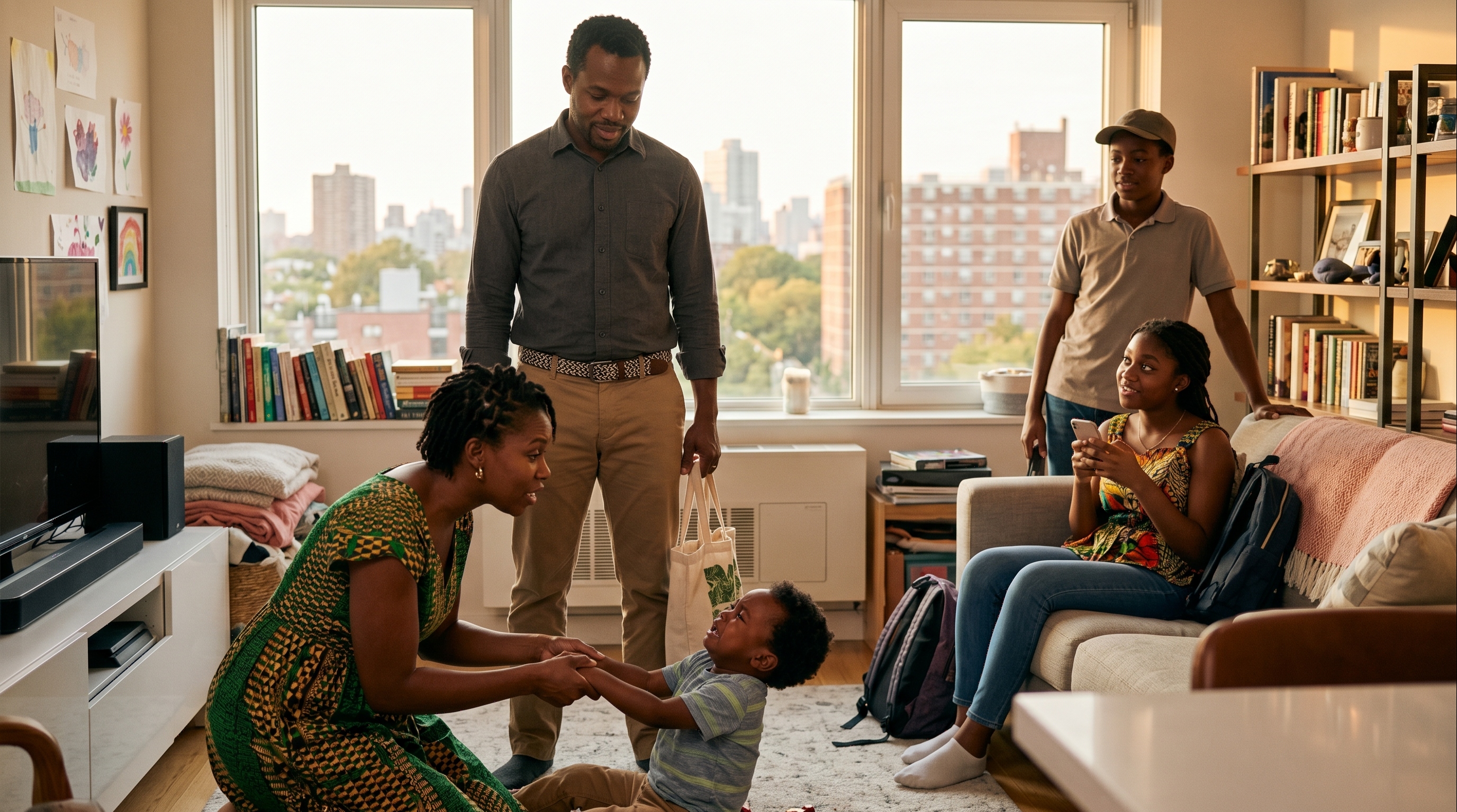
Amara's husband, Tariq, had been home all afternoon. Kofi had been perfectly fine with him. Cheerful, even. But the moment Amara walked in, the child fell apart completely. Tariq looked at Amara with an expression she had come to recognise well: equal parts sympathy and helplessness. "He was great all day," Tariq said quietly. "I don't know what happened." Amara dropped her bag onto the nearest chair and sat down on the floor to figure it out.
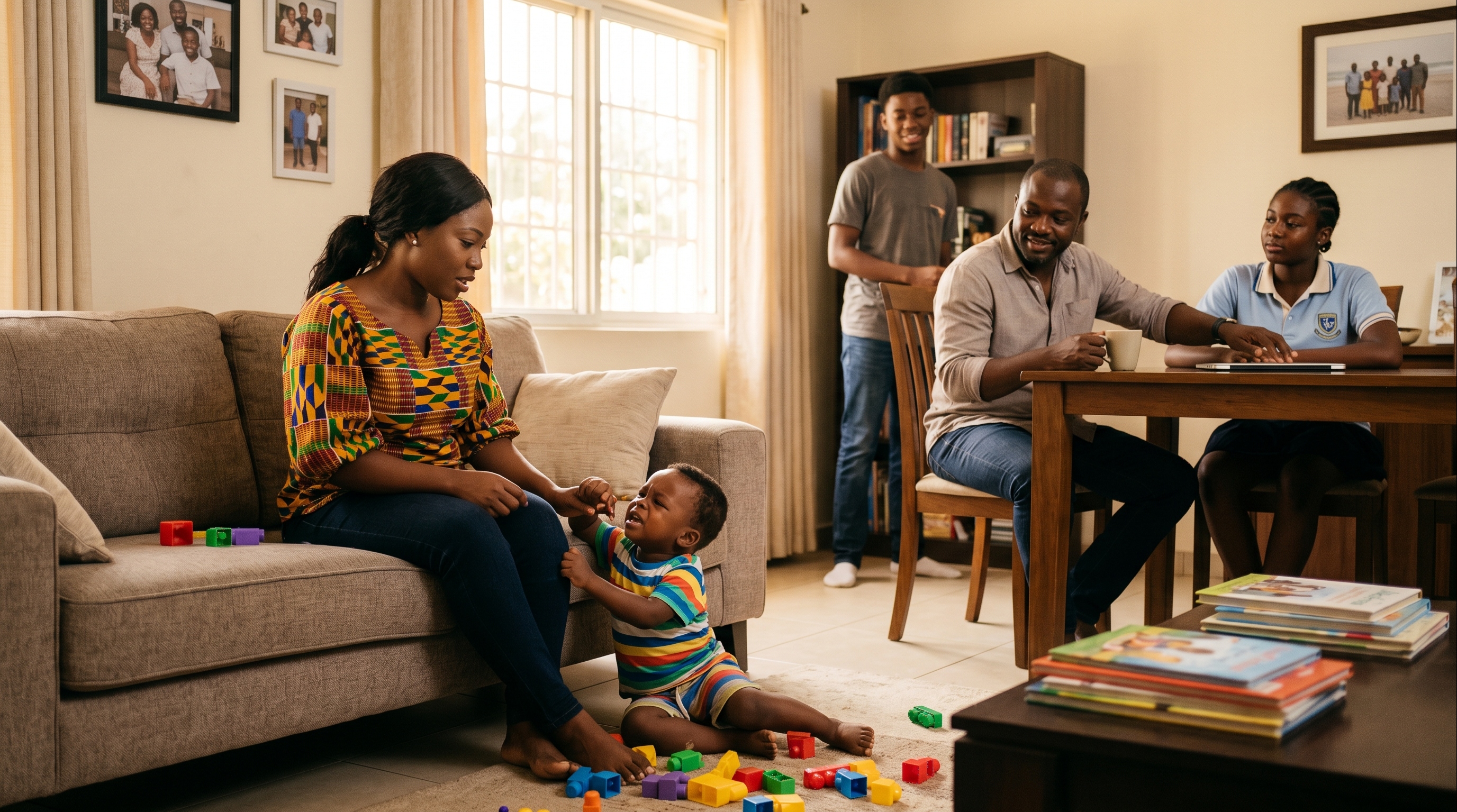
Toddlers do not behave worse around the people they love least. They behave worse around the people they love most, and that distinction matters enormously.
Your toddler, somewhere between the ages of one and four, is doing one of the most complex things a human brain ever has to do. They are learning to feel emotions they have absolutely no vocabulary for. They are learning that they are separate people from you. They are discovering that the world has rules, limits, and other human beings with conflicting needs.
And they are doing all of this with an underdeveloped prefrontal cortex, which is the part of the brain responsible for logic, impulse control, and emotional regulation. In adults, that part of the brain is not even fully formed until the mid-twenties. In a three-year-old, it is barely switched on.
So what does this mean practically? It means your toddler is walking around all day holding enormous, unwieldy emotions, and the moment they see the person they feel safest with, they release everything they have been holding in.
You are not being punished for being a good parent. You are being trusted. Your child has unconsciously learned: around this person, I can fall apart. I will still be loved. I will still be safe.
When Amara finally looked up the phrase "safe base parenting", the term describes a concept in attachment theory; the idea that a securely attached child uses their primary caregiver as an emotional home base. From that base, they explore. From that base, they take risks. And to that base, they return when life gets overwhelming.
The tricky, counterintuitive part is that the return is not always calm. Sometimes, the return looks like a tantrum. Sometimes, it looks like clinginess or regressio. These behaviours are not signs that your child is going backwards. They are signs that your child trusts you enough to come home.
This does not mean you simply accept all behaviour and call it love. The critical distinction is understanding that while the reason for the behaviour is trust, the behaviour itself still needs guidance.
Loving a child does not mean tolerating every expression of their emotions without response. It means responding to the emotion while still holding a boundary around the behaviour.
Something else worth understanding is what your toddler's body is doing all day long while you are at work, at the market, or simply in another room.
A toddler who attends a crèche, a nursery, or spends long hours with a carer or extended family is, in many ways, performing all day. Not consciously. But socially and emotionally, they are expending enormous energy holding themselves together in an environment that is not their emotional home. They are sharing, waiting, following instructions, managing their impulses, tolerating noise and change and other children's unpredictability, all without the person who makes them feel fully safe.
By the time you arrive, they have nothing left.
This is particularly important for working parents to hear, because the guilt can be overwhelming. You leave in the morning. You come home. And the child who apparently had a lovely day with the childminder is now inconsolable at your feet. It is easy to wonder if you are doing something wrong. You are not. You are simply the person they save their realest self for.
First: Anticipate the transition.
The moments when behaviour deteriorates most predictably are transitions. If you know the explosion is likely to come at 6pm when you walk through the door, build a small ritual around that transition.
Second: Name the feeling before managing the behaviour.
This is one of the most well-supported strategies in early childhood research, and it works because it addresses the root cause.
When Kofi lost it over the red cup, instead of saying "stop crying" or "that's enough," Amara knelt down and said, "You're really upset. You wanted your cup on the counter and it moved. That made you very angry." She did not solve the cup problem immediately. She just named what he was feeling. Kofi stopped mid-cry, looked at her, and said "Yeah."
Third: Hold the limit while staying warm.
After naming Kofi's feeling, Amara still did not move the cup back. "The cup lives on the table now, love. But I know you're upset. Let's sit together for a minute." The behaviour was not rewarded. But the feeling behind it was acknowledged. The difference matters enormously for a toddler's long-term emotional development.
The parenting conversation online and in many social circles has a tendency to romanticise outcomes. The goal of everything we have discussed today is not to produce a toddler who never cries, never melts down, and navigates every transition with grace.
That child does not exist.
The real goal is to raise a toddler who learns, that emotions are survivable. That feeling big things does not mean being destroyed by them. That the people who love them will not abandon them when they fall apart. And that, over time, there are better ways to express what they feel than screaming on the hallway floor.
If you are reading this and feeling recognised, take a breath.
The work now is to help them learn what to do with all of that feeling.
And you can do that.



Comments (0)
Please sign in to join the conversation.
Loading comments...