

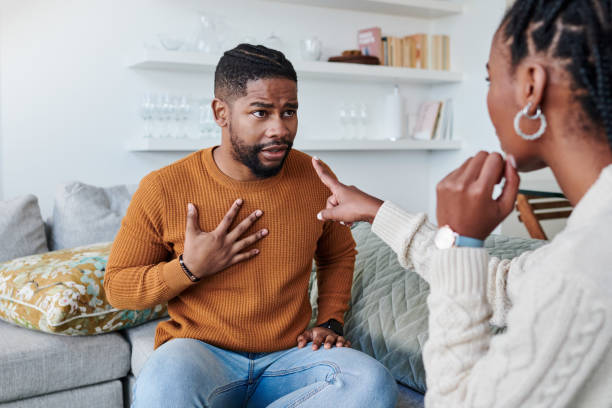
A completely ordinary question. But Ndilimeke's response arrived sharper than the question deserved: "Why does it matter to you? You weren't even around when it actually mattered." Shikongo blinked, genuinely confused, because they weren't talking about anything from the past. They were talking about dinner.

Yet somehow, in the space of one sentence, they were suddenly back at his sister's wedding two years earlier, the day he'd promised to attend Ndilimeke's university graduation and instead got stuck helping with last-minute wedding errands, missing the ceremony entirely.
He had apologised back then, sincerely and repeatedly. She had said she forgave him. And yet here it was, resurfacing in the middle of a conversation about birthday dinner logistics, as if the wound had simply been waiting for an opening.
Forgiveness and healing are not the same thing, and saying "I forgive you" doesn't automatically mean the hurt has finished doing its work underneath the surface.
Ndilimeke had invited her extended family, printed the programme herself, and sat in that auditorium scanning the crowd for Shikongo's face during the entire ceremony, only to realize, with a mixture of embarrassment and heartbreak, that he simply wasn't coming.
When he arrived that evening, apologetic and genuinely remorseful, she accepted his apology because she loved him and understood that family obligations sometimes collide unfairly.
But acceptance in the moment doesn't erase the quiet ache that formed that day - the feeling, however small, that she hadn't been prioritised when it mattered most.
Unresolved hurt doesn't disappear just because time passes or an apology was given. It goes quiet for a while, sometimes for months, but it doesn't vanish. It waits in the body and the memory, and it resurfaces whenever something even loosely resembling the original wound appears again, often in situations that have nothing to do with the original event.
Reasons Past Arguments Hijacking Present Relationships:
A - Surface forgiveness without real healing.
Saying "I forgive you" is a beginning, not an ending, and skipping the deeper healing work leaves the wound active underground.
B. Unprocessed emotional pain.
Like Ndilimeke, many people accept an apology while still carrying unaddressed hurt that was never fully expressed or explored.
C. Similar situations reopening old wounds.
A new event that echoes an old hurt, even loosely, can trigger the original pain instantly and intensely.
D. Fear of raising the past again.
Many partners avoid revisiting old hurts because they don't want to seem like they're still stuck on it, so the wound stays buried and unresolved.
E. Lack of a proper repair conversation.
A quick apology often replaces a deeper conversation about why the incident happened and how to prevent it from repeating.
F. Using the past as ammunition.
Sometimes, in the heat of an unrelated argument, old hurts get brought up strategically to win the current disagreement.
G. Emotional trust that was never fully rebuilt.
Trust can be verbally restored while emotional safety quietly remains shaky underneath.
H. Cultural pressure to move on quickly.
In many communities, dwelling on past hurts is discouraged, which can push people to suppress pain rather than properly resolve it.
I. Different healing timelines.
One partner may feel ready to move forward while the other is still privately processing, and this mismatch creates friction.
J. Anniversary reactions.
Certain dates, seasons, or events can unconsciously reactivate old emotional wounds without either partner realising why.
K. Never actually asking how the hurt affected the other person.
Apologies often focus on the apologiser's guilt rather than genuinely exploring the other person's experience.
L. Comparing current behaviour to past mistakes.
A new, unrelated action gets unfairly measured against an old wound, making forgiveness feel conditional and fragile.
M. Avoiding vulnerability during arguments.
Bringing up old pain can feel safer than expressing a new, present vulnerability directly.
N. Never renegotiating expectations after a hurtful event.
Couples often skip the step of agreeing on what should happen differently moving forward.
O. Believing love should erase the need for repair.
Some people assume that if the love is strong enough, past hurts shouldn't matter anymore, which unintentionally invalidates real pain.
We want to be honest with you here, because this is where so much relationship advice fails people: the goal isn't to never mention the past again, as if pretending it didn't happen makes love stronger. The goal is making sure the past has actually been fully addressed, so it stops leaking into unrelated present-day conversations.
## How Shikongo and Ndilimeke Finally Closed the Loop
That Friday evening, instead of getting defensive, Shikongo did something different. He sat down across from Ndilimeke and said, "I think we never actually finished talking about the graduation. I said sorry, but I never really asked how it felt for you, sitting there that day." Ndilimeke's eyes filled with tears immediately, not from anger, but from the relief of finally being asked. She told him everything—the scanning of the crowd, the empty seat, the quiet embarrassment in front of her family. He listened without interrupting, without defending himself, simply absorbing what she'd carried alone for two years.
Practical Guidance and Real Tools:
Revisit unresolved past hurts intentionally, even if an apology was already given, asking directly, "Did we ever really finish talking about this?"
Ask your partner how a past event actually made them feel, rather than assuming the apology covered everything.
Notice when an unrelated argument suddenly references old pain, and gently name it: "This feels bigger than what we're actually discussing right now."
Agree on what should be different moving forward after any hurtful event, rather than leaving the resolution vague.
Avoid using past mistakes as ammunition during new disagreements, since this erodes trust further rather than resolving anything.
Recognise that healing timelines differ, and be patient if your partner needs more time to fully move past something.
Create space for vulnerability during calm moments, not just during arguments, so old wounds can surface safely.
Watch for anniversary reactions around difficult dates, and check in with each other during those times.
Separate the past incident from your partner's present character, avoiding the trap of judging today's actions through yesterday's mistake.
Choose repair over avoidance, even when it feels easier to simply let old wounds stay buried.


Comments (0)
Please sign in to join the conversation.
Loading comments...