

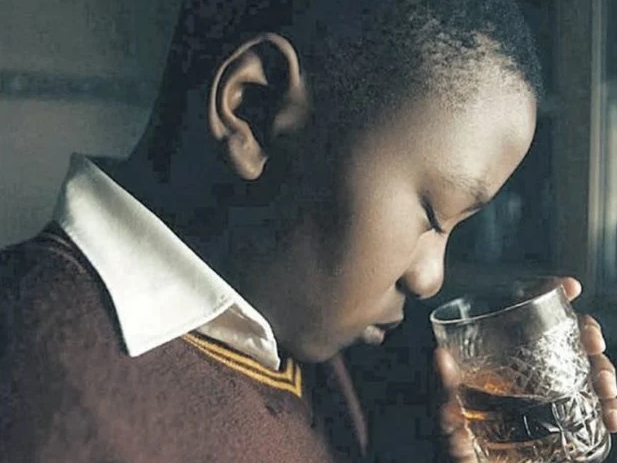
The compound was loud that December evening, the way it always got when the Ondo family gathered for end-of-year celebrations. Palm wine passed from hand to hand, someone's speaker crackled with old makossa records, and seven-year-old Divine sat on his uncle's lap, watching the adults laugh harder with every round poured.
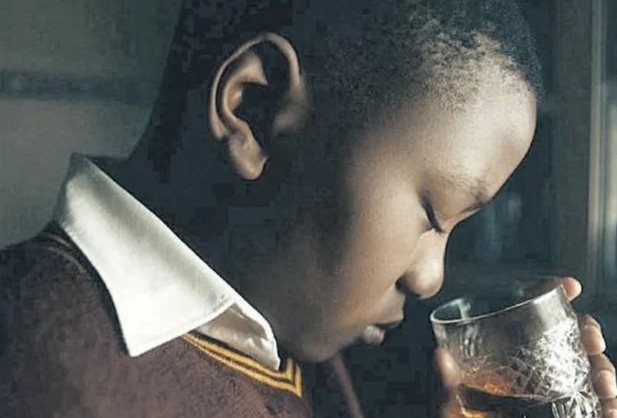
His uncle, Tonton Serge, dipped a finger into his glass of red wine and pressed it playfully to the boy's lips. "Taste am small small, you go strong like man!" The table erupted in laughter. Divine giggled too, not understanding what had just happened to his small body, only that the room found it funny, and children love being the reason a room laughs.
Somewhere along the line, a lot of us absorbed the idea that letting a child sip alcohol is harmless mischief, a rite of passage, even a badge of toughening them up." Grandmothers do it at festivals. Uncles do it during football matches.
Some mothers, tired after a long day of cooking and minding the house, do it just to quiet a fussy toddler with a spoonful of beer, believing it will make the child drowsy and easier to manage.
But what looks like a joke on the surface is quietly rearranging a child's biology underneath.
The Brain Is Still Under Construction
A child's brain is not a smaller version of an adult brain; it is an entirely different structure still being built, wired, and reinforced daily until the mid-twenties. The prefrontal cortex, the part responsible for judgment, impulse control, and decision-making, is one of the last regions to fully mature.
Alcohol interferes directly with this construction process. Even small, repeated exposures during childhood can slow the formation of neural pathways that a child will need later for concentration in school, for regulating emotions, and for making sound choices as a teenager.
A single celebratory sip may seem harmless, but the developing brain does not distinguish between "just once" and "just because grandma insisted."
Little Bodies, Big Consequences
A child's liver is small, still developing its capacity to filter and process substances the way an adult liver does. When alcohol enters a child's bloodstream, it doesn't get diluted the way it would in a full-grown adult body. This means a quantity that feels negligible to a grown man can cause a child's blood alcohol level to spike dangerously fast.
Symptoms guardians often miss include sudden drowsiness that looks like normal sleepiness, slurred speech mistaken for tiredness, or a drop in blood sugar that can cause seizures in extreme cases.
Mama Bibang, a mother of three, once recounted how her youngest became unusually quiet and cold to the touch after a family wedding where relatives had given him "just a small cup" of beer to "match the celebration." It took a frightening trip to the clinic before anyone connected the dots.
The Silent Emotional Cost
Beyond the physical risks lies something quieter but equally damaging: the emotional message a child absorbs.
When alcohol is handed to a child amid laughter and applause, the child learns, without anyone saying it outright, that drinking equals belonging, that alcohol is how adults celebrate, cope, and connect.
This becomes the invisible blueprint many teenagers carry into their first real encounter with alcohol at 15 or 16, except now there is no watchful uncle guiding the "small small" sip, only peer pressure and a bottle passed around without supervision.
Children raised around casual alcohol exposure are statistically more likely to develop early drinking habits because the taboo was broken for them long before they were emotionally equipped to handle it.
Culture Is Not the Enemy Here, Confusion Is
It would be unfair and untrue to paint every African household that does this as reckless. Many guardians genuinely believe this is affection, hospitality, or tradition, not harm. Tonton Serge did not wake up that morning intending to hurt Divine; he was simply repeating what his own uncles once did to him at that same age, in that same compound, decades earlier.
This is generational, passed down like a family recipe, unquestioned because it always seemed to "turn out fine."
But the truth many families are only now learning, through clinics, through schools, through public health campaigns, is that "turning out fine" often hides quieter damage: difficulty concentrating in class, unexplained irritability, or a child who develops an unusually high tolerance and curiosity for alcohol far too early.
Change does not require confrontation at the family table, and it certainly does not require shaming the elders who mean well. It starts with small, deliberate shifts.
- Redirect the ritual, not the celebration.
Offer children their own festive drink, a chilled malt beverage, fresh juice, or a sweetened zobo, served in a "grown-up-looking" cup, so they still feel included in the moment.
- Speak to relatives privately, not publicly.
A quiet word to Tonton Serge in the kitchen carries more weight and less embarrassment than a correction in front of the whole family.
- Explain the "why," not just the "no."
Children and even adults respond better to understanding than to prohibition. Saying "his liver cannot process it yet" lands differently than simply saying "don't."
- Watch for normalised language at home. Phrases like "just a taste" or "it will make him strong" should be gently challenged whenever they surface, especially from older siblings mimicking what they've seen.
- Model the behaviour you want repeated. Children copy what they see far more than what they are told, so an older sibling who visibly chooses a soft drink at a party teaches more than a hundred warnings ever could.
Protecting a child from alcohol exposure is about making sure the child sitting at that table gets to grow into someone whose brain, body, and future were never quietly compromised in the name of a shared laugh.



Comments (0)
Please sign in to join the conversation.
Loading comments...