


Funke's laptop balanced precariously on her knees while three-year-old Chioma tugged at her wrapper, demanding another cup of water. Six-year-old Adaora was sprawled on the rug practicing her letters with loud sighs, and little Bode, just one, dozed fitfully in the cot nearby after refusing his afternoon nap. The rice for dinner simmered on the stove, but the kitchen counter still held breakfast plates, and Funke’s work report deadline loomed like a quiet storm. That familiar heavy feeling settled in her chest again; not sharp anger, but a nagging weight that whispered she was failing at holding it all together.

Months earlier, the same weight had crept in during those hazy newborn days with Bode. She remembered standing in the same kitchen at dawn, cradling him while the older children called from their room, her body exhausted from night feeds and her mind replaying every undone chore. Tunde would return from his shift at the bank, roll up his sleeves without a word, and help sort the laundry, yet Funke still felt that invisible judgment pressing down, as if good mothers magically maintained spotless homes, thriving careers, and endlessly patient playtime all at once.
The expectations weren’t shouted; they lived in the quiet comparisons she made with herself, in the social media glimpses of perfectly arranged living rooms, and in the cultural threads that celebrated the strong African mother who never seemed to falter.
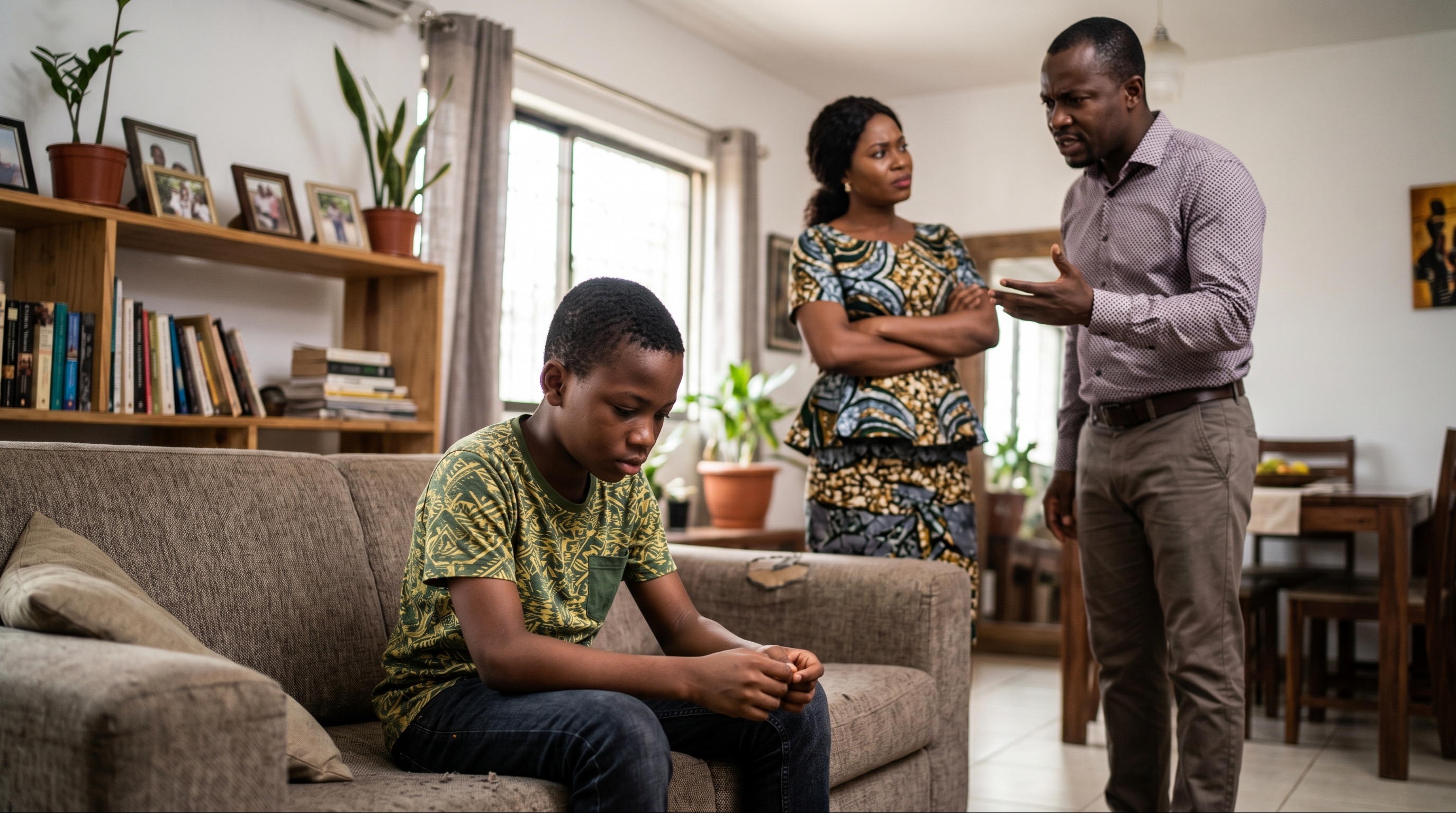
One ordinary Tuesday, after a particularly tiring day where the children’s energy outpaced hers and the house felt like a whirlwind she couldn’t quite tame, Funke paused. Tunde walked in, saw her shoulders slumped, and pulled her into a gentle side hug while the kids played. In that moment, she voiced the guilt aloud as a simple truth: she loved their family deeply, yet the pressure to perform perfection was stealing her peace. Tunde listened, nodded, and reminded her that their home was built on presence, not flawless management. That evening marked the quiet turning point where Funke decided the guilt would no longer steer their days.
Young moms, that heavy feeling you know too well, the one that shows up when the laundry piles up or when you choose thirty minutes of focused work over an extra story session, is real and human. But letting “mom guilt” dictate how you run your home steals the very joy and effectiveness you’re trying to protect. Mom cooks every meal from scratch, keeps the children in immaculate uniforms, advances at work without missing a beat, and still finds time to nurture everyone’s emotions. When real life interrupts that image, guilt rushes in to fill the gap.
Here’s the honest truth: family life with young children is rarely picture-perfect, and it doesn’t need to be. The guilt arises partly because we absorb unspoken societal scripts that equate a woman’s worth with seamless domestic control. There’s deep respect for mothers who sacrifice visibly, yet this same respect can morph into an internal voice that says any imperfection equals failure. When you allow that voice to determine your home management, you start making decisions from fear rather than wisdom.
You might push through exhaustion to scrub every surface before he returns, only to find yourself too drained for the warm conversation your marriage actually needs. Or you might say yes to every playdate request and every school project demand, ignoring that your own energy tank is empty.
Over time, this creates a home where tension simmers beneath the surface, not because the family is broken, but because the mother is running on self-judgment instead of sustainable rhythms. Young fathers reading this, understand that your wife’s quiet moments of doubt aren’t signs of weakness; they’re signals that the mental load is heavy. Stepping in without being asked, celebrating small wins together, and sharing the planning of household systems lightens that load in ways that matter more than grand gestures.
The better path is managing your home from a place of clarity and self-compassion rather than guilt.
This doesn’t mean lowering standards or neglecting responsibilities. It means recognizing that a functional, loving home for young children prioritizes consistency over perfection. These choices, when made intentionally, build security for your children far more than spotless counters ever could.
Many of us grew up seeing our own mothers stretch themselves thin, often without the dual pressures of formal careers that today’s young moms face. That legacy carries beauty but it also risks passing down the idea that struggle without visible relief is the only honorable way. You can honor that strength while choosing differently for your generation. Speak with your partner about realistic divisions of labor that fit your specific season. These conversations, held in calm moments rather than crisis, create teamwork that reduces the isolation guilt thrives on.
Mom guilt often pushes unnecessary spending for perceived shortcomings.
A thoughtful approach might involve creating simple systems: a weekly meal plan using affordable local staples, a rotating chore chart that includes even the older children in small ways, and protecting pockets of time for your own recharge. When you release guilt’s grip, you gain the mental space to make these practical decisions without the emotional tax that clouds judgment.
Emotionally, children absorb the atmosphere more than the aesthetics.
They remember the mother who laughed with them despite the unfolded clothes, not the one who was perpetually frazzled trying to meet impossible bars. Your young ones need your steady presence more than they need a showroom home. When guilt dictates, that presence becomes performative. You’re there physically but mentally elsewhere, calculating what you’re doing wrong. Breaking that cycle starts with naming the guilt for what it is: a feeling, not a fact.
As young couples building life together, remember that home management in this season is less about rigid control and more about adaptive flow. One partner might carry more domestic weight while the other pushes a career milestone. This flexibility, rooted in mutual support, strengthens the family unit far beyond what solo perfection ever achieves.
Allowing mom guilt to lead often stems from fear.
Facing that fear honestly frees you. You become more present, more creative with limited resources, and more connected to your partner. Practical steps emerge naturally: batching similar tasks, accepting help when offered without guilt, setting boundaries on screen time or social commitments so energy remains for what matters.
Young moms, you are not failing when the house reflects the beautiful chaos of raising young souls. You are actively shaping a family that learns resilience, adaptability, and grace through your example. By refusing to let mom guilt determine your home management, you model something powerful: that worth isn’t earned through flawless execution but through faithful, imperfect presence.
Your partner sees a woman who values sustainability over performance. Your children experience a mother whose emotional availability isn’t sacrificed on the altar of impossible standards. And you reclaim the energy to enjoy this season.


Comments (0)
Please sign in to join the conversation.
Loading comments...