

Screen time in the early years isn't really about screens. It's about attention, connection, and the quiet architecture of a child's developing brain, which is busier building itself between birth and age six than at almost any other point in life.
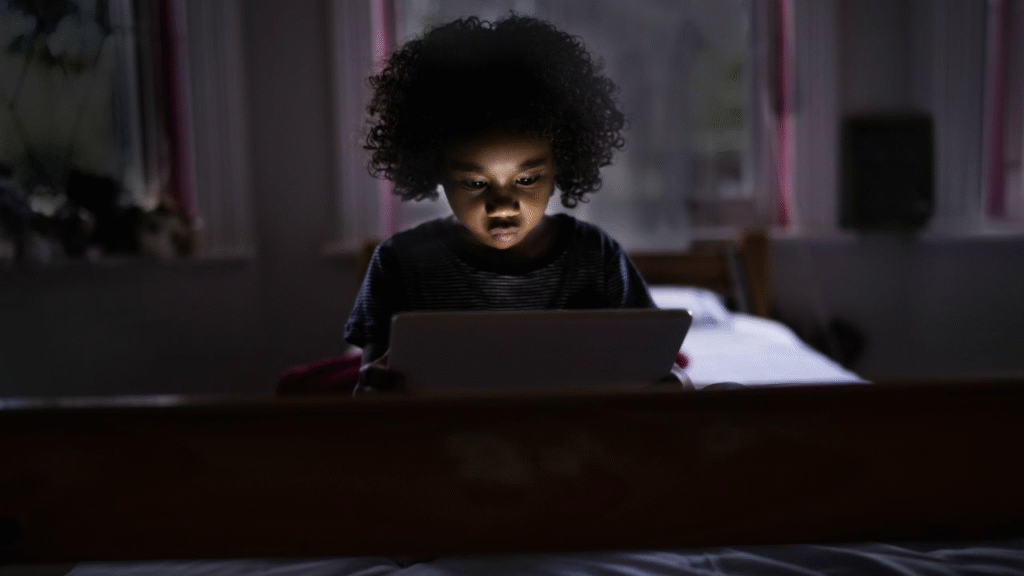
Amina finally sat down to breathe. Her three-year-old son, Youssef, was curled on the sofa, tablet propped against a cushion, eyes wide and unblinking, thumb occasionally swiping without him even looking down. She smiled at first — he was quiet, he was safe, and honestly, she was exhausted. But something in her chest tightened when she realised she couldn't remember the last time he'd asked her to play, to read, or even to look at him. He hadn't looked up in forty minutes.
That night, after Youssef finally fell asleep, Amina sat with her husband, Karim, on the balcony. She didn't accuse him. She didn't accuse herself either. She just said, quietly, "I think we lost a few hours of him today, and I don't know how to get them back."
Karim didn't respond right away. He looked out at the city lights and said, "I think we've been losing them for a while. We just didn't want to say it out loud." That single exchange became the turning point for their family. It wasn't dramatic. It was just real. And that's usually how change actually starts.
Every conversation Youssef missed while staring at a glowing rectangle was a conversation his brain didn't get to practice. Every moment he wasn't negotiating with a sibling, naming his frustration out loud, or asking "why" for the hundredth time, was a rep his emotional muscles didn't get to build. That's just biology, and understanding it is the first step to doing something about it, without spiraling into shame.
Amina and Karim didn't throw the tablet in the Bouregreg River, as that would've felt satisfying. Instead, over the following weeks, they built a rhythm, and along the way, they learned eleven things that genuinely changed how their household functioned.
We're sharing them here not as rules, but as a mirror, because chances are, if you're reading this, you've had your own version of that balcony conversation.
Screens aren't the enemy; unregulated, unlimited access is. Youssef watching twenty minutes of an educational show while Amina cooked dinner wasn't the problem. The problem was the tablet becoming the default answer to boredom, tantrums, restaurants, car rides, and quiet mornings every single time.
The early years are a narrow window for language explosion. Passive screen content doesn't talk back. A child's vocabulary grows fastest through back-and-forth exchange, and a screen, no matter how colourful, never serves the ball back.
Boredom is not the villain parents think it is. When Karim started resisting the urge to hand Youssef a device the moment he sighed, "I'm bored," something unexpected happened; Youssef began building elaborate worlds out of couch cushions and kitchen spoons, because boredom, given space, turns into imagination.
Screen time often replaces sleep time more than parents realise. Amina noticed Youssef's bedtime battles softened dramatically once screens were switched off a full hour before bed, because the blue light and stimulation were quietly sabotaging his ability to wind down.
Kids mirror what they see, not what they're told. Karim realised his own phone habit of checking it at the dinner table, scrolling during Youssef's bath, was teaching a lesson louder than any rule they set, so the family began "phone baskets" at the door during meals.
One consistent boundary beats ten inconsistent ones. Instead of a complicated schedule nobody could remember, they picked one simple rule: no screens before breakfast, and stuck to it every single day, which made it easier for Youssef to accept, because kids don't fight consistency; they fight uncertainty.
Co-viewing changes everything. When Amina sat and watched with Youssef instead of using the screen as a babysitter, she found herself narrating, asking questions, and turning a passive activity into a shared one, which is a small shift with a surprisingly large emotional payoff.
Screen time guilt is often heavier on parents than the screen time itself. Amina used to lie awake replaying the hours Youssef spent on the tablet, until she realised that anxious guilt wasn't protecting her son — it was just draining her, and a calmer, more intentional parent serves a child better than a perfect record ever could.
Nine, cultural and family pressure plays a real role, and pretending it doesn't helps no one. Grandmothers who hand over their phones at every visit, cousins who compare whose child "already knows the alphabet from the app," neighbours who judge a fussy toddler in public should be regulated as part of regulating screen time.
Outdoor time and physical play are screen time's natural counterbalance. The evenings Youssef spent chasing his cousins around the courtyard did more for his mood, sleep, and appetite than any app ever promised to.
Connection is the actual antidote; not restriction alone. Amina and Karim discovered that simply removing screens without replacing that time with real attention just left a void; the goal was never a screen-free childhood, it was a connected one, where devices had a place, but never the main seat at the table.
You don't need to eliminate technology to protect your child's childhood. Start small. Start tonight, even if it's just one meal, one bedtime, one "watch me" moment at a time.

Comments (0)
Please sign in to join the conversation.
Loading comments...