
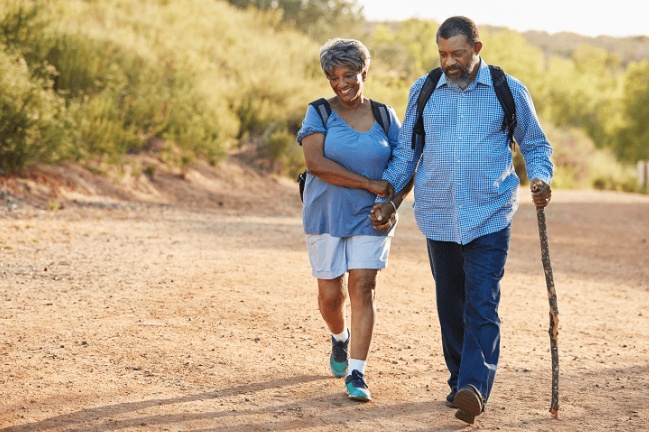
In busy African households, families are quietly harnessing the brain’s remarkable ability to rewire itself - just this afternoon, as the sun filters through the curtains of a modest home, where Mr. Adewale, a 52-year-old logistics manager, sits at the dining table, his right arm, heavy from the stroke that struck eight months earlier.
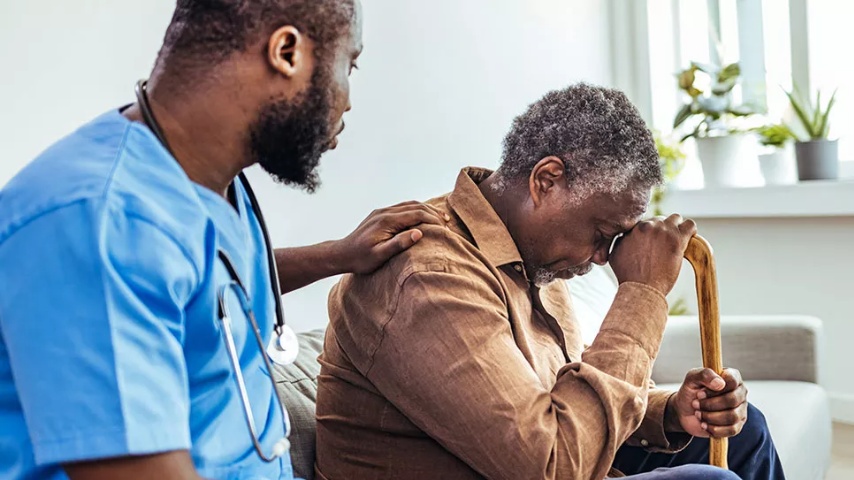
His wife, Funke, holds up a small mirror while their teenage daughter guides his left hand through a simple reaching task. What looks like an ordinary family moment is, in fact, a precise neuroplasticity exercise. Within weeks, Mr. Adewale begins lifting a cup with the affected hand — something his doctors had said might never return.
Across Africa, thousands of families are writing similar stories. They are not waiting for scarce hospital beds or expensive therapy centres. Instead, they are activating the brain’s built-in capacity for change right where they live.
Your Gut Is Talking — And It’s Driving Your Anxiety And Depression
Stroke remains one of the continent’s most unforgiving burdens happening every other time, whether in the urban or rural areas. According to the 2025 World Stroke Organization Global Fact Sheet, low- and middle-income countries—including those across sub-Saharan Africa — bear 87% of stroke deaths and 89% of disability-adjusted life years. A 2025 Lancet analysis of African data shows the region carries the world’s highest age-standardised DALY rate for stroke at 2,628 per 100,000 people.
Yet, the same science that once limited recovery to the first few weeks, now tells us the window stays open, far longer when we act deliberately at home. Recent 2025 – 2026 reviews confirm that consistent, family-guided movement practice triggers structural brain changes — new connections forming, dormant pathways lighting up — long after the acute phase. The difference is no longer about access to fancy clinics. It is about consistent, evidence-backed techniques woven into daily African life.
The Science We Now Understand
You need to know here and now that neuroplasticity is not a vague hope; it is a measurable biological process. After a stroke, surviving neurons sprout new dendrites and reroute signals around damaged areas.
A 2026 MDPI review on virtual-reality-assisted rehabilitation explains how task-oriented, repetitive training with immediate feedback accelerates this reorganisation in upper-limb and gait functions. Another 2025 systematic review in the Journal of Neuroplasticity and Rehabilitation analysed constraint-induced movement therapy, mirror therapy, and task-specific training across dozens of trials and found them all effective at enhancing motor recovery and functional independence.
The critical insight repeated across these studies: intensity and relevance matter more than location. When practice happens in the patient’s own environment — surrounded by familiar faces and routines — adherence rises and gains last longer.
Why Home-Based Recovery Fits African Realities
A 2025 Nigerian qualitative study on home-based care needs for older stroke survivors revealed that families want practical, low-cost strategies they can sustain without disrupting work or school. Telerehabilitation trials published in Brain Sciences in 2026 showed that remote-guided home programmes delivered outcomes equal to or better than clinic-only care, particularly for activities of daily living.
For busy professionals balancing careers and caregiving, the living room becomes the most powerful rehabilitation gym — available 24 hours, culturally comfortable, and free from Lagos traffic or long clinic queues.
13 Proven Techniques Families Can Start Today
These methods are drawn directly from 2023 – 2026 peer-reviewed evidence. Each can be performed with minimal or no equipment, involves family members as active partners, and targets the motor cortex through repetition, feedback, and intention.
1. Mirror Therapy
Place a mirror vertically between the arms so the unaffected hand’s reflection appears where the affected one should be. Move the good hand while watching the “reflection” perform the action. A 2025 review confirmed this visual trick activates mirror neurons and promotes cortical re-mapping within weeks.
2. Motor Imagery Training
Sit comfortably and vividly imagine performing a movement — lifting a spoon, writing your name — with the affected limb. Follow with 10–15 minutes of actual gentle attempts. Studies show mental rehearsal alone increases brain activation in the motor areas, priming real movement.
3. Action Observation Therapy
Watch videos of precise hand or walking movements (family can record themselves). Then imitate. The 2025 neuroplasticity physiotherapy review found this technique strengthens neural pathways through observational learning.
4. Modified Constraint-Induced Movement Therapy
Gently restrain the unaffected arm (mitt or sling) for 30 – 60 minutes daily while forcing the affected arm to perform tasks like sorting beans or turning pages. Home-adapted versions in 2023 Frontiers research improved arm use significantly.
5. Repetitive Task-Specific Training
Choose one functional task — reaching for a phone, folding laundry — and repeat it 50–100 times daily, breaking it into small achievable steps. This is the cornerstone of use-dependent plasticity cited in every major 2024–2026 review.
6. Bilateral Arm Training
Perform identical movements with both arms simultaneously — clapping, rolling a ball, lifting water bottles. Synchronised action recruits both hemispheres and speeds recovery.
7. Graded Motor Imagery Sequence
Progress through three stages: laterality recognition (identifying left/right images), motor imagery, then mirror therapy. This sequenced approach reduces pain and improves movement planning.
8. Rhythmic Auditory Stimulation
Move in time to favourite high-tempo Nigerian music or a metronome app. Rhythm primes the motor cortex; 2025 trials showed measurable gait and arm improvements.
9. Telerehabilitation-Guided Sessions
Use WhatsApp video or affordable apps for weekly check-ins with a physiotherapist. 2026 Brain Sciences trials proved home telerehab matches clinic results for upper-limb function.
10. Low-Cost Virtual Reality or App Gaming
Affordable smartphone VR headsets or free movement-tracking games encourage hundreds of repetitions in play. The 2026 MDPI review documented cortical reorganisation and higher patient motivation.
11. Portable Neuromuscular Electrical Stimulation
Small, battery-operated units (widely available in African pharmacies) deliver gentle pulses during movement attempts. Combined with voluntary effort, they amplify neuroplastic signals.
12. Family-Assisted Active-Assisted Range of Motion
A loved one gently moves the affected limb through its range while the patient actively participates as much as possible. This bridges passive and active phases, preventing contractures while building strength.
13. Integrated Daily Aerobic and Resistance Exercise
Short walks, seated marches, or resistance-band work raise brain-derived neurotrophic factor (BDNF) levels, creating a fertile environment for new neural connections. 2025 studies link this to both motor and cognitive gains.
Weaving Recovery into African Daily Life
These techniques thrive when embedded in routine. A Lagos family might use mirror therapy while watching evening news. A Kampala household could turn music-cued walking into a communal activity after dinner. The cultural emphasis on family presence turns every session into an act of love rather than clinical duty.
What You Can Do Today
* Choose one technique that matches your family member’s current ability and commit to 20–30 minutes daily.
* Involve at least two family members — one to guide, one to encourage — so no single person burns out.
* Track small wins weekly (photos, video, or a simple notebook) to see neuroplasticity in action.
* Combine mental (imagery) and physical practice in the same session for compounded effect.
* Schedule a one-time telerehab consultation via local physiotherapists or apps to personalise the 13 techniques.
* Celebrate cultural moments — music, shared meals, storytelling — while practising to keep motivation high.
Rest when needed; neuroplasticity rewards consistency, not exhaustion.