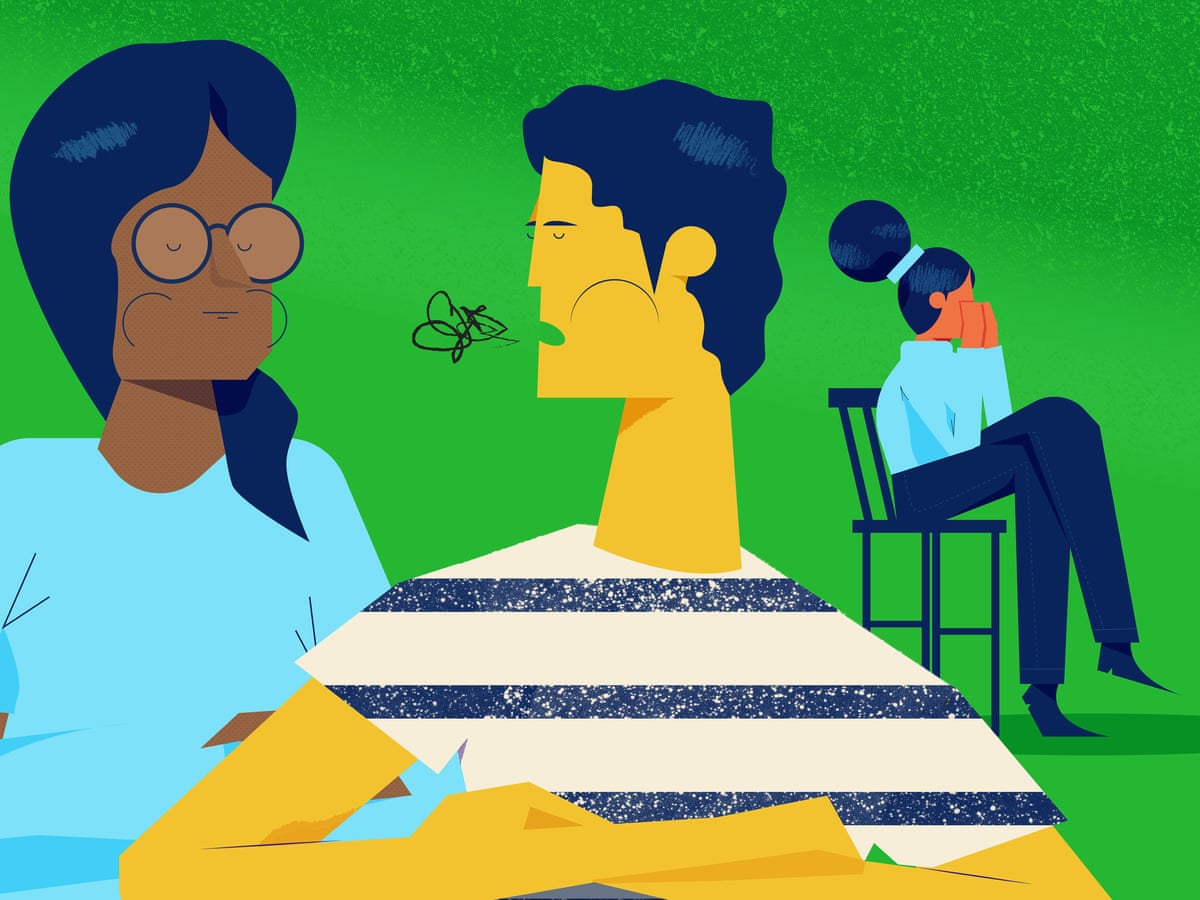

We are not anti-research. Reading about relationships can genuinely help you grow emotionally, relationally, and as a person. The problem is not information. The problem is using information as a substitute for intimacy. When the search bar becomes the first place you go instead of the last resort, you have quietly outsourced your relationship to strangers who have never met your partner, never seen the way they laugh at their own jokes, and never witnessed the specific and irreplaceable texture of what you two have built together.

That is what we want to interrupt — not curiosity, but the habit of treating Google like a couples therapist.
Adaeze was seated at the kitchen table, takeaway jollof rice going cold beside her phone, while Emeka, her boyfriend of two years,was in the living room watching a match, occasionally shouting at the screen the way men do when they've temporarily forgotten the world. On paper, everything was fine. The apartment smelled like peppered fish and air conditioning. There was a shared life being built between these two walls.
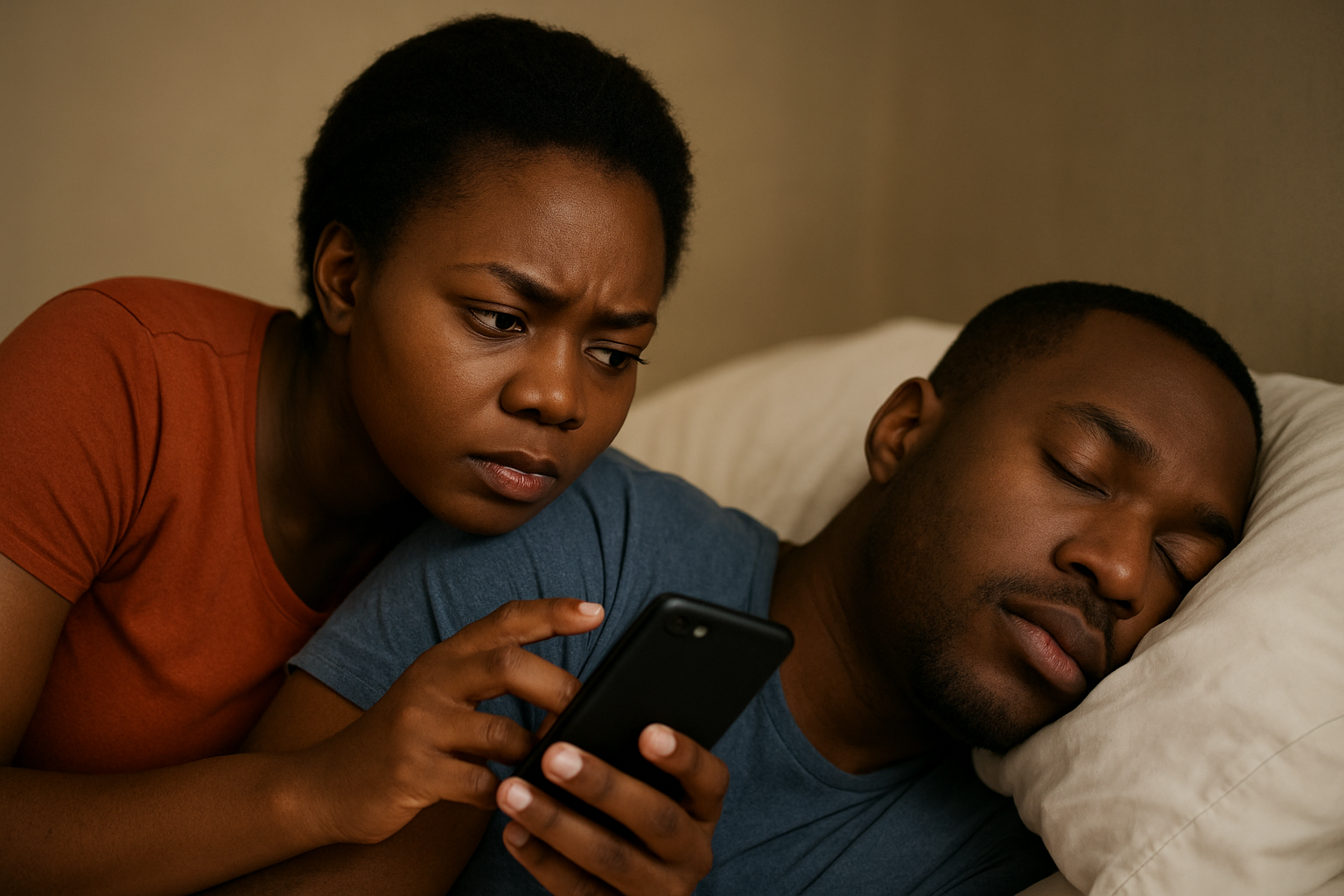
And yet, Adaeze had her thumbs moving across her screen with the quiet urgency of someone decoding classified documents, typing, "why does my boyfriend seem emotionally distant after a long day?" into a search bar that was more than happy to respond.
The results came back like a flood: articles, Reddit threads, YouTube commentary, TikTok therapists perched on ring-lit stools delivering verdicts in thirty seconds flat. One said emotional unavailability was a red flag. Another said it was attachment trauma. A third said she deserved better and linked to a quiz.
By the time Emeka wandered into the kitchen to ask if there was more rice, Adaeze looked at him; this man she had chosen, this man who had held her hand at her father's funeral, and for a fraction of a second, she assessed him like a suspect. Not a partner. A suspect.
That fraction of a second is what this article is about.
We are living through an era where information is cheap, attention is fractured, and the anxiety of love has found a new outlet: the search bar. Singles in relationships are particularly vulnerable to what we are going to call Search-Driven Relationship Drift.
It is the quiet, cumulative effect of spending too much time asking the internet what your partner's behaviour means, and too little time asking your partner. It is not dramatic. It does not announce itself. It just slowly turns someone you love into a case study you're building evidence against.
Here are the 22 reasons it is happening, and why recognising them might be the most honest thing you do for your relationship this year.
The 22 Reasons: Read Slowly, Read Honestly
01. Every Search Starts With a Conclusion Already in Mind
When Adaeze typed ‘why does my boyfriend seem emotionally distant," she was not genuinely open to the answer being "he watched a stressful match and is unwinding.’ She was hoping the internet would confirm what her anxiety had already suggested. Search engines are confirmation machines: respond to your framing and return results that match it. If you type in fear, fear comes back dressed as fact. The search bar does not know Emeka. It knows your keywords. And keywords stripped of context are not truth. They are an echo of your worst-case scenario.
02. You Start Diagnosing a Person Instead of Understanding One
After enough articles, you stop seeing your partner as a human being navigating life alongside you. You start seeing them as a collection of symptoms to be categorised. Emeka stops being ‘Emeka who sometimes goes quiet when he is stressed,’ and becomes ‘a man exhibiting signs of emotional unavailability.’ The clinical language of internet psychology feels sophisticated, but it strips the humanity out of someone you are supposed to be building intimacy with. Diagnoses belong in therapy rooms, not in the kitchen on a Tuesday night while jollof rice goes cold.
03. The Internet Writes About the Worst-Case Version of Your Partner
Content about relationships gets traction when it is alarming. "He loves you and is just tired" does not go viral. "10 Signs He Is Stringing You Along" does. The entire ecosystem of relationship content online is structurally biased toward catastrophe, because catastrophe keeps people reading, sharing, and coming back for more. When you consume this content during vulnerable moments in your relationship, you are not getting a balanced view of human behaviour; you are getting the dramatic version, filtered for engagement. Emeka does not deserve to be measured against the villain in someone else's content strategy.
04. You Start Collecting Evidence Instead of Creating Memories
There is a quiet but devastating shift that happens when you have read too many "red flag" articles. You stop being present in your relationship and start being a detective inside it. Sunday brunch with Emeka becomes a scene you are mentally cataloguing: did he check his phone too many times? Did he seem less attentive than last month? Was that comment slightly dismissive? Moments that should become memories become evidence files instead. And once you start building a case, you stop building a life together.
05. You Borrow Other People's Relationship Pain and Apply It to Yours
Reddit threads and comment sections are filled with people processing their own heartbreak, their own betrayals, their own specific situations with specific people who are nothing like Emeka. When you sit in those spaces long enough, their pain starts to feel instructive. "This happened to her, and she ignored the signs. I will not make the same mistake." But the problem is that their sign and your situation are not the same thing wearing the same coat. Pain borrowed from strangers rarely produces wisdom that fits your actual life. "The search bar does not know your partner. It knows your keywords. And keywords stripped of context are an echo of your worst-case scenario."
06. You Begin Expecting Your Partner to Perform, Not Simply to Be
After consuming enough content about what a "good partner" looks like, you unconsciously create a checklist. And then your actual partner, the flawed, tired, distracted, beautifully human Emeka, gets graded against it daily. He is no longer allowed to just exist in the relationship because he must perform at the standard the internet has set. That is an unfair and exhausting bar to hold someone to. And quietly, without realising it, you have stopped accepting him and started auditing him.
07. The Volume of Information Creates the Illusion of Certainty
The more you read, the more convinced you become that you understand what is happening. But reading twelve articles about emotional withdrawal does not mean you understand why Emeka specifically goes quiet after difficult work calls. Volume of information is not the same as depth of knowing. The illusion of certainty that comes from excessive research is particularly dangerous because it makes you stop asking questions. And a person who has stopped asking questions has stopped being curious about their partner. Curiosity is one of the foundations of lasting love.
08. You Start Testing Instead of Trusting
There is a thread of TikTok content dedicated to "testing" your partner to see how they respond. Say this, do this, withdraw this, and observe. Adaeze, deep in her search spiral, once tried going quiet for a day to "see if Emeka would notice." He did notice; he texted concerned, then called, then showed up worried. And instead of feeling loved, she felt the need to analyse whether his response was fast enough. She had turned a perfectly good man into a lab experiment. Testing destroys the very trust it is trying to measure.
09. Comparison Enters the Relationship Through the Side Door
Content about relationships is almost always illustrated with an idealised version of what things should look like. Couples who communicate perfectly. Partners who always know the right thing to say. Connections that seem to require no maintenance whatsoever. None of this is real, but it is convincing at 11 p.m. when you are already feeling uncertain. Without realising it, you begin holding Emeka up against these curated ghosts, and he loses every time, not because he is lacking, but because the comparison is fundamentally dishonest. Real love is built between real people, not between a real person and a highlight reel.
10. You Outsource Your Emotional Processing to Strangers
Feeling something difficult in a relationship is an invitation to reflect, to communicate, to sit with discomfort and grow through it. But the search bar offers an easier route: let someone else process it for you, let a content creator name it, package it, and tell you what it means. Over time, this outsourcing stunts your emotional development. You stop learning how to feel through things because you have found a way to skip to the explanation. And explanations without experience are just words. Growth happens in the feeling, not in the reading about the feeling.
11. Anxiety Masquerades as Awareness
One of the most disorienting parts of relationship search spirals is that they feel productive. You feel like you are being self-aware, emotionally intelligent, and responsible. You are researching. You are educating yourself. You are not just blindly trusting. But what is actually happening, more often than not, is that anxiety is wearing the costume of awareness. You are becoming more afraid. And fear, disguised as wisdom, is still fear. It still makes you smaller. It still makes your partner seem like a threat to manage rather than a person to love.
12. The Relationship Becomes a Problem to Be Solved, Not a Life to Be Lived
Emeka and Adaeze had a habit on Saturday mornings: street food from the bus-stop woman, a short walk, easy conversation that went nowhere in particular. After three months of deep search spirals, Adaeze found herself using those walks to mentally rehearse conversations she had scripted based on advice from relationship podcasts. The walk was no longer a walk. It was a strategy session. The relationship had quietly transitioned, in her mind, from something she was living inside to something she was trying to fix. The tragedy is that nothing was broken until she started treating it like it was.
13. You Begin to Pathologise Normal Human Behaviour
Not every moment of silence is emotional unavailability. Not every cancelled plan is a sign of waning interest. Not every distracted evening is disrespect. Human beings are tired, overwhelmed, preoccupied, hormonal, complicated, and these are not red flags. They are just Tuesday. But when you have spent significant time in spaces that teach you to read danger into ordinary behaviour, ordinary behaviour starts to look dangerous. Emeka is allowed to have a bad week. He is allowed to need space. He is allowed to be imperfect without it being a diagnosis.
14. You Stop Communicating Directly Because the Internet Told You to Observe
A significant chunk of relationship content online advises watchfulness over directness: to notice his patterns, track her consistency, observe before you speak. This sounds wise. It is not. Observation without conversation is surveillance. And no healthy relationship survives being treated as something to be monitored. The questions Adaeze was typing at 2 a.m, she could have asked Emeka most of them. Not all. But most. The conversation might have been awkward. It might have been uncomfortable. But it would have been real, and real is the only material from which genuine intimacy is built.
15. You Start Holding Your Partner Accountable for Content You Consumed
One of the strangest manifestations of search-driven drift is the moment your partner gets blamed for something they did not do yet. You read that men who do X eventually do Y. Emeka does X. So you begin treating him as if Y has already happened. You withdraw trust pre-emptively. You erect emotional walls against a betrayal that exists only in a stranger's story. Emeka walks into the room and encounters a version of Adaeze who is already angry at someone he has not yet become. That is one of the loneliest experiences a partner can have.
16. The Habit Quietly Erodes Your Confidence in Your Own Perception
Here is the irony: the more you search for external validation of your feelings, the less you trust your own inner voice. You stop asking yourself "what do I actually feel about this?" and start asking the internet "what should I feel about this?" Over time, you become dependent on external frameworks to make sense of your internal world. And a person who cannot trust their own perceptions cannot show up authentically in a relationship. Adaeze, at her most search-saturated, had genuinely lost the ability to decide whether she was happy without checking first.
17. You Start Grieving a Relationship That Is Still Alive
There is a particular kind of sadness that comes from spending too much time reading about relationships that failed — the warning signs people missed, the patterns they should have spotted, the way love quietly turned to loss while someone wasn't looking. Read enough of these accounts, and you begin to feel their grief as anticipatory grief for your own relationship. You start mourning Emeka while he is right there. You start mentally preparing for a loss that has not occurred and may never occur. That mourning creates emotional distance, and the distance then feels like evidence that you were right to mourn.
18. The Algorithmic Loop Amplifies Whatever You Fear Most
Search engines and social media platforms are designed to feed you more of what you already engaged with. If you clicked on one article about emotional unavailability, the algorithm noted that. If you watched one TikTok about partners who pull away, you will see seventeen more tomorrow. The machine does not know that you are actually fine; it only knows that fear got you clicking. So it gives you more fear. Within weeks, your feed has become a curated catastrophe, and every time you open your phone, the message is the same: your relationship is probably not okay. That is not truth. That is an algorithm doing its job.
19. You Become Reactive Instead of Responsive
Reactivity is what happens when you are operating from fear and accumulated suspicion. You flinch at small things, escalate quickly, and interpret neutrally intended comments through a negative lens. Responsiveness is what happens when you are present, grounded, and trusting. Search-driven drift moves people from the second state to the first, gradually and almost imperceptibly. Emeka makes an offhand comment about Adaeze's cooking, and she hears in it every article she has ever read about dismissive partners. He meant nothing. She heard everything. That gap between what was said and what was heard is where relationships go to slowly die.
20. It Trains You to See Relationships as Inherently Precarious
The cumulative message of most relationship content is that love is fragile, partners are unreliable, and you must always be on guard. This may be a useful perspective in some specific situations. As a general operating principle for a committed relationship, it is devastating. Relationships require a baseline of felt safety that this is not going to implode without warning. When content culture trains you to live in constant relational vigilance, you destroy that safety. And without safety, vulnerability dies. And without vulnerability, genuine intimacy is simply not possible.
21. You Start Treating Leaving as the Sophisticated Option
There is a strain of modern relationship content that has elevated leaving as the emotionally evolved response to almost any difficulty. Know your worth. Choose yourself. Do not settle. These are not bad ideas in context. But consumed as a background hum to a perfectly workable relationship, they make staying feel naive and leaving feel brave. Adaeze, at her lowest point in the search spiral, nearly ended things with Emeka not because something had gone catastrophically wrong, but because the content she was consuming had convinced her that a person who loved herself would not put up with such uncertainty. The uncertainty was entirely in her phone.
22. You Forget That Relationships Are Not Projects
The final and perhaps most fundamental reason your phone's relationship searches are making you treat your partner like a disposable option is this: the internet teaches you to approach relationships as things to be managed, optimised, and assessed, and humans do not thrive when they are managed, optimised, and assessed. Emeka is not a project. Adaeze is not a case study. They are two people who chose each other on a specific afternoon, in a specific city, for reasons that belong entirely to them. No algorithm has access to those reasons. No content creator can replicate that specific weight of chosen love. And every hour you spend searching for answers the internet does not have is an hour you are not spending inside the relationship that actually holds them.
Put the phone down a little more. Ask the real questions to the real person. And trust that the relationship in front of you is worth more than every algorithm's opinion of it combined.