
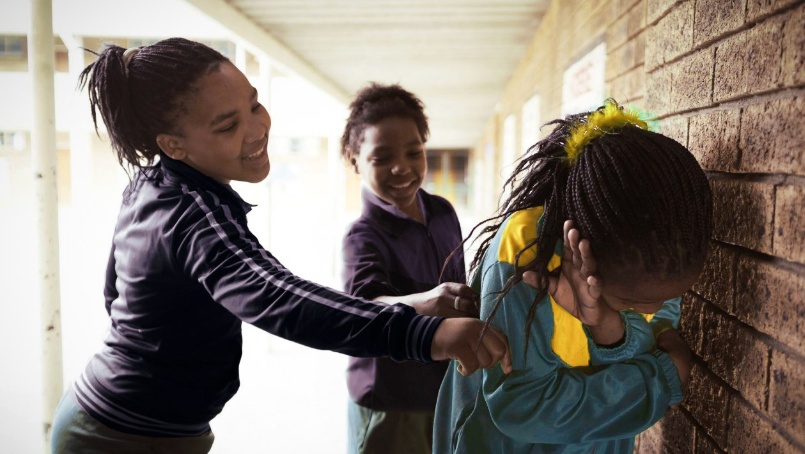
We, parents and guardians, stand at the centre of a quiet crisis that touches every school corridor, every playground, and every family chat group. We see the headlines about bullying – the gossip, the exclusion, the online cruelty – yet we rarely pause to ask where the behaviour truly begins.
The truth, rarely spoken in today’s fast-paced world, is that bullying is not a sudden schoolyard problem. It is most often a learned response that starts in the one place we control most completely: our homes.
When the home environment teaches anger first, children absorb it as the normal way to move through the world. We see the results in emotional and relational bullying – behaviours such as gossiping, exclusion, and online harassment – that have become increasingly common precisely because their non-physical nature makes them harder for adults to notice and address.
We know from lived family experience and from the consistent pattern observed across communities, that children who grow up hearing raised voices, sharp words, or constant criticism at home, carry that template into every relationship. They become angry and aggressive most of the time, not because they were born that way, but because the damage of constant exposure to tension at home was already done – and it was more than just physical.
LEARN HOW FAMILIES ARE REDISCOVERING CLOSENESS WHILE GUIDING TEENS THROUGH MENTAL HEALTH STRUGGLES
Anger becomes a form of self-protection, especially against unkind remarks and disrespect. In our homes, when we snap at each other over small things or allow disrespect to pass without gentle correction, we unintentionally train our children to use the same shield outside.
Bullying, we now understand, often begins as an attempt to be seen. A child who feels invisible or powerless at home quickly learns that controlling others through words or silence makes them feel powerful somewhere.
We must hold this truth gently: the behaviour is not the child’s full identity; it is a signal that something in their earliest environment needs our attention.
We as parents and guardians also witness how bullying rarely stems from a one-off incident. Rather, it is often intertwined with the child’s lived experiences, social environment, and emotional well-being.
The child who watches siblings or parents settle disagreements through sarcasm or exclusion, carries that script to school. The teenager who hears constant comparison at home begins to compare and diminish others to feel secure.
These patterns are not dramatic scandals; they are the everyday rhythms of family life that shape character more powerfully than any lecture. The rare wisdom here – one our elders understood instinctively – is that prevention is not about waiting for a school report. It is about noticing the tone around our dinner table tonight.
When we choose patience instead of irritation, when we model repair after conflict, we give our children a different script: one that says disagreements can be faced with respect and that every person deserves dignity.
Yet, home is only the first classroom.
As children grow older, we see bullying become an attempt to reckon with the unwritten rules of social hierarchies – their way of grappling with uncertainty or discomfort over who fits in, who is admired, and who is not. We live in a world that celebrates status more loudly than ever before.
Social media, peer groups, and even academic pressure whisper that belonging must be earned through control. Subtle exclusion, gossip, and social hierarchies can be equally harmful – for instance, the “queen bee system” among girls where one child maintains power by deciding who is in and who is out.
We, parents must recognise that these motivations are less about brute force and more about control, belonging, and perceived social status. Bullies do not have to be physically stronger or bigger than the people they target. A quiet, clever child who feels overlooked at home can become the most effective relational bully simply because they have learned that words and silence are powerful tools.
We guardians hold the balance the world needs when we teach our children that true status comes from kindness, not from climbing over others. The rare truth here is that every child craves significance. When we fail to give it to them through unconditional love and clear guidance at home, they will seek it elsewhere – sometimes at someone else’s expense. We can counter this by creating homes where every family member feels seen and valued without having to diminish anyone else.
Family meetings, shared chores done with laughter, and genuine praise for effort rather than perfection become daily antidotes. In doing so, we restore the natural order our grandparents protected: that the strongest person in any room is the one who lifts others up.
There is another layer that deserves our honest attention – the moment when bullying behaviours are perceived or justified as harmless fun. We have all heard the phrase “it’s just horseplay” or “boys will be boys” or “girls are just being girls.” When these words are used, bullies themselves are often unaware of the harm they are causing. The laughter that follows a cutting joke hides the sting for the child on the receiving end.
We parents sometimes repeat the same justification because it feels easier than confronting the discomfort. Yet the wisdom we must reclaim is that “just joking” is never just joking when it leaves another child anxious, withdrawn, or doubting their worth. The rare truth today is that many of us grew up with this language ourselves and survived, but survival is not the same as thriving. Our children deserve more than survival; they deserve homes and schools where emotional safety is the norm.
We as a society of parents and guardians can create that safety when we choose to interrupt the pattern early. This does not mean perfection. It means progress. It means pausing when we feel anger rising and naming it calmly: “I am feeling frustrated right now, and I am choosing to speak kindly.” Children watch and learn.
When we apologise after a sharp word, we teach them that strength includes accountability. When we listen to their school stories without immediate judgment, we give them space to process their own emotions. These small acts compound into the character that protects both them and others.
Holistic balance requires us to look beyond our individual homes as well. Schools, faith communities, sports clubs, and extended families all play supporting roles. Yet none can replace the primary influence of the home. We guardians must therefore partner with teachers, not blame them. We must monitor online spaces without invading privacy, guiding instead of spying. We must model the emotional intelligence we hope to see in our children.
Research consistently shows that children who grow up with secure attachment and clear emotional coaching are far less likely to bully and far more likely to intervene when they see it. This is not theory; it is the lived outcome of families who choose presence over distraction.
The world today moves at a speed that makes deep family connection feel optional. Screens, work pressures, and endless activities pull us apart. In that rush, the rare truth we must reclaim is that the most powerful classroom our children will ever attend is still the one around our kitchen table. The tone of our voices, the respect in our eyes, the way we handle disappointment – these become the blueprint for how our children treat the world. When we teach anger first, we hand them a tool they will use. When we teach empathy first, we hand them a shield that protects everyone.
We parents and guardians are not powerless. We are the first and most influential line of defence. By choosing to examine our own homes with honesty and love, we can raise children who seek belonging without harming others. We can teach them that true power lies in lifting voices rather than silencing them, in building friendships rather than hierarchies. This is the balanced path the world needs daily: firmness without harshness, guidance without control, love that is both tender and strong.
The wisdom in every story of bullying prevention is simple yet profound: change begins with us. When we model self-control, when we create homes where every child feels seen without having to fight for it, when we refuse to dismiss hurtful “horseplay” as harmless, we break cycles that have repeated for generations. Our children watch. They learn. They carry our example into their schools, their future families, and their communities. In doing so, we do not merely stop bullying; we raise a generation that knows how to build kindness as naturally as they once learned anger.
This is the quiet revolution available to every parent and guardian reading these words. It does not require wealth or special programmes. It requires only the daily choice to teach respect first, empathy second, and self-worth third. When we make that choice together – across every home in every neighbourhood – we give our children the greatest gift possible: the ability to walk through life without needing to diminish anyone else to feel valuable themselves. That is the balanced world we can create, one family at a time, starting tonight at dinner.
:max_bytes(150000):strip_icc()/GettyImages-667816610-5988bfc422fa3a00109ffb28.jpg)