Roughly 23.6% of paternity tests conducted by Smart DNA Nigeria during its 2025/26 reporting period came back negative, meaning the man tested was not the biological father, according to the company's latest annual DNA Testing Report.
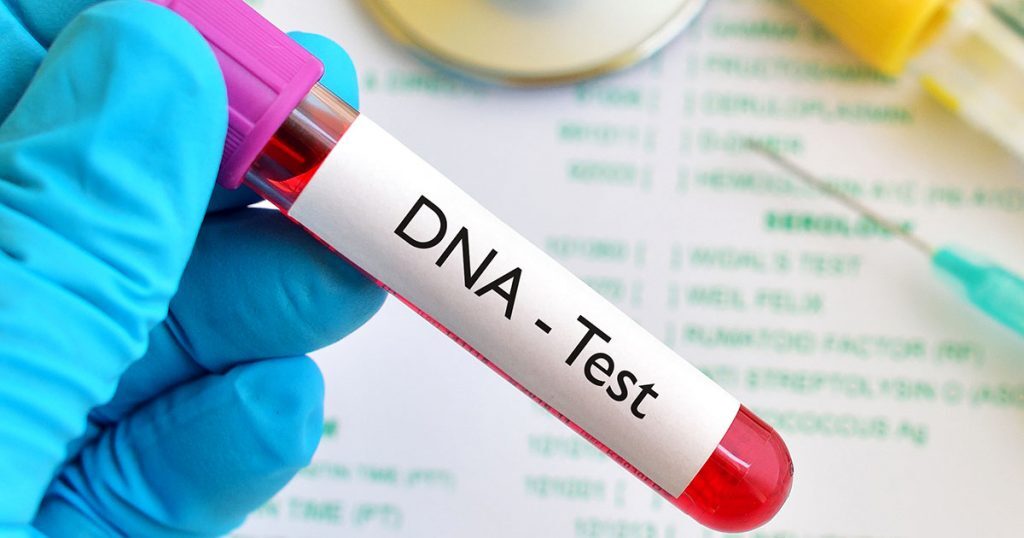
The figure, released in a statement on Sunday, August 24, 2026 in Lagos, marks a slight decline from 24.0% the previous year and 26.1$ in 2023.
But Smart DNA was quick to caution against reading too much into the number.
Its clients, the company stressed, were not a random sample of Nigerian families — they were people who had already developed doubts or specific reasons to seek testing in the first place.
The 23.6%, it said, reflects that self-selected group and cannot be used to estimate how common non-paternity is across the country as a whole.
Most of the testing had nothing to do with courts or immigration offices.
The report found that 87% of tests were ‘Peace of Mind’ tests — private, self-initiated checks carried out outside any legal or immigration process — up from 83.7% the year before.
Immigration-related tests made up 9.7% of cases, legal tests 1.9 per cent, avuncular tests one per cent, and prenatal testing just 0.4%.
The people seeking answers were mostly older men. Those aged 41 and above made up 48% of male clients, while men between 31 and 40 accounted for a further 35.8% — meaning more than eight in ten male clients were over 30.
On the children's side, 59.% of those tested were five years old or younger, a proportion that has barely shifted from the previous period.
Smart DNA said this pattern suggests many families would rather settle questions of biological relationship early, though the data alone can't explain why.
Lagos dominated the testing landscape, accounting for 75.1% of all classified cases, up from 69 per cent previously.
Within the state, Lekki recorded the most cases, followed by Ajah, Ikorodu, Yaba and Ikeja, with Lagos Mainland making up 61.6% of location-specific cases.
Beyond Lagos, Ogun led testing activity, trailed by Delta, Oyo, Rivers, Enugu, Edo, Abuja, Imo and Kwara — a spread the company said points to slowly growing awareness of DNA testing nationwide.
Men were also far more likely than women to make the first move. Men initiated 78.6% of first contacts with the company, compared to 15.2% by women.
By ethnicity, Yoruba clients made up 52.6% of the total, followed by Igbo at 29.1%, Edo at 5.8%, a combined 5.4% for Delta, Ijaw, Isoko, Urhobo and Itsekiri groups, and Hausa clients at one per cent — figures Smart DNA attributed to its own client and geographic base rather than any real difference in paternity patterns between ethnic groups.
The company closed its report with a broader point: DNA testing can answer biological questions with a high degree of accuracy, but it cannot explain the social, cultural, economic or relationship factors that lead families to seek those answers in the first place.
It urged the public to rely on evidence, not rumour or sensational claims, when discussing paternity and family relationships in Nigeria.

Comments (0)
Please sign in to join the conversation.
Loading comments...