

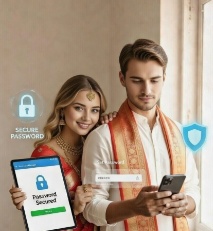
In today’s digital world, our phones and online accounts hold pieces of our lives we once only shared in person, messages, photos, banking information, even our personal thoughts and details. With so much of ourselves online, many couples find themselves asking, should we share passwords?
It sounds simple, almost romantic. Sharing a password can feel like saying, I trust you completely. It can be a gesture of openness, a way to show that you have nothing to hide. But as many couples discover, it’s not always that simple. Sharing passwords can bring comfort, but it can also create tension, blur boundaries, and even spark arguments.
For some couples, sharing passwords feels natural. It can make life easier, coordinating shared accounts like streaming services, calendars, or subscriptions, giving access to important information during emergencies, or feeling emotionally connected, as if you truly have access to each other’s world.
Take the story of Tolu and Chidi, who have been married for three years. Tolu shared her passwords with Chidi early in their marriage. “It felt like trust,” she says. “I wanted him to see my world without secrets.” For them, password sharing became a symbol of closeness, a way of saying, We are completely open with each other.
But not every relationship benefits from full access. Some people feel their privacy is being invaded, or that constant access creates pressure rather than comfort. It can feel like surveillance rather than trust. Accidental mistakes, like reading a message out of context, can spark fights. Sharing passwords doesn’t automatically guarantee honesty.
For Amina, sharing her password with her partner became a source of stress. “I felt like I had to explain everything I did online,” she admits. “It wasn’t about hiding things, it was about having my own space.” Psychologists agree, trust isn’t built on access to accounts, it’s built on communication, respect, and understanding. Pressuring a partner to share passwords can backfire, creating stress and resentment instead of intimacy.
There is no universal rule. Some couples share certain accounts, like Netflix or a joint calendar, while keeping personal accounts private. Others are completely open and comfortable exchanging passwords. The key is mutual understanding. Ask yourselves before sharing, why do we want to share this password, is it trust, convenience, or control, how will it affect my sense of independence, and are we comfortable with boundaries even if accounts are shared.
The healthiest couples find a balance, they communicate openly about their digital lives, respect privacy, and use shared access as a tool, not a test of loyalty. In the end, sharing passwords is less important than talking honestly about your digital lives. Trust is not proven by access, it is proven by how partners treat each other every day. Respecting boundaries, being transparent, and listening to each other matters far more than any combination of letters, numbers, or symbols.
Passwords are just tools, they are not love, loyalty, or commitment. A healthy relationship thrives on honesty, respect, and communication. Sharing a password can be convenient or comforting, but it should never replace the real foundation of a relationship, trust.
Whether you decide to share every password or keep some private, the most important thing is knowing that your partner values you, respects your boundaries, and communicates openly. That is the kind of trust that lasts, far beyond any login or password.



Comments (0)
Please sign in to join the conversation.
Loading comments...