

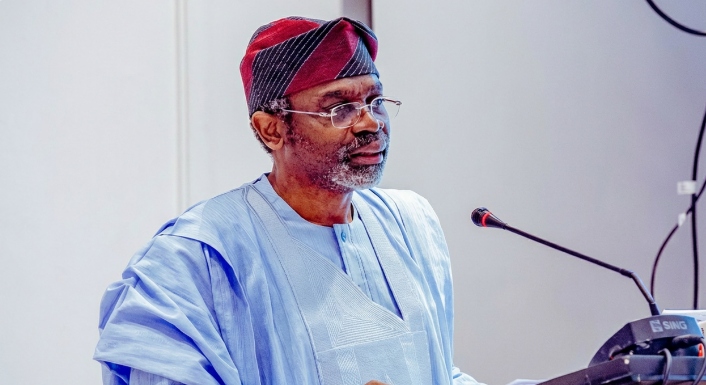
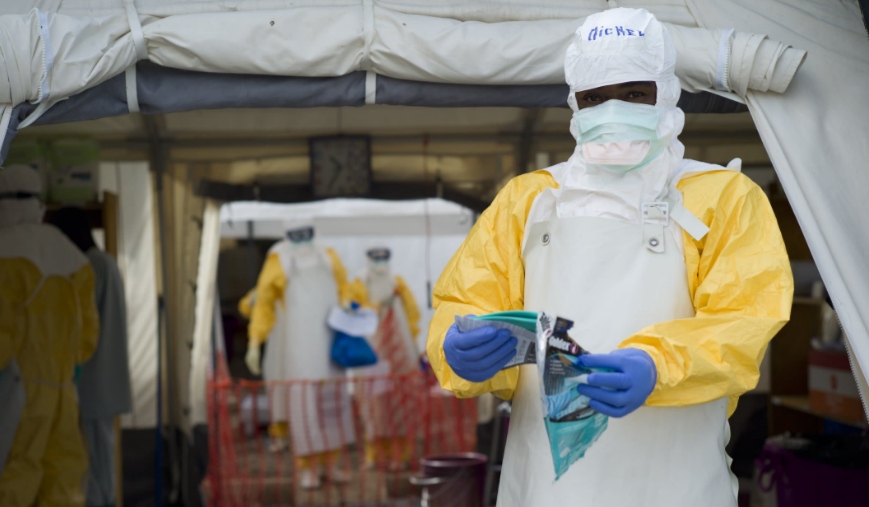
The federal government has inaugurated a Presidential Task Force on Ebola Virus Disease Preparedness, signalling a deliberate shift from reactive crisis management to proactive disease prevention, making clear that this time, Nigeria intends to be ready before the virus arrives, not after.
Chief of Staff to the President, Femi Gbajabiamila, inaugurated the task force at the State House in Abuja on Thursday, confirming that no case of Ebola has been reported in Nigeria but stressing that the absence of an outbreak is precisely why action must be taken now.
"We did the inauguration today on the preparedness of Nigeria for the Ebola virus disease. We've covered a lot of ground. Right now, there's no reported case, which is good news, and that's why all hands have to be on deck to make sure the measures we are taking are preventive, not curative," he told State House correspondents after the inauguration.
The memory of 2014 loomed large over Thursday's event.
That year, a Liberian-American diplomat, Patrick Sawyer, arrived in Lagos carrying the Ebola virus, triggering a frantic, high-stakes race to contain what could have become a catastrophic outbreak in Africa's most populous city.
Nigeria eventually contained it but not without fear, chaos, and the deaths of several healthcare workers.
Gbajabiamila made clear the government has no intention of reliving that experience.
"We don't want to be in the situation we were last time, where we had a carrier in the country and we're all running helter-skelter," he said.
The task force has established several subcommittees to coordinate preparedness across critical areas, including disease surveillance, border control, immigration management, and emergency response.
Governors and representatives from states hosting international airports participated in the inaugural meeting, reflecting the government's recognition that Ebola does not respect administrative boundaries.
But in a significant departure from previous preparedness frameworks, Gbajabiamila said this task force would go beyond airports.
Nigeria's vast and porous land borders, he noted, represent an equally serious vulnerability that previous responses had underestimated.
"Normally, when people talk about emergency preparedness and cross-border diseases such as this, they think about airports. But now we're covering not just airports; we're placing greater emphasis on land borders. We have a lot of cross-migration through the land borders, and the Border Control Development Agency is involved, immigration is involved, and a lot of the border communities are involved," he said.
The Director-General of the Nigeria Centre for Disease Control and Prevention (NCDC), Dr. Jide Idris, confirmed that surveillance systems at major points of entry have already been strengthened, while acknowledging that recent developments elsewhere on the continent have made vigilance essential.
"The focus is to be prepared. We don't have any Ebola case here now, but we need to be prepared. We need to ensure that we don't get that Ebola virus here. However, just in case one slips in, we want to be prepared nationally to identify and deal with the case," Idris said.
He described the preparedness framework as a genuinely whole-of-government effort, drawing together the ministries of health, interior, and education, alongside immigration, border control agencies, and state governments, all operating under a clearly defined command-and-control structure.
"The bottom line is that the objective is that we do not allow Ebola to come in. If it does come in, we are prepared to rapidly identify and manage the case nationally," he said.
THE NATION


Comments (0)
Please sign in to join the conversation.
Loading comments...