

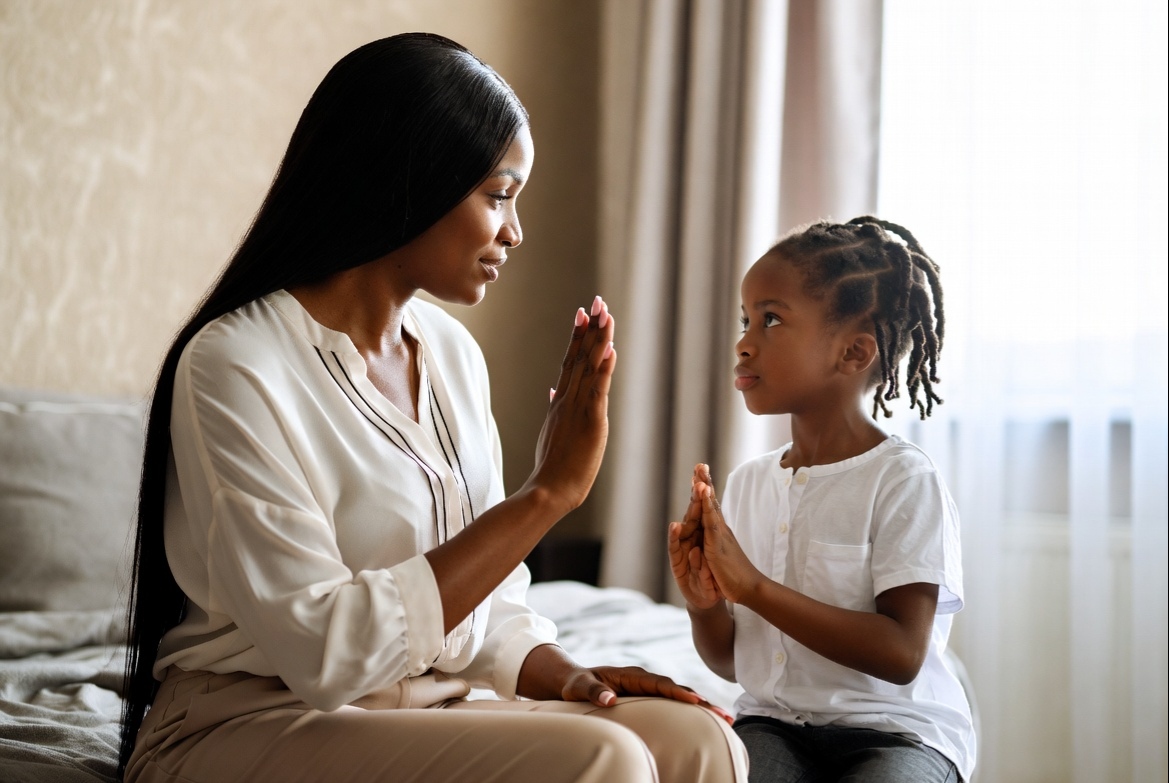
No parent ever wants to imagine their child being hurt. Yet every year, thousands of children experience some form of abuse, such as physical, emotional, sexual, or neglect.

What's more? The painful truth is that in the majority of cases, the perpetrator is someone the child already knows and trusts. That reality doesn't make the world a place to fear. It makes early, open, and honest parenting the most powerful tool you have.
Why You Must Include Your Boy-Child in a Menstrual Hygiene Conversation
This is not about raising anxious, suspicious children. It is about raising confident ones. Children who know themselves, trust their instincts, and know without question that you are a safe person to come to.
Start With the Body, Early
One of the most effective things you can do as a parent is teach your child about body autonomy from a very young age. Children who understand that their body belongs to them and that no one has the right to touch it without their permission are significantly better equipped to recognise and report inappropriate behaviour. Use the correct anatomical names for body parts. Avoid teaching shame around the body. Make clear that private parts are private, and that no adult, regardless of who they are or how much your child loves them, should ask to see or touch those areas in secret.
The concept of "good touch" and "bad touch" is a useful starting point, but go further. Talk about uncomfortable touches, the kind that feel confusing or that someone asks to be kept secret. Children often struggle to recognise abuse not because they didn't feel something was wrong, but because they lacked the words to name it or the confidence that they would be believed.
Create a Home Where Talking Is Safe
If a child only comes to you with good news, that should concern you just as much as silence. The goal is a relationship where your child feels genuinely comfortable bringing you anything; the awkward, the frightening, even the shameful. This does not happen automatically. It is built through years of small moments. This entails not overreacting when they tell you something you didn't want to hear, listening without immediately jumping to problem-solving mode, believing them when they describe how they feel, and resisting the urge to dismiss concerns as exaggerated or silly.
Children who are raised in homes where communication is open and emotions are validated are far less likely to keep secrets that someone has pressured them to keep. Abusers depend on silence. They groom children specifically by fostering isolation and shame. A child who knows they won't be dismissed or disbelieved is far more likely to speak up when something feels wrong, even if it takes a few tries to find the right words.
Teach Them the Language of Boundaries
Teaching children to say no, clearly and without guilt, is one of the most underrated parenting tools available to you. Many well-meaning families inadvertently teach children to override their own discomfort in the name of politeness. Forcing your child to hug a relative when they don't want to, insisting they "be kind" when they've expressed they feel uncomfortable, or minimising their hesitation about a person or situation all chip away at their ability to trust and act on their own instincts. Instead, validate that no means no, even within the family. Let them see that their discomfort matters and will be taken seriously.
Older children and teenagers need an additional layer of this conversation: understanding coercion. Not all pressure is physical. Emotional manipulation, guilt-tripping, threats, and gradual boundary-crossing are all forms of grooming behaviour. When young people can identify these patterns and name them, they are far less vulnerable to them.
Know Who Is Around Them and Stay Present
Abusers don't always look suspicious. They often look like the most caring, helpful, wonderful person in the room. They volunteer, they mentor, and they're beloved by the community. This is precisely why grooming is so effective, since it works on parents as much as on children. Staying present and involved in your child's life is not helicopter parenting. It's knowing who their friends are, who their teachers are, who they spend time alone with, and what spaces they move in both online and offline.
Pay attention if an adult is paying an unusual amount of individual attention to your child, offering them gifts, seeking time alone with them, or encouraging secrecy. These are patterns worth taking seriously, even if the individual seems lovely. Trust your instincts and teach your child to trust theirs. Discomfort exists for a reason.
Don't Overlook the Digital World
Online abuse and exploitation are among the fastest-growing threats to children in the United Kingdom today. Children as young as eight are spending significant time online, and many are doing so without adequate supervision or guidance. Have ongoing conversations, not a single "stranger danger" talk, about what safe online behaviour looks like. Establish clear boundaries around private messages, photo-sharing, and talking to people they've never met in person.
Use parental controls as a starting point, not a solution. No filter replaces an open relationship where your child feels comfortable telling you if someone online has said something that made them uncomfortable, asked for photos, or tried to move a conversation somewhere private. Create the environment where that conversation can happen without fear of judgement or having their devices taken away as punishment for honesty.
Believe Them. Always Start By Believing Them
If your child tells you something happened, or even hints that something might have, your first response matters enormously. Stay calm. Don't interrogate them or press for details in a way that feels overwhelming. Don't immediately express disbelief, even if what they're saying is about someone you care about. Simply say: "I believe you. I'm glad you told me. None of this is your fault." Then take action by contacting your doctor, a social worker, or in urgent cases, the police.
Children rarely lie about abuse. What they far more commonly do is minimise it, retract it when they're scared of the consequences, or never say anything at all. If they've come to you, that is a profound act of trust. Honour it.
Conclusion
Keeping your children safe from abuse is not about perfect surveillance or keeping them inside a bubble. It is about equipping them with self-knowledge, open lines of communication, and the unshakeable belief that they are loved and believed. Protection isn't a single conversation. It's a thousand small ones about bodies, feelings, trust, and the certainty that you are always, always a safe place to land.


Comments (0)
Please sign in to join the conversation.
Loading comments...