

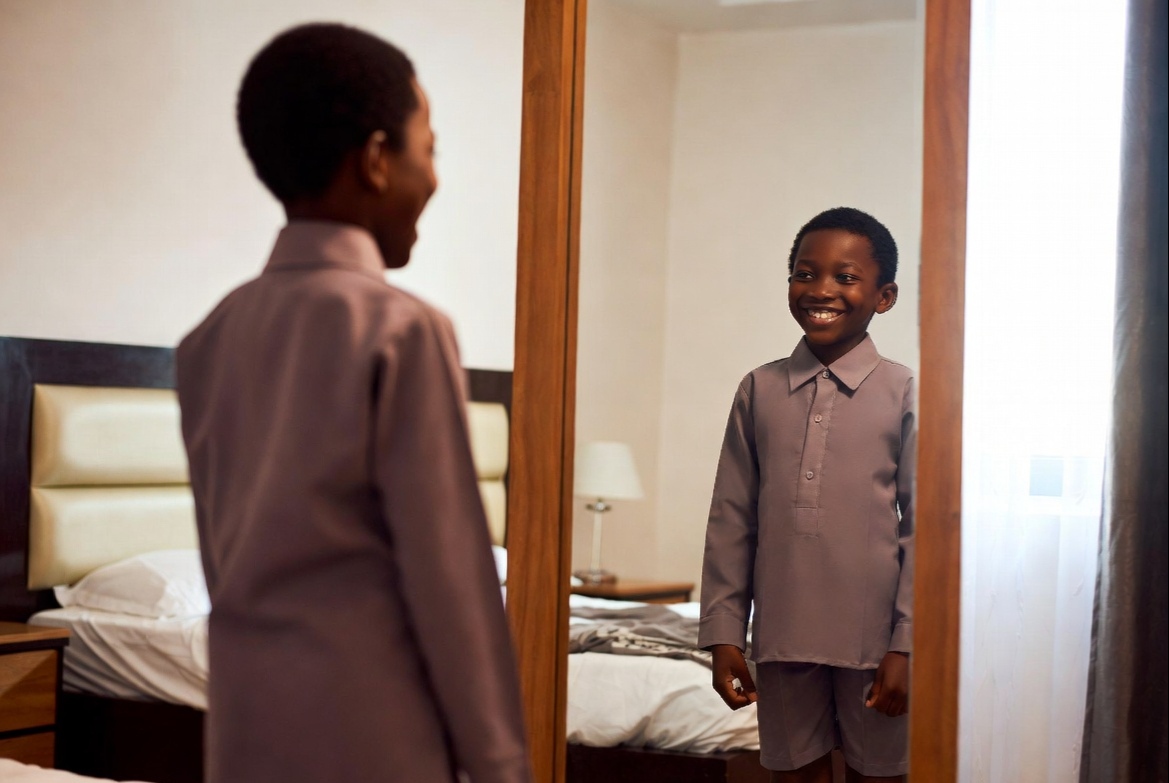
As a parent, you recognize this quiet moment too well. One where your child stands at the edge of something new, a classroom, a stage, or a football pitch, and you watch their face shift. The excitement fades. The shoulders drop. Then, they look back at you with eyes that say, "What if I can't do this?"

That moment is not a failure but actually an opportunity.
Are you wondering, How do I raise a child who doesn't crumble when life gets hard? Not a child who is arrogant or reckless, but one who is quietly, deeply sure of themselves, even when things go wrong.
The Dangers of Using AI as a Parenting Coach
The good news? Confidence is not a personality trait some children are born with, and others are not. It is a skill. So, like any skill, it can be taught, nurtured, and grown, one small moment at a time.
Here is how you can start.
Let Them Struggle, Just a Little
We live in an age where parents want to fix everything fast. The homework is too hard? You sit down and do it with your kids. The friendship fell apart? You call the other parent. The fear of watching your children suffer is so powerful that you rush to remove every obstacle before they even feel it.
However, it is important to establish that struggle is where confidence is built.
When your child figures something out, however small, their brain registers a win. That win becomes a memory. Then, the memory becomes a belief. "I can do hard things." Lastly, that belief, repeated over time, becomes confidence.
This does not mean leaving your children to sink. It means resisting the urge to jump in at the first sign of difficulty. Ask them, "What do you think you should try first?" rather than handing them the answer. The magic is not in the solution. It is in your child realising they found it themselves.
Praise the Effort, Not Just the Result
"You're so clever!" feels like the kindest thing to say. When you tell your children that they are naturally gifted, they become afraid of anything that might prove otherwise. They avoid challenges, stop taking risks, and associate failure with identity.
On the other hand, when you say, "I'm really proud of how hard you worked on that," something different happens. Your child learns that their effort matters. That trying is valuable and failing at something does not mean they are a failure.
Praise process. Celebrate persistence. Honour the attempt. This one shift in language can change everything.
Give Them Responsibilities That Actually Matter
Children need to feel useful. Not useful in a token, "here, stir this soup" kind of way but genuinely needed.
It does not have to be complicated. In many African and Asian households, children carry genuine weight in the family's daily functioning, such as cooking, looking after younger siblings, and managing chores with real consequence. That responsibility communicates something profound to a child: "We trust you. You matter here."
That trust becomes the foundation of confidence. So, let your child pack their own school bag. Let them make decisions about their meals and apologise for their own mistakes without you scripting it. Give them the dignity of being capable.
Be Honest About Your Own Mistakes
One of the most powerful things you can do as a parent is to sit down with your child and say, "I got that wrong today."
Children who grow up watching adults hide their mistakes learn that failure is shameful, something to be concealed. In contrast, children who grow up watching adults own their mistakes, laugh at themselves, and try again learn that failure is simply part of being human.
When you normalise imperfection, you give your child permission to be imperfect too. Thus, a child who is not afraid of being imperfect is a child who will try things. A child who tries things builds confidence. It really is that simple.
Teach Them the Language of Their Feelings
Confidence does not just come from doing; it comes from understanding. A child who cannot name what they are feeling is a child who is controlled by their feelings. On the other hand, a child who can say, "I feel nervous because this is new and I don't know if I'll be good at it," has already taken back some of their power.
Across cultures, from Lagos to London to Lahore, emotional literacy is increasingly being recognised as one of the most important gifts a parent can give. Teach your child words like anxious, disappointed, overwhelmed, proud, and uncertain. Read books together where characters navigate difficult emotions. Talk at the dinner table about feelings, not just events.
When your child understands their inner world, the outer world becomes far less frightening.
Watch What You Say When They Are Not the Audience
Children hear everything. They hear you on the phone describing them to a relative. They hear you whispering to your partner after a parents' evening. They hear the casual comment you made that you have already forgotten.
"He's just shy." "She's not really sporty." "He struggles with school, bless him."
These labels, even when said with love, stick. Children absorb them and build identities around them. Speak of your child as the person you want them to become, not simply the child they are right now.
Say "He's still figuring out how to make friends" instead of "He's just shy." The difference is small in words, but enormous in what it plants.
Show Them the World Is Big and They Belong In It
Finally, expose your children to difference. To stories, faces, languages, and lives that are not their own. Confidence, in its truest form, is not about believing you are better than others. It is about believing you belong in the room, at the table, and in the conversation.
A child who has met the world in all its variety is a child who is not easily shaken by it.
You do not need to raise a fearless child. Fear is healthy. What you want is a child who feels the fear and does it anyway because somewhere inside them, they know they are enough.
That knowing? It is your job to help them build. On the plus side, you are already doing it just by asking the question.


Comments (0)
Please sign in to join the conversation.
Loading comments...