

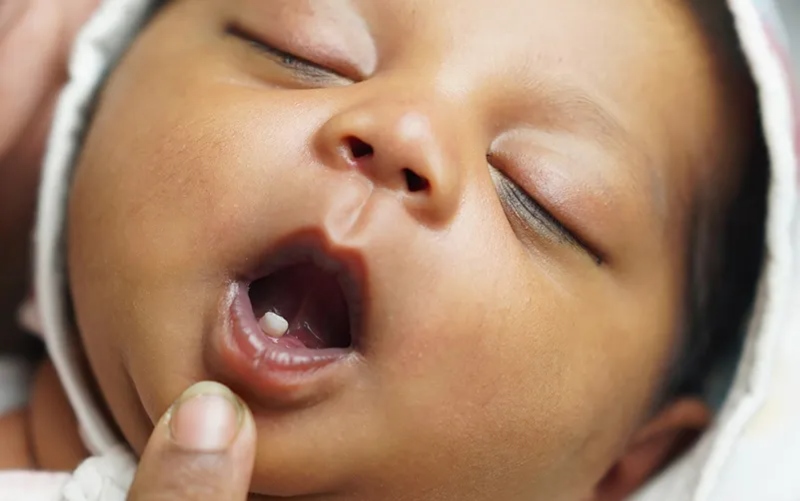
There is nothing quite like the moment a new parent is told their newborn already has a tooth. The room shifts. Eyes widen. Someone, somewhere in the back, whispers something under their breath. In many communities across Nigeria, West Africa, and beyond, a baby born with a visible tooth has long been treated as a sign of something otherworldly, something to fear, or something to celebrate, depending on who you ask.
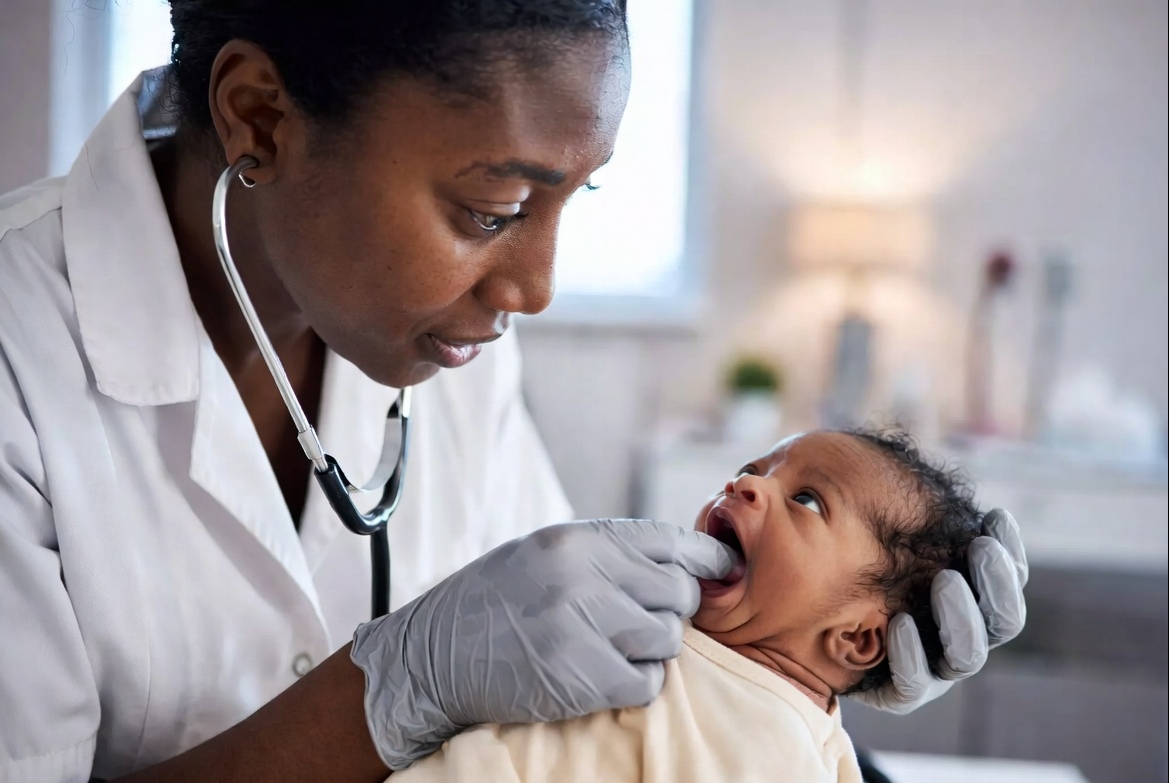
However, science has something to say about this. And honestly? It is far more fascinating than any myth.
What Are Natal Teeth, Exactly?
When a baby is born already carrying one or more visible teeth, those teeth are called natal teeth. They are not milk teeth that arrived early in the usual sense, but teeth that were already present and had already pushed through the gum line before birth. This is different from neonatal teeth, which appear within the first 30 days after birth.
Why Sharing Your Child's Face Online Could Cost More Than Likes
Natal teeth are rare, but they do happen. Studies estimate that roughly one in every 2,000 to 3,500 births produces a baby with natal teeth. That might sound uncommon, but across a country of over 200 million people, that means thousands of Nigerian babies are born this way every year.
They are most often found on the lower front gum, the same spot where the first baby teeth usually appear several months later. In most cases, only one tooth is present, though occasionally there may be two.
Witchcraft, Warning, or Wonder? The Cultural Weight
Before science had an answer, communities built stories. In some Nigerian traditions and across parts of West Africa, a baby born with teeth was viewed with deep suspicion. The child was sometimes called a witch, believed to bring misfortune to the family, or even considered a threat to the mother who breastfed them.
In other cultures, the story flipped entirely. In parts of Europe during earlier centuries, a child born with teeth was seen as destined for greatness, a future warrior or leader. Julius Caesar and Napoleon Bonaparte were both reportedly born with teeth, and history treated that as a mark of destiny, not danger.
The truth is that neither fear nor folklore prepared families for what is, at its core, a biological event. Cultures reached for meaning because they lacked information. Today, we have the information and it changes everything.
So What Actually Causes It?
The honest biological answer is that doctors and researchers are still piecing this together, but several clear patterns have emerged.
Genetics plays the biggest role. If a parent or grandparent was born with natal teeth, the chances rise considerably. The tendency can run quietly through a family for generations before it appears again. If your baby arrived with a tooth and you dig into family history, someone may remember a relative who did too.
Certain medical syndromes are also associated with natal teeth. These include conditions such as Ellis-van Creveld syndrome, Sotos syndrome, and Hallermann-Streiff syndrome. However, it is important to note that the vast majority of babies born with natal teeth have none of these conditions. Most are entirely healthy.
Hormonal exposure and environmental factors during pregnancy have also been explored. Some researchers believe that elevated hormone levels or certain nutritional factors during foetal development may trigger earlier-than-normal tooth formation. This is an area where more research is still needed.
In simple terms, the tooth bud, which is present in every developing baby, simply began its journey a little earlier than expected. It did not wait for the outside world.
Are Natal Teeth Dangerous?
This is the question every parent wants answered, and the answer is: it depends on the tooth.
Natal teeth are often loosely attached to the gum because the tooth roots have not fully formed yet. A tooth that is very loose presents a genuine concern because there is a small risk of the tooth detaching and being inhaled by the baby, which can cause a choking hazard. For this reason, a dentist or paediatrician may recommend removing a natal tooth that is dangerously loose.
Beyond that, natal teeth can make breastfeeding uncomfortable or even painful for the mother. Some babies also develop a condition called Riga-Fede disease, where the underside of the tongue becomes ulcerated from repeated contact with the sharp edge of the natal tooth. This sounds alarming, but it is manageable, and a dentist can smooth the tooth's edge or advise on next steps.
If the natal tooth is firm and well-rooted, many healthcare providers recommend leaving it in place. Removing a well-anchored natal tooth unnecessarily can sometimes damage the permanent tooth developing beneath it.
The right course of action always begins with a proper dental and medical evaluation rather than panic, and certainly not folklore.
What You Should Do?
The first step is to stay calm. A natal tooth is not a curse. It is not a sign of illness, evil, or bad luck. It is biology doing something unusual, and unusual does not mean wrong.
The second step is to seek professional advice promptly. A paediatrician should examine the baby shortly after birth, regardless, and if a natal tooth is present, a referral to a paediatric dentist is a sensible next move. They will assess whether the tooth is stable, whether it poses any risk, and whether any intervention is needed.
The third step, and perhaps the hardest, is to resist the pressure of community myths. Well-meaning relatives may say frightening things. Neighbours may speak in hushed voices. Hold firm to what the evidence shows. It is the fact that a natal tooth is a biological quirk with known causes and manageable outcomes.
In Conclusion
Your baby did not arrive with a tooth because of witchcraft. They arrived with a tooth because biology is extraordinary, unpredictable, and occasionally moves ahead of schedule. Natal teeth have been documented in medical literature for centuries. They have been studied, examined, and understood.
What makes the difference for any family facing this is access to accurate information and proper care, not superstition.
A baby born with a tooth is still just a baby. Hungry, new to the world, and entirely deserving of wonder.


Comments (0)
Please sign in to join the conversation.
Loading comments...