

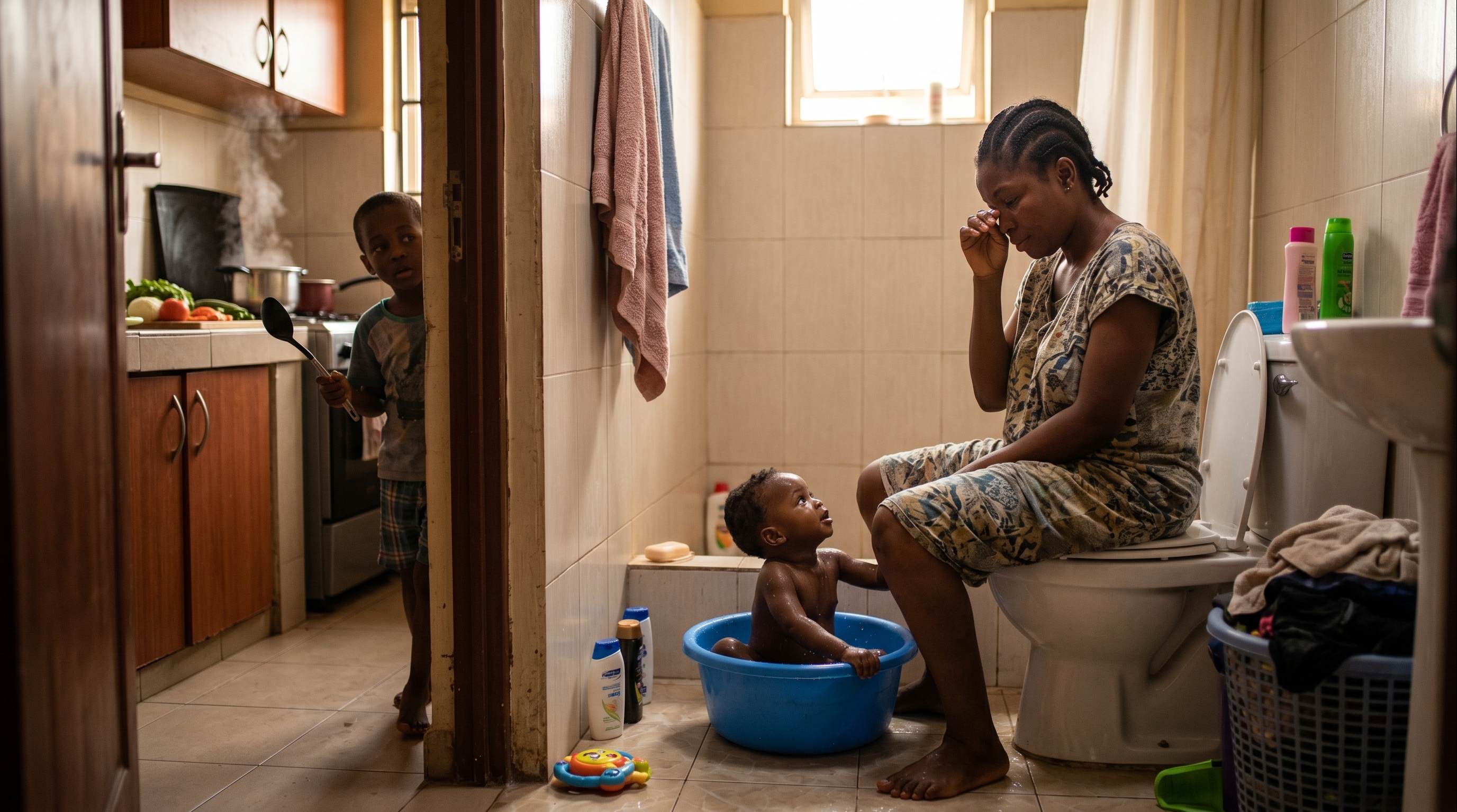
Nakato Florence sat on the edge of her bathtub at 11:47 p.m., the tap running just loud enough to mask the sound of her own breathing. Her 17-year-old, Trevor, had slammed his door an hour ago after another argument about his college applications, and her younger one, Diana, had asked for the third time that week why "Mummy looks tired all the time." She pressed a towel to her face and let herself cry, quietly, the way mothers do when they've learned that even grief needs to be scheduled around everyone else's needs.
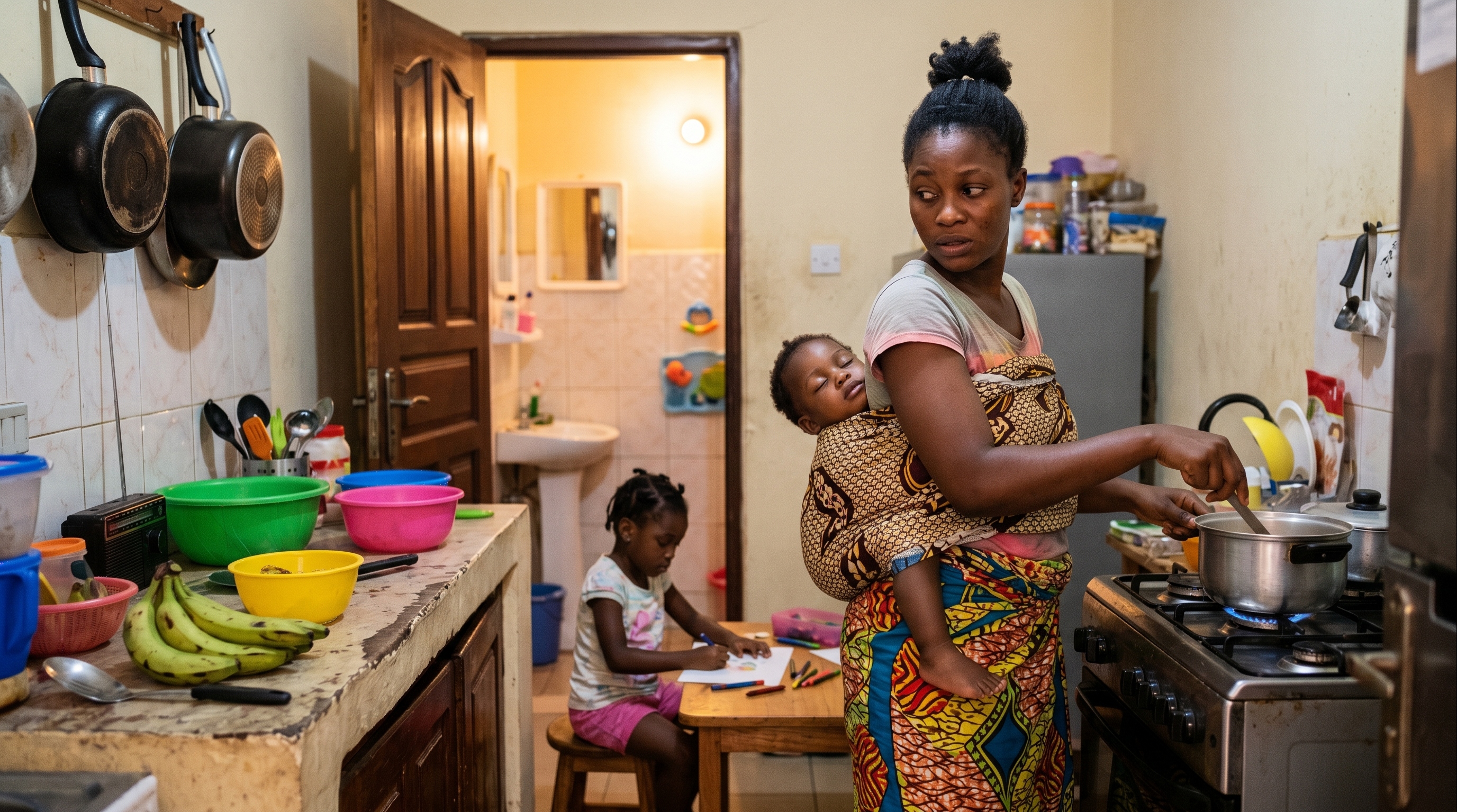
When she finally came out, her face washed and composed, she found her sister Achen waiting in the kitchen with two cups of tea. Achen didn't ask what was wrong. She simply said, "I heard the tap running for twenty minutes. That's not a shower, that's something else." Florence laughed despite herself, and that laugh cracked not into collapse, but into honesty.
That night became the turning point, not because anything dramatic happened, but because for the first time in years, Florence said out loud: "I think I'm not okay, and I don't know how to fix that while everyone needs me to be fine."
1. That Bathroom Moment Is Not Weakness
Mothers raising teenagers and young adults often experience a specific kind of exhaustion that doesn't look like the baby-years exhaustion. It's quieter, lonelier, and far more isolating because the world assumes that once your children can dress themselves and hold a conversation, your job has gotten easier.
The truth is that parenting teenagers requires a different kind of energy, and many mothers simply don't have anywhere to put the overflow. Crying in private is a sign that your emotional cup has been pouring out for so long that it needs refilling, and your body is telling you in the only language it has left.
The Pressure to Be "The Strong One" Is Quietly Wearing You Down
In homes where mothers are seen as the emotional center of the family, there's an unspoken rule that she must always have it together. This pressure isn't cultural in a negative sense but it becomes dangerous when it means mothers never get to be human in front of their families. Recognizing that strength and softness can exist in the same person is the first step toward not carrying everything alone.
3. Teenagers Notice More Than They Say, And That Can Be a Bridge
Many mothers fear that showing emotion will burden their children or make them feel responsible for adult problems. But age-appropriate honesty, like saying "I had a long day and I need a few minutes," teaches teenagers something powerful: that emotions are normal, that adults have limits too, and that asking for support is not a sign of dysfunction.
4. The Argument
Often, conflicts with teenagers about practical things are really about deeper anxieties: fear of the future, fear of disappointing parents, fear of not being understood. When mothers can pause and ask, "What is this really about?" before reacting, it doesn't just de-escalate conflict, it opens a door to understanding what your teenager is actually struggling with beneath the surface behavior.
5. Self-Care Is Having Someone Who Sees You
For many mothers, especially those running households largely on their own, the missing ingredient isn't more discipline or more effort but connection. Having even one person who checks in, who notices when the tap runs too long, who doesn't require explanations before offering tea, can be the difference between quietly burning out and finding a way back to balance. Support doesn't have to be therapy or a retreat; sometimes it's simply someone saying, "I see you, and you don't have to explain."
6. Mental Health Struggles Don't Pause Because You're Needed
One of the hardest realities for mothers of teens is that personal mental health challenges don't wait for a "convenient" time. Life keeps demanding: school fees, meal planning, work deadlines, family obligations. The lesson here isn't to wait until things are "calm enough" to seek help; it's to integrate small moments of care into daily life rather than waiting for a breaking point.
7. You're Allowed to Need Help With Things You're "Supposed" to Handle Alone
Many mothers feel that asking for help suggests they can't manage their own home. But running a household with teenagers is genuinely demanding work, often invisible and unpaid, and no one is built to do it without support. Whether that support comes from a sister, a friend, a community group, or a counsellor, accepting help isn't an admission of failure. It's recognition that you're human, and that even the strongest women need somewhere to set their burden down occasionally.
8. Talking to Your Teen Doesn't Always Mean Talking About Feelings Directly
Teenagers often open up more easily in low-pressure settings rather than face-to-face "serious talks." For mothers feeling disconnected from their teens, shared activities can rebuild closeness without forcing emotional conversations that might feel intimidating to a young person still learning how to express themselves.
9. Your Wellbeing Directly Shapes the Emotional Climate of Your Home
When a mother is depleted, the entire household feels it through atmosphere. Tension rises faster, patience shortens, and small issues feel larger. This is about understanding that taking care of yourself is foundational. A mother who has even small pockets of restoration brings more patience, more clarity, and more warmth into her interactions, which benefits everyone, including the teenagers who may not say it but absolutely notice it.
10. Crying Means You're Releasing Pressure Safely
There's a difference between falling apart and letting pressure out before it builds into something harder to manage. Mothers often fear that crying in front of their children will alarm them, but occasional, honest emotional expression can actually normalize emotions in the home rather than create fear around them.
11. Watching Out for the Signs in Yourself Matters as Much as Watching Out for Your Teen
Mothers are often trained to monitor their children for signs of stress, withdrawal, or struggle but rarely taught to monitor themselves the same way. Persistent fatigue, irritability, feeling emotionally "flat," or needing to escape to small private spaces just to breathe are signals worth paying attention to, not ignoring. Recognizing these signs early, the same way you would for your child, allows mothers to seek support before reaching a breaking point.
Crying in the bathroom is proof that you've been carrying more than anyone realizes, for longer than anyone noticed.
If you're a mother of teens or young adults who feels like she's running on empty, this is your reminder: noticing your own exhaustion is the beginning of getting the support you deserve, so you can keep showing up for the people who need you, without disappearing in the process.


Comments (0)
Please sign in to join the conversation.
Loading comments...