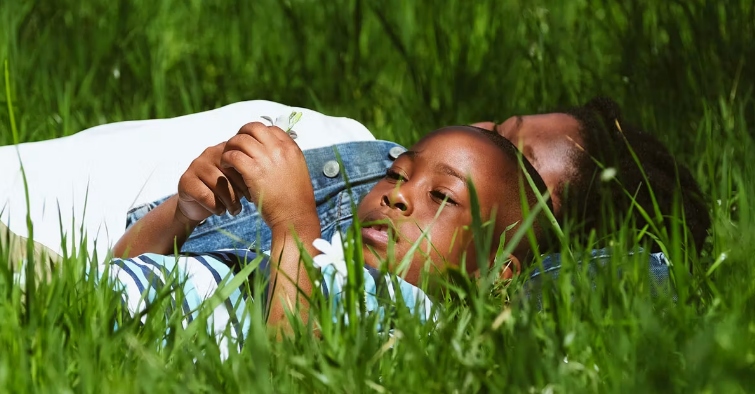


It was a typical Thursday evening in Lekki. I had just navigated three hours of traffic with the kids in the back seat, my husband was still stuck on the Third Mainland Bridge, and the generator had kicked in again because NEPA decided it was time for “light off.” The children were cranky, my temples were throbbing, and the WhatsApp group for school fees was blowing up. Then my nine-year-old looked up from her tablet and said, “Mummy, let’s just go outside.” We didn’t go far — just the small green strip behind our estate.

Twenty-five minutes of walking, pointing at birds, laughing at a dog chasing its tail and by the time we got back, the shouting had stopped, my shoulders had dropped, and even the generator noise felt less personal. That night everyone slept better. The next morning my husband asked, “Can we do that again this weekend?”
That small walk didn’t fix the bills or the traffic but it did something science has been quietly proving for years: it lowered our family’s cortisol levels. Cortisol — that stress hormone that spikes with life's hustle, school runs, market prices, and the constant “how will we manage?” feeling — is the silent thief of joy in many homes. When it stays high, we snap at the kids, scroll more, sleep less, and feel disconnected even when we’re all under the same roof. A happy nature walk — light, playful, no pressure — acts like a natural reset button for everyone.
14 Ways Your Beauty Choices Shape How Your Children See Themselves
Here are 15 ways these walks quietly change the game for every single person in the family.
1. Everyone feels less overwhelmed by the daily grind
That low-grade tension that builds from 5 a.m. school prep to 9 p.m. “have you done your homework?” melts faster when you’re under trees instead of under fluorescent lights. Parents stop carrying the weight of tomorrow’s to-do list quite so heavily; kids stop melting down over small things.
2. Mood swings become less frequent and less dramatic
Cortisol fuels irritability. When it drops, the “who took my charger?” arguments lose their fire. We’ve seen many usually quiet husbands crack jokes they haven’t made in weeks, and our teenagers actually answer questions without grunting.
3. The whole family sleeps deeper and wakes up lighter
Nature walks regulate your body clock better than any blue-light filter. Children who used to toss until midnight now ask to go to bed. Parents who woke up at 3 a.m. worrying about rent report falling asleep without the usual mental replay of the day.
4. Kids concentrate better at school (and parents at work)
Lower cortisol means clearer thinking. One mum in the estate told how her son’s teacher noticed fewer careless mistakes after they started Saturday morning walks at Conservation Centre. The same focus helps us finish reports without that 4 p.m. brain fog.
5. Couples reconnect without forcing “date night”
No need for expensive dinner or babysitter. Walking side by side, phones in pockets, you remember why you liked each other before the children and the bills arrived. Many couples say the best conversations happen when they’re not staring at each other across a table but moving together through fresh air.
6. Emotional meltdowns in children reduce noticeably
Toddlers and teenagers both store stress in their bodies. A happy walk gives them space to name feelings (“I was scared of the class test”) without the usual shouting match. They learn that big feelings don’t need big reactions—they just need movement and fresh air.
7. The family immune system gets a quiet boost
Fewer coughs and “I don’t feel well” mornings. Nature’s phytoncides (those invisible chemicals trees release) plus lower cortisol mean fewer sick days, fewer hospital runs, and more actual weekends.
8. Screen addiction loses its grip naturally
Nobody is preaching “reduce screen time.” When you’re chasing butterflies or racing to spot the most lizards, tablets lose their appeal. Children who used to beg for “just ten more minutes” now beg for “one more lap around the park.”
9. Parents feel like actual humans again, not just providers
Dads who carry the weight of “I must provide” and mums who carry the mental load of everything else both report feeling lighter. The walk reminds you that you are more than your salary or your parenting report card.
10. Gratitude sneaks in without effort
Pointing out a colourful lizard or the way the sky changes at sunset trains everyone’s brain to notice good things. Families start saying “thank you” more — at home, not just in church.
11. Creativity and problem-solving improve for everyone
That stuck feeling — “how do we pay this school fee?” or “what project should I do?” — often loosens during a walk. Kids come back with wild ideas for science fairs; parents return with fresh angles for work challenges.
12. Blood pressure and heart health get gentle support
No gym membership required. The combination of movement and calm greenery lowers resting heart rate and blood pressure in a way that feels kind, not punishing — perfect for the 30-something parent who already feels exhausted.
13. Family bonds grow stronger through shared silly moments
Racing to the mango tree, taking silly photos of each other pretending to be statues, or singing off-key worship songs while walking — these tiny memories become the glue. Children remember “the day we saw the butterfly swarm” more than any expensive holiday.
14. Anxiety about the future loses its daily power
Cortisol keeps us in fight-or-flight about “what if the economy gets worse?” A regular nature walk teaches the nervous system that the world is still beautiful and safe in small pockets. Both parents and older children report worrying less on Sunday nights.
15. Long-term resilience becomes the family’s quiet superpower
Life will still throw traffic, NEPA bills, and unexpected school fees. But families who walk together regularly bounce back faster. They have a shared ritual that says: “We’ve got this. We’ve walked through worse and still laughed.”
You don’t need new trainers, matching outfits, or a holiday budget. You just need the willingness to step outside together. In a city that never slows down, these walks are how we teach our children — and remind ourselves — that peace is not something we wait to afford. It’s something we can walk into, hand in hand, one green step at a time.
Your family doesn’t have to be perfect to deserve this calm. You just have to be willing to try. Start small this weekend. Watch what happens when cortisol takes a back seat and laughter gets to drive for a while.