
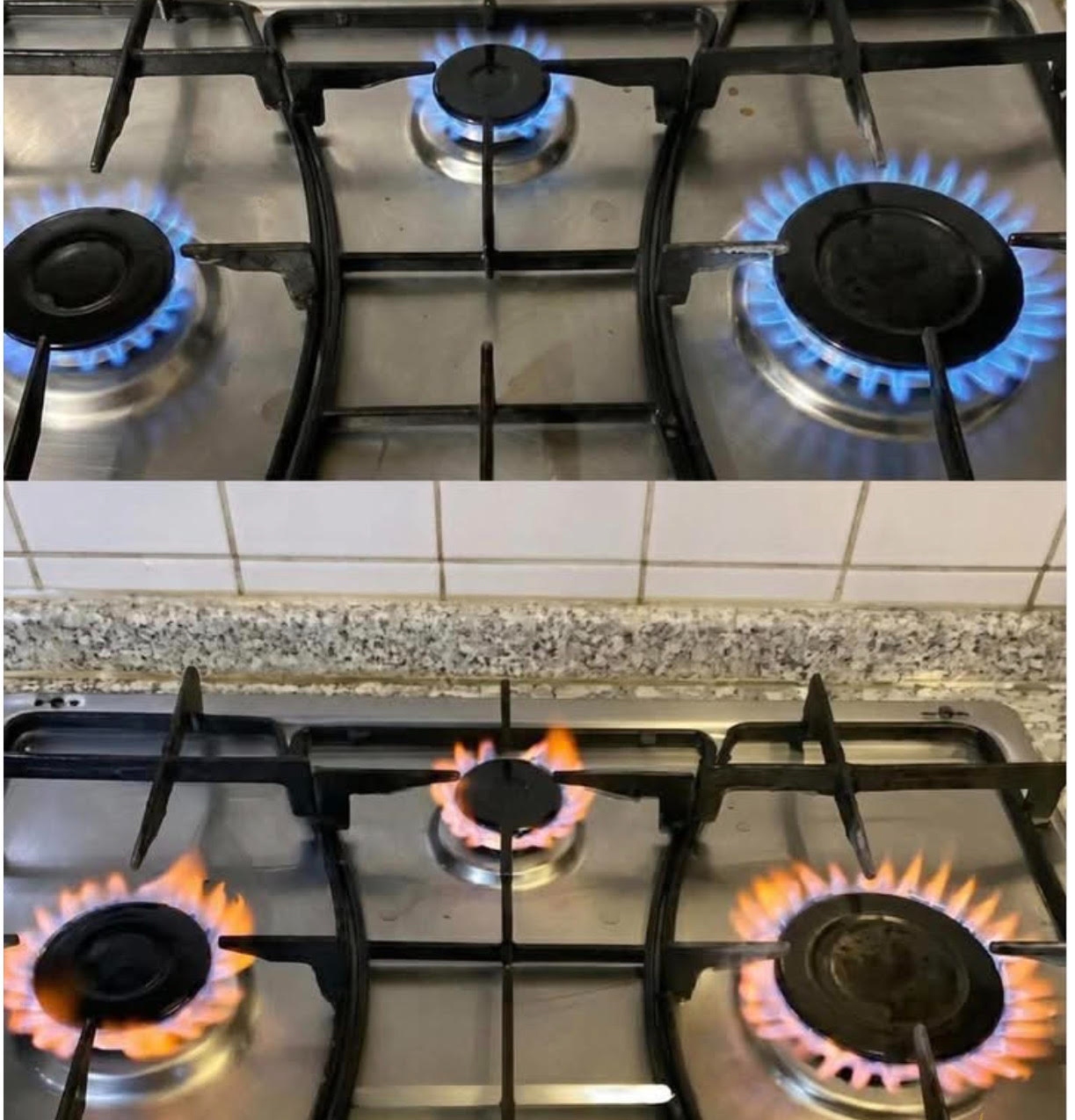
Gas burners can produce different types of flames depending on how well the gas mixes with air before ignition. The image you shared shows two distinct flame conditions, one is correct and efficient, while the other indicates a problem that needs attention. Understanding the difference is important for safety, efficiency, and the longevity of your cooking equipment.
Gas combustion in a cooker depends on the right balance between fuel (gas) and oxygen (air). When this balance is correct, the flame burns cleanly. When it is not, the flame changes color and behavior, signaling a problem that should not be ignored.
Blue Flame (Normal and Efficient Combustion)
The blue flame seen in the top burners represents proper combustion. In this condition, gas mixes adequately with oxygen before burning, resulting in a clean, steady, and almost invisible blue flame. This type of flame produces maximum heat, cooks food faster, and does not leave soot on pots or the cooking surface. It is the ideal state for any gas cooker and shows that the burner, air intake, and gas pressure are all functioning correctly.
Yellow/Orange Flame (Incomplete Combustion)
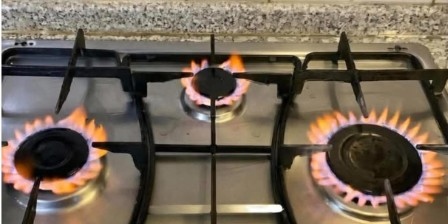
The yellow or orange flame seen in the bottom burners indicates incomplete combustion. This happens when there is insufficient oxygen mixing with the gas before ignition. As a result, the flame becomes larger, flickering, and discolored. This type of combustion is inefficient, meaning it consumes more gas while producing less heat. It also leads to the formation of soot, which can blacken pots and dirty the cooker surface.
Health and Safety Implications
Incomplete combustion can produce carbon monoxide, a colorless and dangerous gas. In poorly ventilated spaces, this can pose serious health risks. That is why a yellow flame should never be ignored, especially when used indoors.
Common Causes of Yellow Flame
Several factors can cause this problem. The most common is a dirty or blocked burner, where food particles, grease, or debris obstruct the tiny holes through which gas flows. Another cause could be improper air adjustment, especially if the air shutter of the burner is partially closed. Low gas pressure or a faulty regulator can also affect how gas mixes with air, leading to poor combustion.
Recommended Solutions
To resolve the issue, start by cleaning the burner thoroughly. Remove it and ensure that all the holes are clear and free from blockage. Check that the burner is properly aligned when you place it back. If your cooker allows air adjustment, ensure the air vents are open enough to allow proper mixing. If the problem persists after cleaning, it is advisable to have a qualified technician inspect the gas supply system and regulator.
A blue flame indicates efficient, safe, and complete combustion, while a yellow or orange flame signals incomplete combustion, reduced efficiency, and potential safety risks. Ensuring your gas cooker consistently produces a blue flame is essential for both performance and safety.