

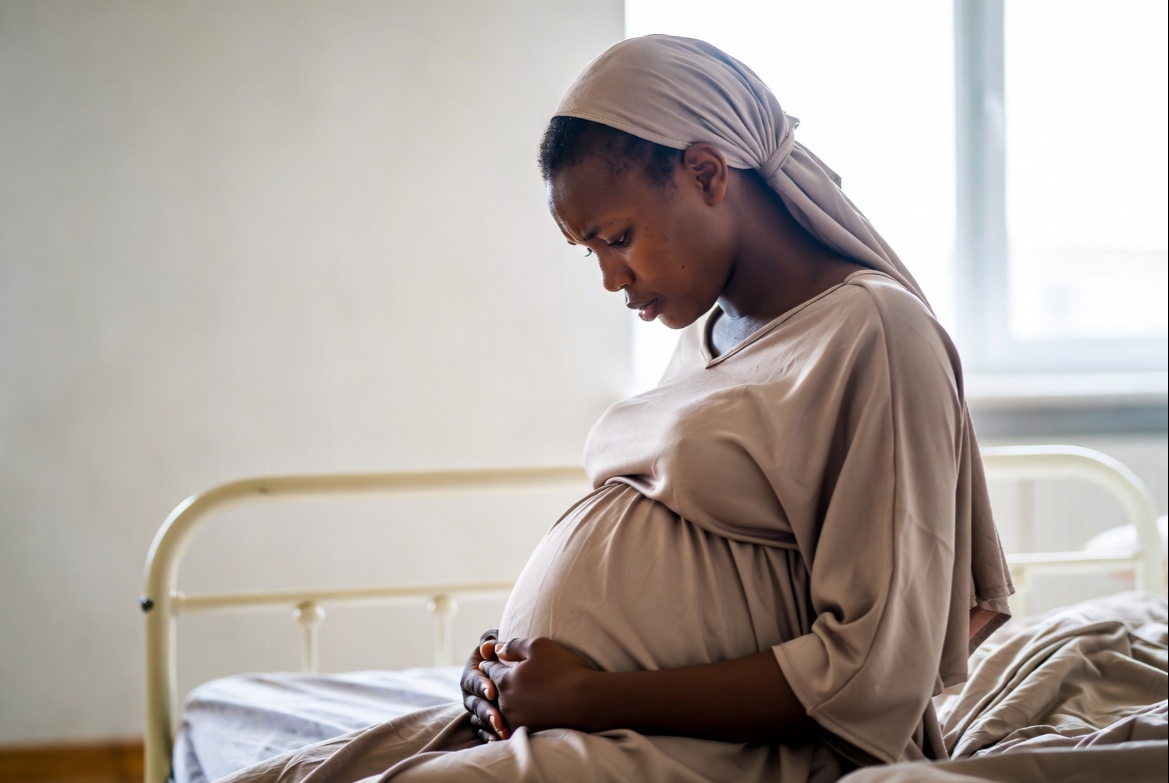
Imagine going through one of the hardest physical experiences a human body can endure, labour, only to come out the other side not with a healthy baby, but with a hole inside you that will not close on its own.
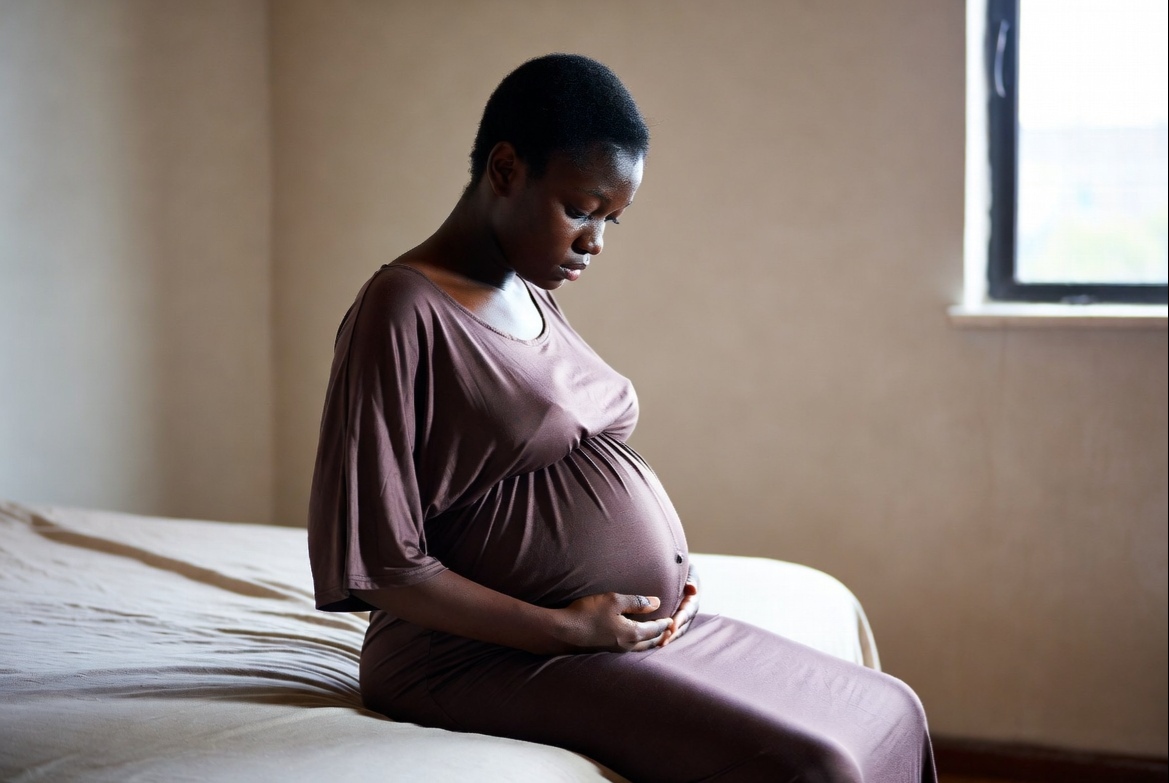
That is, in plain terms, what obstetric fistula is.
It is an abnormal opening that forms between a woman's birth canal and either her bladder or her rectum, sometimes both, after a prolonged, obstructed labour. When a baby cannot pass through safely and help does not arrive in time, the pressure from the baby's head cuts off blood supply to the surrounding tissue. That tissue dies. When it dies, it leaves a gap where there should be none.
Why Sitting on the Toilet Too Long Is Bad for Your Bowel
The result? Constant, uncontrollable leaking of urine, faeces, or both. No pause. No warning. No way to stop it without surgery.
Why Does It Happen?
Obstetric fistula does not happen because something went mysteriously wrong. It happens when a woman does not get help in time.
The typical story goes like this: a young woman, often a teenager, often in a rural community far from the nearest hospital, goes into labour. The labour stalls. Then, the baby is positioned awkwardly, or the woman's pelvis is simply too narrow. This usually happens because she was married and became pregnant before her body fully matured. She pushes for hours. Sometimes days. Without a skilled birth attendant or emergency care, nobody can perform a caesarean section. The baby, tragically, often does not survive. Then, the mother is left with a fistula.
The three main types are:
Vesico-vaginal fistula (VVF) — an opening between the vagina and the bladder. This is the most common type and causes continuous leaking of urine.
Recto-vaginal fistula (RVF) — an opening between the vagina and the rectum, causing leaking of stool and gas.
Complex fistulas — involving multiple openings or affecting nerves and muscles, making treatment more difficult.
In some cases, the nerve damage is so severe that a woman loses the ability to walk properly. She may develop foot drop, a condition where the foot hangs and drags because the nerves that lift it have been damaged by prolonged pressure during labour.
Who Is Most at Risk?
This is not a condition that touches all women equally. Obstetric fistula follows the map of inequality almost perfectly.
The World Health Organisation estimates that around 500,000 women are currently living with untreated obstetric fistula worldwide, and that roughly 50,000 to 100,000 new cases develop every year. The overwhelming majority are in Sub-Saharan Africa and South Asia.
The risk factors stack on top of each other like a cruel list:
Being a young adolescent girl whose pelvis has not yet fully grown.
Living in a rural area more than two hours from the nearest maternity unit.
Being too poor to afford transport or hospital fees.
Having no access to a skilled midwife during labour.
Being in a country where girl-child marriage is still practised.
Having had little or no education.
Living somewhere where emergency obstetric care is severely under-resourced.
Nigeria alone accounts for a significant portion of global cases, with some estimates suggesting over 400,000 women in the country are living with untreated fistula. Chad, Ethiopia, Niger, Mali, South Sudan are some of the names of the most-affected nations. They are also the names of some of the world's most under-resourced countries. This is not a coincidence.
The Life That Follows
Here is where the story becomes about something deeper than medicine.
A woman with obstetric fistula does not simply deal with a physical condition. She deals with everything that comes with it.
The smell. The constant wetness. The skin infections and sores from prolonged contact with urine. The shame that builds when family members no longer want to sit near her. The husband who leaves. The community that whispers. The women who are hidden away in back rooms or outhouses because their families do not know what else to do.
Research from organisations working directly with fistula survivors paints a painful picture. Women report being abandoned by their spouses in significant numbers. Many are ostracised from their communities. Some are told their condition is a curse or punishment. Depression and suicidal ideation are frighteningly common. Women who were once mothers, wives, farmers, traders and active members of their communities find themselves reduced to something they never asked to be. That is, a source of discomfort for everyone around them.
Yet, they endure. That is the part that should make us all sit up a little straighter.
Can Obstetric Fistula Be Treated?
Yes, and this is the part that carries real hope.
Fistula repair surgery, when performed by a skilled surgeon, has a success rate of roughly 85 to 90 percent for straightforward cases. The operation itself typically takes between 30 minutes and two hours. It is not experimental. It is not new. It has been performed successfully for decades.
The challenge is access, not the existence of a cure.
Organisations such as the Fistula Foundation, UNFPA, Doctors Without Borders (MSF), and the Hamlin Fistula Ethiopia have been working for years to close the gap between the women who need care and the care that exists. The Addis Ababa Fistula Hospital in Ethiopia, founded by Australian surgeon Catherine Hamlin and her husband Reginald Hamlin, has performed over 60,000 fistula repair surgeries since its founding. It remains one of the most significant humanitarian surgical programmes in the world.
Still, tens of thousands of new cases arise every year. Most of them could have been completely preventable with access to skilled birth attendants and emergency obstetric care.
Prevention Measures
Obstetric fistula can be almost entirely prevented. Here is what actually works:
Delaying first pregnancy until a girl's body has fully matured.
Providing access to skilled midwives during labour.
Having functioning referral systems so that complicated labours can be escalated quickly.
Ensuring hospitals can perform emergency caesarean sections around the clock.
Investing in girls' education, because educated girls tend to marry later and have better access to healthcare information.
Ending the practice of child marriage.
None of these solutions are medically complex. They are politically and economically complex, which is why the problem persists.
Why This Is Everyone's Issue
Obstetric fistula is often described as a disease of poverty. That is true, but it is also a disease of neglect. Of systems that were never built to value women's lives equally and global health priorities that consistently underweight conditions affecting women in low-income countries.
When we talk about obstetric fistula, we are also talking about what happens when girls are married at 13 or 14. When we talk about it, we are talking about the nearest clinic being a six-hour walk away. We are talking about what it means to be poor and female and pregnant in a place where the health system was never designed with you in mind.
Every year, the United Nations marks May 23rd as the International Day to End Obstetric Fistula. Yearly, reports are written and statistics are shared. Progress is being made slowly. The number of women living with untreated fistula is declining in some regions, thanks to sustained investment in surgery and prevention.
However, the work is far from done.
What You Can Do Right Now
You do not have to be a surgeon or a policymaker to contribute something meaningful.
Awareness matters. The stigma surrounding obstetric fistula keeps women silent and keeps the condition invisible. Sharing accurate information like this article chips away at that silence.
Support matters. Organisations doing direct surgical and rehabilitation work rely on donations and advocacy. A contribution to the Fistula Foundation or UNFPA's Campaign to End Fistula goes directly towards surgery, follow-up care, and reintegration support for survivors.
Accountability matters. In countries where fistula remains a widespread problem, holding governments to their commitments on maternal health, midwifery training, and emergency obstetric care is a form of advocacy that has real downstream effects.
These women did not choose what happened to them. They chose to keep going anyway. The least the rest of us can do is make sure the world knows their names and refuses to look away.


Comments (0)
Please sign in to join the conversation.
Loading comments...