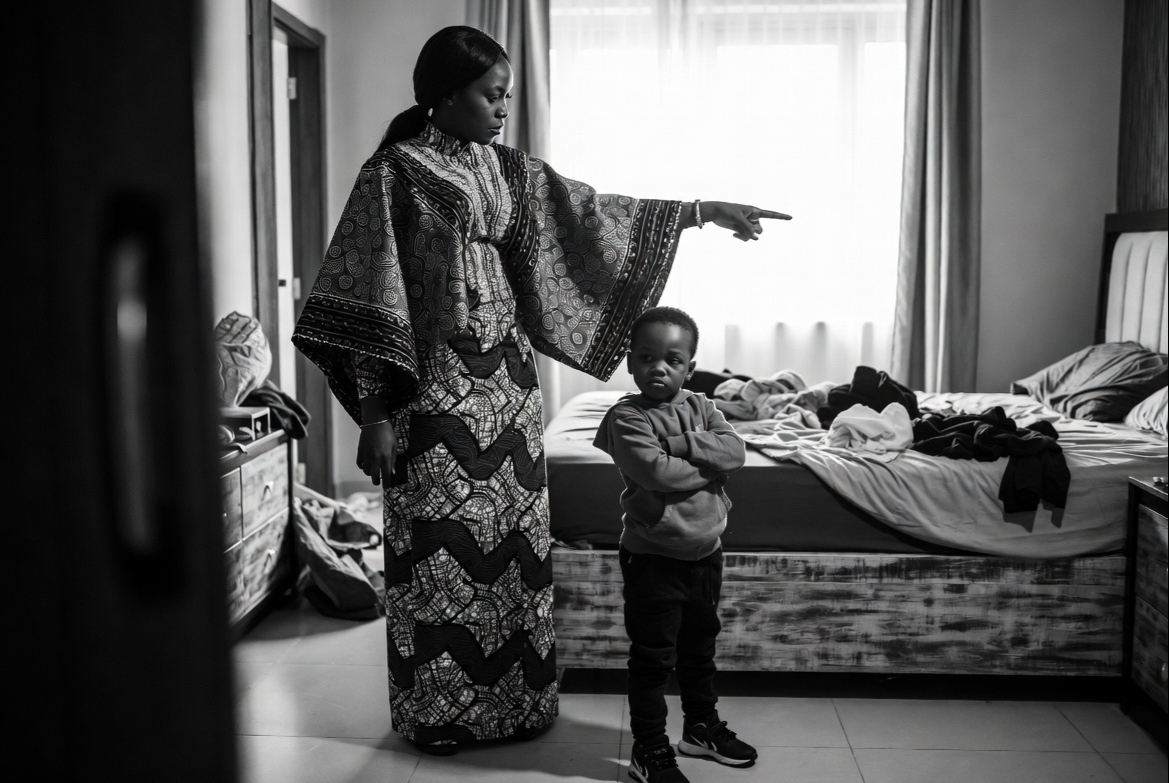


Kondwani had just fixed the kitchen tap, which had been dripping for 11 days, and on a Saturday morning, with his youngest daughter, Mphatso, sitting cross-legged on the cold tile floor watching him with enormous, curious eyes, he finally sorted it out. He wiped his hands on a rag, turned the tap on and off twice to confirm, and exhaled the kind of satisfied breath that only comes after finishing something quietly frustrating.

His wife, Lusungu, leaned against the doorframe. "You know," she said, "you're really good at this. The kids see everything you do, Kondwani. Everything." Mphatso nodded with the solemn authority of a six-year-old who absolutely agrees.
And Kondwani, looked down at the rag in his hands and said, almost under his breath, "It's nothing. Anyone could have done it."
That moment, is something an enormous number of fathers do, repeatedly and often unconsciously: they deflect love. They wave away appreciation. They minimise what they contribute, not out of dishonesty, but out of a deep, long-trained habit of downplaying their own value in the home they work so hard to build.
And slowly, that habit teaches their wives and children to stop offering what Kondwani's family was trying to offer him; recognition, warmth, and the simple, powerful act of being seen.
This one is for you, fathers. And it's for the wives and families reading along, trying to figure out why the man they appreciate so deeply seems almost allergic to being told so.
Why This Matters More Than It Sounds
Compliments inside a home are not just nice words, they are the currency of emotional safety — the way family members signal to each other: I see you, I value you, you matter here.
When a father consistently rejects, minimises, or awkwardly redirects that currency, the family doesn't always consciously register it as rejection. But the giving slowly slows down as the children learn that Dad doesn't really want to be celebrated, so they stop celebrating him. Wives learn that appreciation isn't received well, so they offer it less frequently. And the father, paradoxically, begins to feel unseen in the very home where people were trying to see him all along.
It's about awareness. And awareness is where every useful change begins.
THE DOS
1. Do: Say "thank you" — and let it be enough. The two most complete words in the English language, and the hardest for many men to deploy without adding a "but." When Mphatso told her father his nyemba stew was the best she'd ever tasted, the complete, whole, sufficient response was "Thank you, my love." Full stop. No disclaimers. No redirection. Just receive it cleanly.
2. Do: Make eye contact when a compliment is given. This is a physical act of presence. When Kondwani looked at the rag instead of at Lusungu when she praised him, he communicated, without words, that he wasn't fully available for that moment of connection. Eyes forward, a gentle nod, a real smile tells your family that you are actually here for the love they are offering.
3. Do: Acknowledge the person giving the compliment specifically. "That means a lot coming from you" is a sentence that can transform a compliment into a bonding moment. It tells your child or spouse that their words carry specific weight to you.
4. Do: Let yourself feel it for a moment before responding. There is nothing wrong with pausing. A breath. A beat. That pause is you actually receiving the compliment rather than instantly managing it. Your family will see that pause and know their words landed somewhere real, not just bounced off the surface of your perpetual busyness.
5. Do: Reflect it back occasionally. "I'm glad you noticed — I was thinking about you the whole time I was doing it" turns a one-way compliment into a shared moment. It shows your family that their appreciation actually connects to a feeling you were already carrying for them. This is particularly powerful between a father and his children, who are learning what emotional expression looks like from you every single day.
6. Do: Tell your family what their words mean to you. That evening, over dinner, or at bedtime: "When you said that earlier, it actually made my whole day." This teaches your children that it is strong, not soft, to return to a moment of kindness and name it. You are modelling emotional courage in real time.
7. Do: Receive compliments about your fathering specifically with extra grace. "You're a great dad" is perhaps the most vulnerable compliment a family can offer. It requires them to see you, name what they see, and say it out loud. That is brave. Meet their bravery with yours. Receive it fully, completely, and without immediately listing your shortcomings as a counterargument.
8. Do: Notice the physical language your body uses when you receive praise. Do you cross your arms? Turn away? Laugh nervously and change the subject? Your body often deflects before your mouth even opens. Practice staying open such as uncross your arms, face the person, and let your posture say "I'm here" before your words do.
9. Do: Share compliments your family gives you with your family again. When Kondwani's teenage son, Tadala, later asked if the tap was fixed, Kondwani could have said, "Yes — and your mother said something kind about it earlier that I really appreciated." That small act shows your children that you value their mother's voice, that kind words circulate and matter, and that gratitude is something worth naming, not hoarding quietly.
10. Do: Give compliments generously in return. The best way to make your home a place where appreciation flows freely is to model it yourself. A father who celebrates his children's small efforts and names his wife's contributions creates the very culture of appreciation he will then be able to receive naturally.
THE DON'TS
11. Don't: Immediately minimise what you've done. "It's nothing," "anyone could have done it," "it wasn't a big deal" are the classic deflection lines, and they are kindly meant but quietly harmful. They tell your family that their appreciation is misplaced. That their judgment is wrong. And children, especially, are still learning to trust their own perceptions. When you dismiss what they admire, you make them doubt what they see.
12. Don't: Deflect with humour every time. Laughter is a wonderful thing, and a father who can make his family laugh is a gift. But if every compliment gets turned into a joke, the joke eventually becomes a wall. Your family starts to feel that there's no way to reach you seriously, and they will slowly stop trying. Let some moments be warm without the punchline.
13. Don't: Counter a compliment with a self-criticism. "You're such a patient dad." "I don't know — I lost my temper Tuesday." This is not humility. This is a defence mechanism dressed up as honesty. Receive the specific thing being offered without running a full audit of your parenting record in real time. Tuesday was Tuesday. Right now, they are thanking you. Stay in the right now.
14. Don't: Redirect the compliment away from yourself entirely. "Oh, your mother did most of the work." "It was really your uncle who helped." Deflecting credit to others might feel modest, but it erases the genuine moment your family was trying to have with you, specifically. You can acknowledge others without evaporating from the compliment yourself.
15. Don't: Go silent in a way that feels like discomfort. Silence can be reflective and beautiful, or it can be awkward and shutting. Your family can tell the difference. If you receive a compliment and go so quiet that the giver starts to wonder if they've said something wrong, they will feel punished for being kind, and that is one of the fastest ways to make a home emotionally cautious.
16. Don't: Assume compliments come with hidden expectations. Some fathers deflect appreciation because they have unconsciously learned that when someone says something kind, they usually want something in return. That may have been true in other contexts. Your home should be different. Your wife saying "you're an incredible father" is not a negotiating tactic. Your child saying "Dad, you're my favourite" is not a setup. Receive it as what it is: pure.
17. Don't: Wait to be in the "right mood" to receive appreciation. Kondwani almost said, "Ask me again when I've actually fixed everything on that list." He caught himself. Because the truth is, there is no perfect-condition moment for being loved. Stress, fatigue, unfinished tasks should not suspend your right to be appreciated or your family's right to appreciate you. Receive warmth even in the middle of imperfect days.
18. Don't: Model reluctant receiving to your sons. Boys are watching. Whatever you do with appreciation, they are filing it away as the template. A son who watches his father receive love gracefully grows into a man who can do the same. The cycle either breaks here or continues here. That is a profound kind of power.
19. Don't: Confuse humility with emotional absence. True humility is accurate self-knowledge without needing to broadcast it, but also without needing to deny it when someone else names it. A humble father can say "thank you, that means the world to me" without arrogance. Humility and warmth are not in competition.
20. Don't: Let this moment pass without reflection. Tonight, or this weekend, think back to the last time someone in your home offered you a genuine compliment. How did you receive it? Did they leave that interaction feeling like they'd connected with you, or like they'd been politely declined? That reflection is not meant to produce guil. It is meant to produce awareness, and awareness is the first step in every meaningful shift.