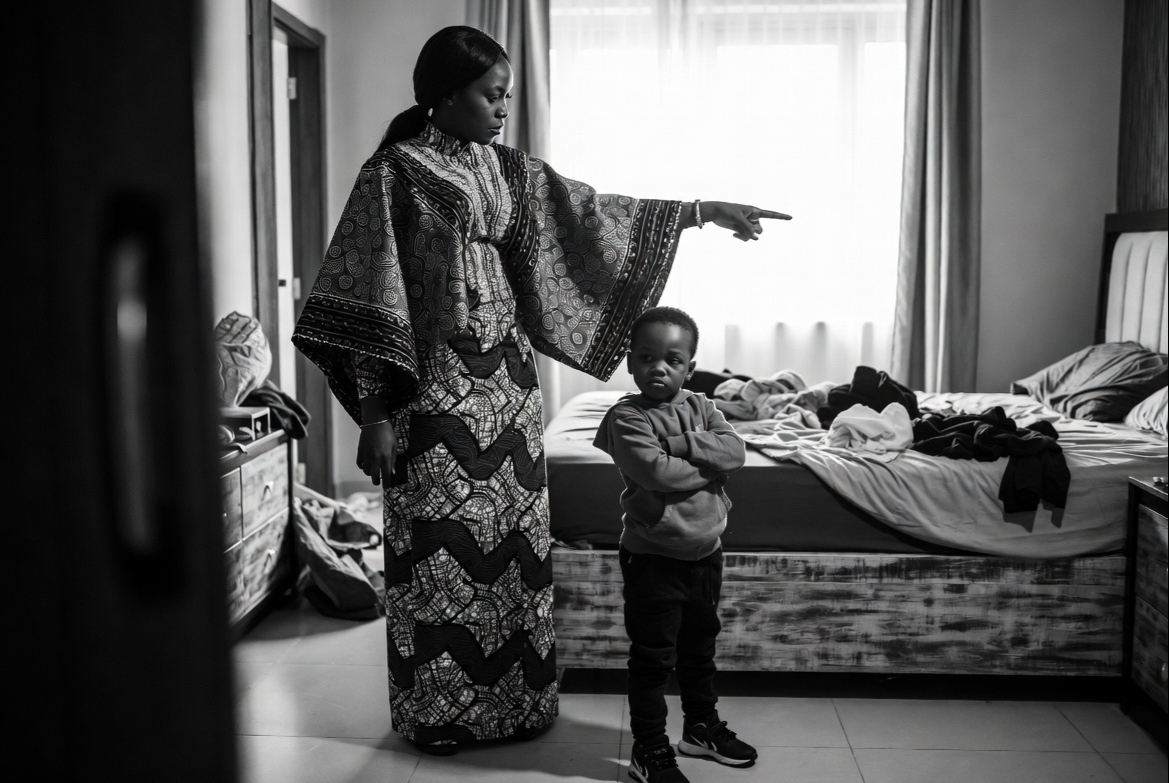

Picture this. It’s a Saturday morning in a typical compound,the generator is humming, the kids are chasing each other across the parlour, and Mama is already on her third load of laundry. She hasn’t slept past 5 a.m. in years. Her husband, a banker, leaves for work at 6:30 with a quick “God bless you, my love.” Neighbours later ask her, “So what do you do?” She replies quietly, “I’m shaping the next generation.” The conversation dies. Someone changes the topic to fuel prices.
That silence? That’s the gap we’re living in.
We call mothers “Generation Shapers” in church sermons and motivational WhatsApp groups, yet when it comes to real talk — at family meetings, job interviews, or even casual hangouts — their work still feels… invisible. Not paid, not praised and barely named. And this isn’t just a “women’s issue” but also it’s a family issue that touches every home, whether you’re in a two-bedroom flat in or a duplex.
10-Minute Exercises Wives Can Do At The Workplace
Sitting with too many mothers who whisper the same thing: “I love my children, but sometimes I feel like I disappeared the day I became ‘just’ a mum.” Their husbands feel the weight too — they see the exhaustion but don’t always know how to name it or fix it. Grandmas nod knowingly because they lived it. Young dads scroll past the memes and wonder why their wives cry in the bathroom after a long day of school runs and market bargaining.
This is not about blam but about seeing clearly what’s really happening in our homes.
The labour is endless and mostly unpaid. A mother wakes at dawn to prepare breakfast, pack lunches, and ensure uniforms are ironed. She drops the children at school, rushes to the market before prices spike, comes home to cook, cleans, helps with homework, soothes tantrums, and still finds time to pray for everyone. If she works outside the home — as many women now do — she squeezes all this into evenings and weekends. The first five years of a child’s life shape much of their brain development and future well-being, with mothers playing a primary role in providing emotional and physical nourishment.
Yet society measures value in monetary terms. If it doesn’t come with a title, business card, or Instagram reel, it doesn’t count. “Housewife” still sounds like a downgrade, even “full-time mum” feels apologetic. We celebrate fathers who “help” with chores but treat mothers who carry the mental load as if it’s their biological destiny — no applause required.
Let’s be honest about our realities in many families, especially in the developing regions of the world, the extended family system used to share the load as aunties, grandmothers, and cousins formed a village. Today, urban migration has scattered that village, adding fuel costs, school fees, and rent mean most households need two incomes, but the second shift still lands heavily on mum. She’s expected to be the emotional glue, the memory keeper, the one who remembers every child’s allergies, teacher’s name, and favourite meal.
Globally, it’s the same story with different spices as in the West, stay-at-home mothers fight the “I don’t work” label too. In parts of Asia, cultural respect for elders sometimes masks the same invisibility. We sing “My Mother” at every chance, yet a woman who leaves paid employment to raise children often hears, “So you’re not doing anything now?” from her own relatives. The language we use reveals everything.
That’s why the phrase “Generation Shaper” matters. It doesn’t erase the hard work — it dignifies it. It says the sleepless nights, the sacrifices, the emotional intelligence poured into tiny humans actually build nations. A child who grows up secure, kind, and resilient doesn’t happen by accident. It happens because someone shaped them with patience, boundaries, and love when no one was watching.
15 Truths Why Mothers Are ‘Generation Shapers’
1. Mothers lay the foundation for brain development in the early years, from pregnancy through the first few years, responsive caregiving helps form neural connections at an astonishing rate — up to 1,000 per second in the earliest stages — influencing lifelong learning and emotional health.
2. They build secure attachment because consistent nurturing creates a safe base that allows children to explore the world confidently, reducing fearfulness and supporting healthy social and emotional growth.
3. Mothers shape emotional regulation through daily interactions, they teach children how to manage feelings, turning tantrums into opportunities for patience and empathy.
4. They boost cognitive skills through simple acts like talking, singing, and reading, expand vocabulary and curiosity, directly supporting problem-solving and learning abilities.
5. Maternal care supports better non-cognitive outcomes. More time with mum in the toddler years can improve behaviour, emotional balance, and social skills, with noticeable effects even from modest increases in responsive time.
6. They buffer against stress. Warm, supportive mothering helps children handle life’s pressures, protecting brain structures like the hippocampus — key for memory, learning, and stress response — especially during preschool years.
7. Mothers model values and character. In Nigerian homes, they pass on respect for elders, hard work, faith, and community spirit through everyday example, shaping the moral compass of the next generation.
8. They nurture resilience. Facing daily challenges with love and guidance teaches children perseverance — a quality every Nigerian child needs in our fast-changing world.
9. Maternal warmth promotes long-term health. Positive early experiences reduce risks of behavioural issues and support better physical and mental outcomes into adulthood.
10. They are the first teachers of language and culture. Mothers weave in proverbs, stories, prayers, and traditions that root children in their Nigerian identity while preparing them for a global future.
11. Responsive mothering enhances social competence. Children learn empathy, sharing, and relationship skills through the consistent, loving interactions only a primary caregiver can provide day in, day out.
12. They invest invisible labour that yields visible results. The mental load — planning, remembering, worrying — creates stability that allows children (and fathers) to thrive without realising the quiet engine behind it.
13. Mothers influence intergenerational patterns. A well-supported mother raises children who are more likely to build strong families themselves, breaking cycles of stress or disconnection.
14. Their role multiplies across the family. When mum is emotionally nourished, the whole home feels it — calmer siblings, stronger partnerships, and grandparents who feel honoured.
15. Shaping a generation starts small but echoes forever. Every meal cooked with care, every prayer whispered at night, every hug after a tough school day contributes to adults who contribute meaningfully to society, economy, and community.
But here’s the beautiful part — change doesn’t require a revolution. It starts with small, deliberate shifts inside our own four walls.
What You Can Start Doing This Week
1. Name the labour out loud. Tonight at dinner, let every family member say one thing Mum (or the primary caregiver) did that day that made life smoother. No grand speeches — just “Thank you for remembering my lunch money” or “Thank you for calming me down this morning.” It sounds simple. It rewires everything.
2. Create a visible “Generation Shaper” ritual. Once a week, let the kids draw or write what they love about their mum’s daily role. Stick it on the fridge. Fathers, join in. Make it normal to celebrate the unseen.
3. Split the mental load, not just the chores. Don’t ask “How can I help?” Ask “What are the three things on your mind this week that I can take off your plate?” School fees? Doctor appointments? Birthday planning? Own it together.
4. Talk money honestly. If one parent is full-time at home, treat that role with the same respect as the paid job. Budget a small “appreciation fund” for her — not as allowance, but as recognition. Discuss long-term plans so she never feels financially trapped.
5. Build your village again. Reach out to one other family this week. Offer to swap school runs or weekend playdates. Nigerian families were never meant to raise children in isolation. Reconnect.
6. Check your own language. Stop saying “just a mum” — even in jokes. When someone asks what she does, answer proudly: “She’s shaping our family’s future.” Model it for your children.
These steps aren’t about perfection. Some weeks will still be messy. Electricity will go off, fees will be due, and tempers will flare. That’s family life all over the world — real, not filtered. But when we stop treating mothers as background characters in their own story, something shifts. Children feel more secure. Partners feel more like teammates. And mothers finally exhale.
The truth is, every generation is shaped somewhere. In the kitchen while pounding yam. In the car during traffic while teaching patience. On the prayer mat at midnight when worry keeps sleep away. Society may still look past that labour, but we don’t have to.
Next time you’re at a family gathering and someone asks a mother “What do you do?”, try answering differently. “She’s a Generation Shaper.” Watch the room pause. Then smile. Because that pause? That’s where the conversation — and the change — begins.
Mothers, you are not invisible here. Not in these pages. Not in the hearts of the children who will one day say, “Everything good in me started with her.”
Fathers, partners, aunties, uncles — let’s make sure they hear it while they’re still shaping us.
What do you think? Have you felt this invisibility in your own home, or seen it in someone else’s? Which of the 15 truths resonated most with you? Drop your thoughts in the comments. Share this with that mother who needs to hear she matters. Let’s keep the conversation going — because the next generation is watching how we treat this one.